-
by sayum
03 August 2026 1:43 PM







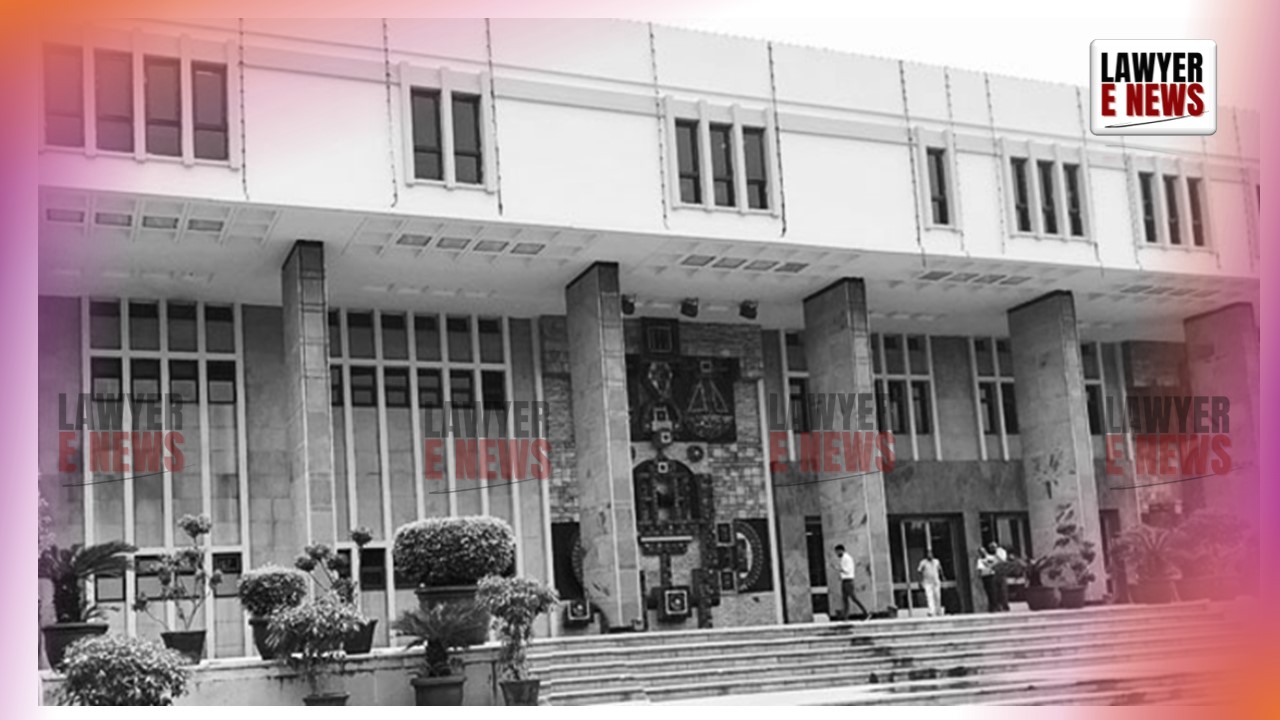
“Right to Cross-Examination Is Not a Perpetual License to Delay Justice” — In a decisive ruling Delhi High Court rejected a plea seeking recall of the complainant witness under Section 311 CrPC in a case under the Negotiable Instruments Act. The company had attempted to reopen cross-examination after the closure of complainant evidence, defence evidence, and recording of accused statements, citing the ill health of their counsel. But Justice Ravinder Dudeja held that the petitioners had squandered ample opportunities and were now merely trying to derail the proceedings.
“The petitioners had been taking court orders for granted. The repeated default in cross-examination and failure to lead defence evidence reflects their intent to delay the case. Section 311 cannot be permitted to become a tool for such misuse.”
“Repeated Non-Appearance, No Medical Proof, No Diligence — You Can’t Seek Recall as a Matter of Right”
The company claimed that its original counsel, a 72-year-old diabetic, had been unable to appear due to diabetic retinopathy. But the Court found this explanation unconvincing and unsupported.
“There is not a single medical record on file to show that the counsel was medically unfit during the trial period,” the Court noted. “Even if he was, nothing stopped the petitioners from engaging another lawyer.”
The Court pointed out that the petitioners were not hapless individuals but a private limited company with resources and the means to act. Their failure to do so, despite issuance of non-bailable warrants and multiple adjournments, was held to be a pattern of conscious neglect, not an inadvertent lapse.
“Section 311 Is Not a Safety Net for Strategic Lapses — It Is a
Discretionary Power to Ensure Justice”
Justice Dudeja examined the jurisprudence around Section 311 CrPC, referring to Zahira Sheikh v. State of Gujarat, Ratanlal v. Prahlad Jat, and State v. Shiv Kumar Yadav, and observed that the power to recall a witness is not meant to be exercised routinely or to bail out litigants from their own delays.
“The Court has to be satisfied that the witness sought to be recalled is essential for a just decision. Here, no such need has been demonstrated — what is shown is only negligence.”
The Court further said that the complainant had already been fully examined, and the case had moved to the stage of final arguments. At this point, the recall request amounted to an effort to reopen settled proceedings.
“A Name Change Is Not a New Defence — It Doesn’t Justify Re-
Cross-Examination”
The petitioners also argued that the complainant company had changed its name during the trial — from Gemalto Digital Security Pvt. Ltd. To Thales Dis India Pvt. Ltd. — and that they needed to cross-examine on this issue. The Court rejected this submission outright.
“The change of name has no bearing on the existence of liability under Section 138 NI Act… The debt remains payable to the same legal entity. This is not a justification for reopening evidence.”
Dismissing the petition and all connected applications, the Delhi High Court held that the petitioners had abused the process of law by failing to act when they had the opportunity, and were now seeking relief by shifting blame to their former counsel.
“Justice requires fair opportunity — not endless indulgence. When a party chooses not to act despite repeated opportunities, they cannot later invoke Section 311 as of right. There is no infirmity in the trial court’s order.”
This ruling reinforces the principle that while cross-examination is critical, it is not immune to the discipline of procedure. Justice delayed by strategic inaction is justice denied to the other side.
Date of Decision: April 17, 2025