-
by sayum
28 August 2026 12:24 PM








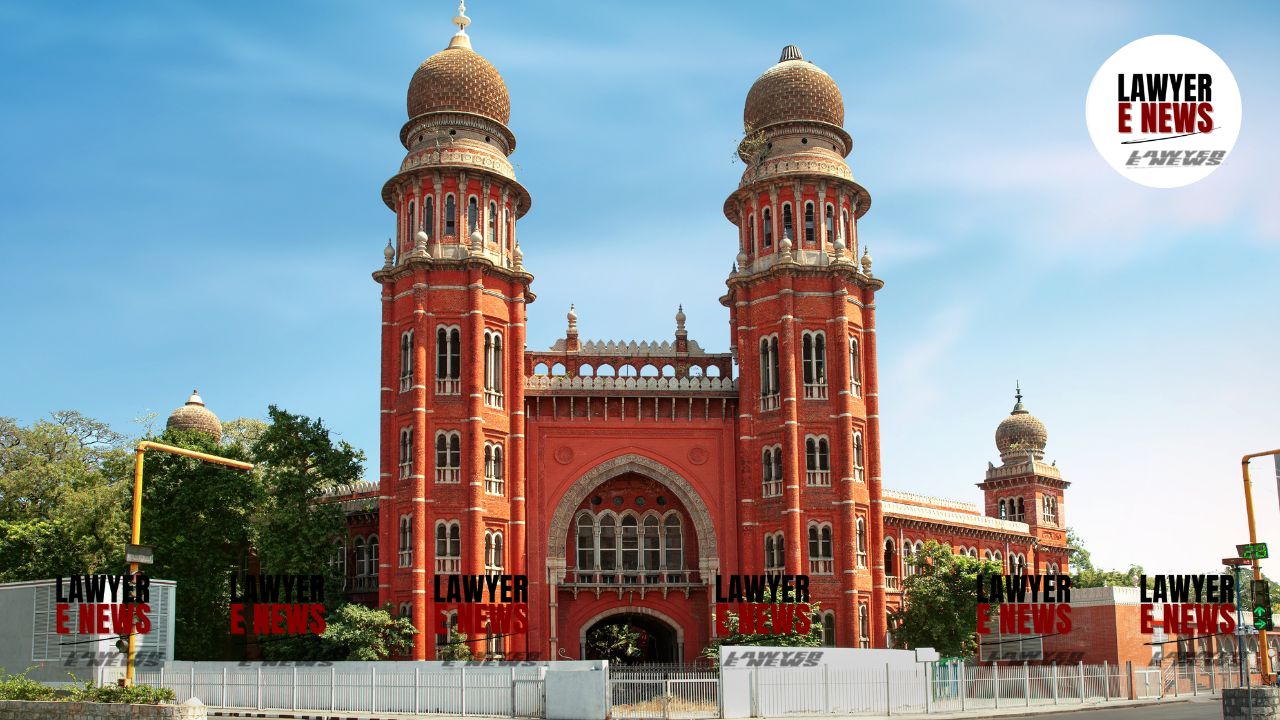
"A litigant cannot be permitted to improve his case by shifting the reasons from stage to stage merely to overcome the law of limitation," Madras High Court, in a significant ruling, held that the discretionary relief of condoning delay cannot be granted to a litigant who approaches the court with unclean hands and takes inconsistent stands to blame their counsel for procedural lapses.
A bench of Justice N. Mala observed that while a liberal approach is generally adopted in delay condonation, the party seeking such indulgence must establish substantial cause and furnish a consistent, cogent explanation for the entire period of delay.
The court's observations came while dismissing a Civil Revision Petition challenging an order of the Small Causes Court, Chennai, which had refused to condone a 69-day delay in filing a Rent Control Appeal. The petitioner had sought to challenge an order for the removal of obstruction in an eviction proceeding involving the Young Men Christian Association (YMCA).
The dispute originated from an eviction petition (R.C.O.P. No. 1806 of 2013) filed by the respondent, which eventually led to an eviction order. During execution proceedings, the petitioner filed various applications to implead himself and recall delivery orders, which were dismissed. Subsequently, the petitioner faced an order for removal of obstruction (E.A. No. 4 of 2025), leading to the delivery of the premises to the respondent. The petitioner then sought to file an appeal against the obstruction removal order with a 69-day delay, which the lower court refused to condone.
The primary question before the court was whether the petitioner had shown "sufficient cause" for the 69-day delay in filing the appeal under the Rent Control proceedings. The court was also called upon to determine if the petitioner's conduct, characterized by inconsistent explanations and allegations of negligence against his former counsel, entitled him to the discretionary relief of condonation of delay.
Inconsistent Stands Disentitle Litigant To Discretionary Relief
The court noted that the petitioner had initially filed a condone delay petition which he later withdrew to file a fresh one, assigning completely different reasons. While the first application cited the misplacement of the case bundle by the counsel as the reason for delay, the subsequent petition shifted the entire blame onto the counsel for failing to file the appeal despite assurances.
Court Finds Petitioner Approached With Unclean Hands
The bench emphasized that such a shifting stand clearly demonstrated that the petitioner had approached the court with unclean hands. Justice N. Mala observed that the lower appellate court was right in not exercising its discretion, as the reasons provided for the delay were uncertain, inconsistent, and unsubstantiated by the materials on record.
"The Appellate Court found that shifting stand adopted by the petitioner clearly showed that the petitioner approached the Court with unclean hands. The Appellate Court was not inclined to exercise its discretion in favour of the petitioner, since it found the reasons for the delay to be uncertain, inconsistent and unsubstantiated."
False Averments Regarding Complaint Against Counsel
A critical factor in the court's decision was the discovery that the petitioner had made false statements regarding a complaint filed against his advocate. The petitioner claimed the appeal was filed only after lodging a complaint with the Bar Council of Tamil Nadu and Puducherry. However, the judicial records revealed that the complaint was actually lodged only after the appeal had already been filed in court.
Litigants Must Disclose Material Facts With Utmost Bona Fides
The court held that a litigant seeking discretionary relief must disclose all material facts with "utmost contour and bonafides." By choosing to make a demonstrably false averment to mislead the court and shift blame, the petitioner forfeited his right to equitable relief. The bench remarked that such conduct disentitles a party from invoking the court's discretionary jurisdiction.
"The petitioner, instead of furnishing a truthful explanation, has chosen to make a demonstrably false averment in an attempt to mislead the Court and shift the entire blame onto his counsel. Such conduct of the petitioner clearly disentitles him to the discretionary and equitable relief."
Blaming Counsel Not An Absolute Ground For Condoning Delay
Addressing the petitioner’s reliance on the Supreme Court judgment in Rafiq and Another vs. Munshilal, the High Court clarified that the principle that a litigant should not suffer for the counsel's fault is not an absolute rule. The bench cited the apex court's ruling in Salil Dutta v. T.M & M.C. Private Ltd., which noted that a party cannot simply disown its advocate to seek relief in every instance.
Duty Of Litigants To Be Vigilant Of Their Own Rights
The court highlighted a growing tendency among litigants to blame their lawyers for negligence and carelessness to overcome the law of limitation. Relying on the recent Supreme Court decision in Rajneesh Kumar & Anr. Versus Ved Prakash (2024), the High Court reiterated that even if a lawyer is negligent, it cannot be an automatic ground to condone inordinate delay as the litigant owes a duty to be vigilant of their own judicial proceedings.
"Even if we assume for a moment that the concerned lawyer was careless or negligent, this, by itself, cannot be a ground to condone long and inordinate delay as the litigant owes a duty to be vigilant of his own rights and is expected to be equally vigilant about the judicial proceedings pending in the court initiated at his instance."
In conclusion, the High Court found no merit in the revision petition and upheld the lower court's decision to dismiss the delay condonation application. The court affirmed that the petitioner’s inconsistent stands and false statements were sufficient grounds to deny the exercise of discretionary power under Article 227 of the Constitution of India.
Date of Decision: 04 June 2026