-
by sayum
26 August 2026 9:49 AM







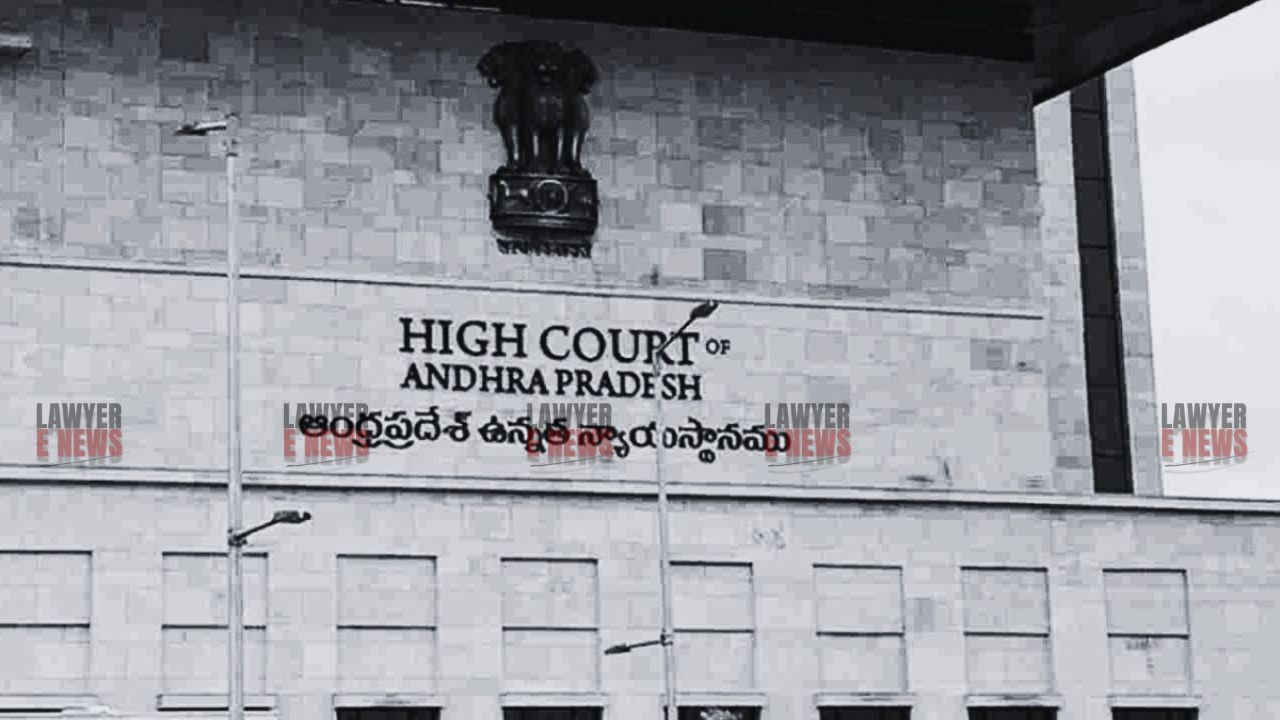
“Privileges of the Legislature are not enclaves shielding those inside from the application of ordinary laws” – declared Justice Gannamaneni Ramakrishna Prasad of the Andhra Pradesh High Court in a landmark ruling dated 4th November 2025, refusing to quash show-cause notices issued by the Assembly’s Privileges Committee against senior journalists of Sakshi newspaper. While dismissing the writ petitions as premature, the Court decisively reiterated that legislative privilege is subject to constitutional limits, and any assertion of privilege must withstand the twin tests of necessity and functional relevance, as evolved by the Supreme Court in Sita Soren v. Union of India.
The case involves the initiation of privilege proceedings over a critical newspaper article titled "Kotlu Karchu… Shikshana Tussu", which had alleged wasteful expenditure by the Andhra Pradesh Legislative Assembly on an aborted MLA training event. The Court’s refusal to intervene at the show-cause stage rests on procedural restraint, but it sends an unequivocal message that press freedom under Article 19(1)(a) remains a constitutional guarantee that cannot be overrun by vague or disproportionate privilege claims.
“Privilege Claimed Must Be Tethered to House’s Collective Functioning”: High Court Reminds Assembly of Supreme Court’s Necessity Test
The Andhra Pradesh High Court invoked the doctrinal clarity laid down by the Supreme Court in Sita Soren v. Union of India (2024) 5 SCC 629, emphasising that:
“The assertion of a privilege... would be governed by a two-fold test. First, the privilege claimed has to be tethered to the collective functioning of the House, and second, its necessity must bear a functional relationship to the discharge of the essential duties of a legislator.”
Applying this framework, the Court held that the Sakshi news article—while critical of administrative decisions relating to a failed MLA training programme—did not directly impact legislative proceedings, nor did it name or defame any legislator. The criticism was directed at alleged inefficiencies and wasteful public expenditure, falling well within the domain of journalistic scrutiny and public interest reporting.
Nevertheless, the Court concluded that it was premature to intervene when only a notice had been issued and no final determination had been made by the Privileges Committee or the Legislative Assembly. The Court said:
“The present stage is only where show cause notices have been issued... seeking explanation from the writ petitioners.”
“Judicial Review of Legislative Privileges is Permissible, But Not at Threshold Stage”: Court Reiterates Constitutional Balance Between Article 194 and Article 19(1)(a)
In a careful balancing of constitutional principles, the High Court reaffirmed that decisions of State Legislatures under Article 194 affecting third parties are not immune from judicial review, especially where they implicate fundamental rights like freedom of speech and expression. The Court clarified that while Articles 212 and 194 confer autonomy to the legislature, they do not oust judicial review in cases of jurisdictional error, mala fide action, or violation of constitutional safeguards.
Justice G.R. Prasad observed:
“Privileges of the Legislature shall also conform to the ‘rule of law’ in very much the same manner as it applies to the common man… The Constitution of India is the bulwark for the common man against any arbitrary or illegal action by any of the organs of the State.”
However, in the present case, since the process was at the initial stage of eliciting responses from the journalists, the Court declined to step in, citing the procedural framework outlined in Ajit Mohan v. Legislative Assembly, NCT of Delhi and Facebook India (2022) 3 SCC 529, where the Supreme Court cautioned High Courts against premature interference in legislative privilege proceedings.
“Pending Supreme Court Reference No Ground to Stall Legislative Proceedings”: High Court Rejects Plea to Wait for N. Ravi Case Outcome
The petitioners had urged the Court to defer the proceedings, citing the pendency of N. Ravi v. Speaker, Tamil Nadu Legislative Assembly, a Constitution Bench matter concerning the interplay between Article 194 and Article 19(1)(a). Rejecting this argument, the Andhra Pradesh High Court relied on Union Territory of Ladakh v. J&K National Conference (2023 SCC OnLine SC 1140), holding:
“Courts cannot defer decisions merely because a constitutional reference is pending before the Hon’ble Supreme Court.”
This reasoning reflects the judiciary's commitment to decisional autonomy and the principle that litigation must proceed on settled law unless and until overturned by a higher court.
“Press Freedom Not Antagonistic to Legislative Authority – But Criticism Alone Not Breach of Privilege”
The Court made it clear that the mere act of publishing an editorially critical news item does not automatically amount to a breach of legislative privilege. Referring to precedents including Raja Ram Pal v. Lok Sabha, Justice (Retd.) Markandey Katju v. Lok Sabha, and Kalpana Mehta v. Union of India, the Court emphasized that the privileges of the legislature are functional, not ornamental:
“Privileges are not a mark of status which makes legislators stand on an unequal pedestal… The lawmakers are subject to the same law that the law-making body enacts for the people it governs and claims to represent.”
The Court reaffirmed that unless the actions of a citizen “interfere with the fundamental functioning of the House,” there can be no justification for invoking privilege proceedings.
Writ Petitions Dismissed as Premature – Committee Directed to Apply Supreme Court's Twin Tests
Ultimately, while declining to quash the privilege notices at this stage, the Andhra Pradesh High Court issued a strong constitutional caution. It placed the onus squarely on the Privileges Committee and the Legislative Assembly to evaluate the matter strictly in line with the constitutional principles and the two-fold necessity test enshrined in Sita Soren.
“This Court reposes absolute confidence in the wisdom of the Privileges Committee as well as the House… in keeping with the settled law and the salutary constitutional principles.”
The ruling is a significant reaffirmation that freedom of the press cannot be chilled by premature or excessive invocation of legislative privilege, and that constitutional courts remain vigilant against such misuse—while also respecting procedural autonomy until final decisions are made.
Date of Decision: 04 November 2025