-
by sayum
04 August 2026 9:39 AM








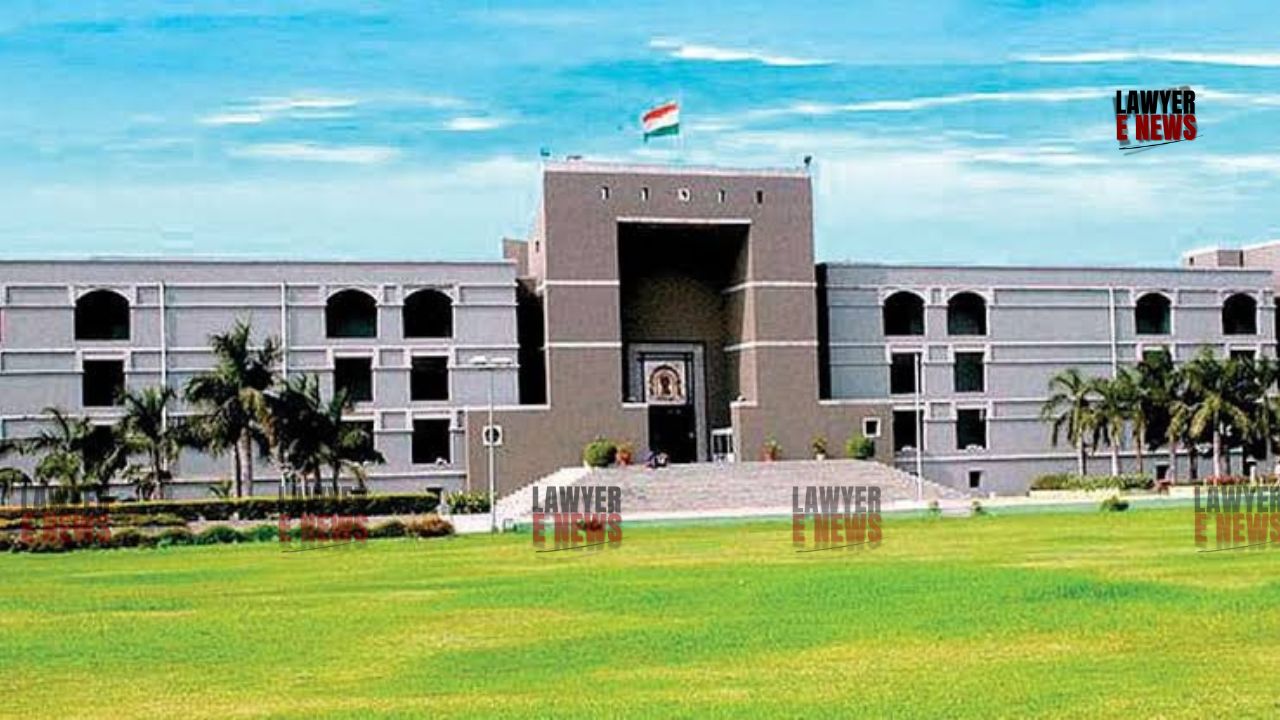
“Only Land Occupied by a Completed Building Can Claim Exemption – Mere Commencement of Construction Is Insufficient”:- In a landmark decision Madras High Court allowed three wealth tax appeals filed by the Revenue against a Chennai-based infrastructure company that sought exemption for urban land under the Wealth Tax Act, 1957 on the ground that construction had commenced. The Division Bench of Justices R. Suresh Kumar and C. Saravanan held that exemption from wealth tax is available only when the building is fully constructed, not when it is merely under construction.
The primary issue before the Court was whether a plot of urban land, on which a building is under construction, qualifies as "land occupied by a building" and thereby falls outside the purview of taxable "assets" under Section 2(ea) of the Wealth Tax Act. The Assessee had argued that pile foundations and early construction activity between 2006 and 2007 converted the land from “vacant urban land” to “business asset,” thereby attracting exemption.
The Court squarely rejected the Assessee’s argument and clarified that: “The expression ‘has been constructed’ obviously cannot include within its sweep a building which is not fully constructed or is still under construction.”
In doing so, the Court relied heavily on the precedent set by the Hon’ble Supreme Court in Giridhar G. Yadalam v. Commissioner of Wealth Tax [(2015) 17 SCC 664], where the apex court overturned the earlier Madras High Court decision in Rohini Hotels (Madras) Ltd.—a decision that the Income Tax Appellate Tribunal (ITAT) had relied upon to allow the Assessee’s appeals.
The Assessee, M/s. Express Infrastructure (P) Ltd., acquired 9.59 acres of land in Chennai from its group company for ₹225 Crores in March 2007. The company began construction of a large commercial complex—Express Avenue Mall—and completed it in 2010. For the relevant assessment years 2007-08, 2008-09, and 2009-10, the Assessee claimed that the land could not be assessed under wealth tax as it was “under productive use” and therefore exempt under the exclusion clauses in Explanation 1(b) to Section 2(ea) of the Act.
The Assessing Officer disagreed, treating the land as urban vacant land and raising a wealth tax demand. The ITAT, however, accepted the Assessee's plea, citing the now-overruled Rohini Hotels case.
The Division Bench firmly criticized the ITAT’s orders, stating: “The Tribunal’s reliance on the Madras High Court’s decision in Rohini Hotels is misplaced as that judgment has since been reversed by the Hon’ble Supreme Court in Giridhar G. Yadalam’s case.”
Further, the Court quoted from the Supreme Court’s ruling: “If the contention of the Assessee is accepted, then even laying one brick would entitle a claim of exemption… Such an interpretation is far-fetched and would result in absurd consequences.”
Rejecting the argument that the land was held for “industrial purposes” or “stock-in-trade,” the Court cited the strict interpretative approach mandated by the Supreme Court in Dilip Kumar & Co.: “Any ambiguity in an exemption clause must be construed in favour of the Revenue. The burden is on the assessee to establish that they squarely fall within the exemption.”
The Bench held that a building “under construction” cannot be treated as one that “has been constructed” and thus the land in question remains taxable.
The High Court set aside the ITAT’s orders and ruled in favour of the Revenue. All three questions of law framed in the appeals were answered in the Revenue’s favour. The Court held: “Since the Rohini Hotels case has been overruled by the Supreme Court, the Tribunal’s decisions relying on it have no legs to stand.”
This judgment settles the legal position that for purposes of exemption under Section 2(ea) of the Wealth Tax Act, only land occupied by a fully constructed building qualifies. Mere commencement of construction or foundational work does not suffice. The ruling underscores the binding effect of Supreme Court precedent and affirms that tax exemptions cannot be granted based on purposive or liberal interpretation when specific conditions are not met.
Date of Decision: April 29, 2025