-
by sayum
04 August 2026 6:31 AM







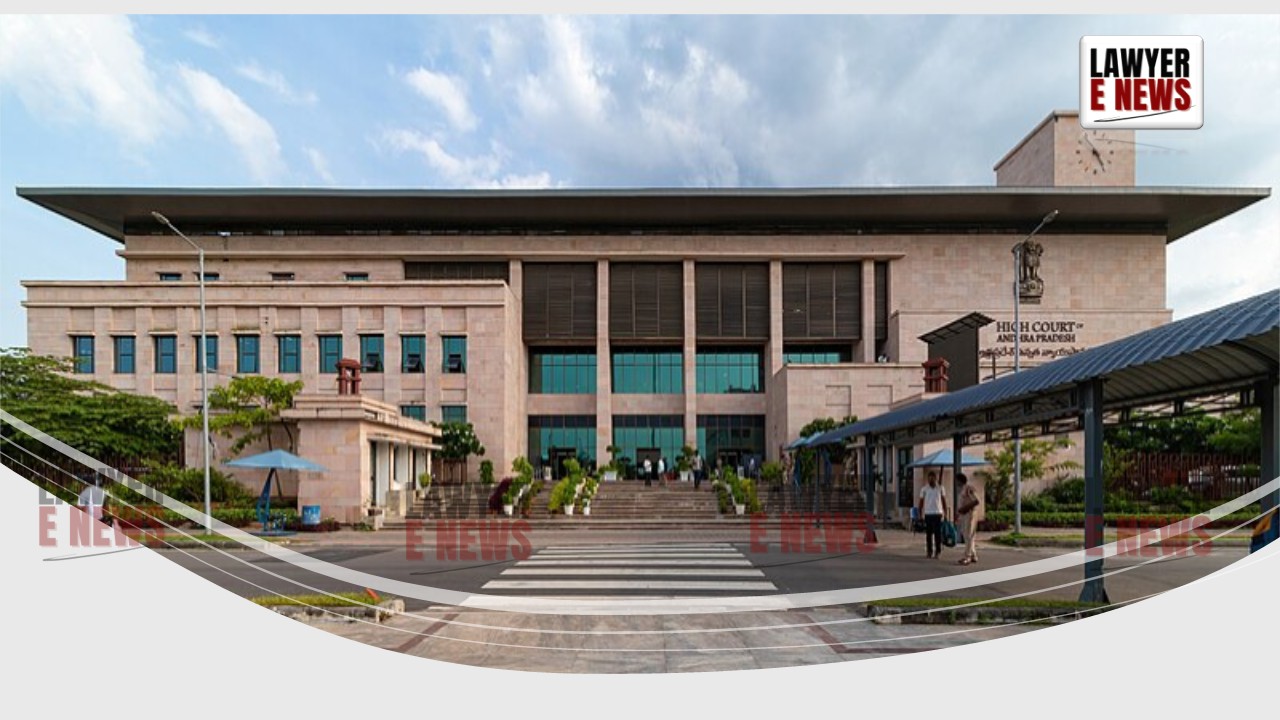
"The Land Cannot Be Restored Simply Because the Project Was Abandoned After Acquisition": Andhra Pradesh at Amaravati pronounced a significant ruling regarding rights over land acquired under the Land Acquisition Act, 1894. Justice R. Raghunandan Rao held that once land is acquired under the Act of 1894, even if not utilized for the specific purpose intended, it cannot be reverted back to the original landowner. The Court dismissed the writ petition, reaffirming settled law and granting liberty to the petitioner to pursue remedies under the Land Acquisition Act itself.
The petitioner, Kokku Vasantha, was the owner of 0.92 acres of agricultural land in Kristapatnam Village, Nellore District. The land was notified for acquisition for establishing an Ultra Mega Power Project, under the Land Acquisition Act, 1894. Over a series of years, various acquisition notifications were issued, withdrawn, and challenged in multiple rounds of litigation before the High Court and Supreme Court.
Notably, although the acquisition process was ultimately upheld by the Hon'ble Supreme Court on December 14, 2009, the intended project was later allegedly abandoned. The petitioner, refusing both the alternative land and compensation offered, sought restoration of her original land, arguing that the purpose of acquisition had failed.
The core legal issue was whether a landowner could seek restoration of their land where the government failed to use it for the stated public purpose after acquisition.
Justice R. Raghunandan Rao pointedly observed: "There is no provision under the Land Acquisition Act, 1894, for the return of land on account of non-use for the purpose for which it was acquired."
The Court acknowledged the petitioner’s grievance that no compensation had been received and that the land remained unused. However, it emphasized that the applicable law — being the 1894 Act and not the 2013 Act — did not contemplate restoration in such cases.
Citing a catena of precedents including Gulam Mustafa v. State of Maharashtra (1976 AIR 448), State of Kerala v. M. Bhaskaran Pillai [(1997) 5 SCC 432], and Leela Wanti v. State of Haryana [AIR 2012 SC 515], the Court reaffirmed that: "Once land vests in the State free from all encumbrances, it cannot be divested merely because the public purpose is not served."
The petitioner relied heavily on Sri Kedar Nath Yadav v. State of West Bengal, contending that non-utilization entitled her to restitution. However, the Court distinguished the present case based on the governing statute and held that the relief under Kedar Nath Yadav could not be extended to acquisitions under the 1894 Act.
Regarding the issue of compensation, the Court noted that:
"The compensation payable under the award has already been deposited before the civil court, and any further claim for enhancement or damages can be agitated before the reference court."
Thus, it was made clear that remedies for grievances like inadequate compensation must be pursued within the framework of the Land Acquisition Act, not via writ jurisdiction for recovery of land.
The Court concluded: "This writ petition is dismissed with liberty to the petitioner to avail of the remedies under the Land Acquisition Act, 1894."
The Andhra Pradesh High Court’s decision strengthens the principle that acquisition under the Land Acquisition Act, 1894, once complete, extinguishes the original landowner’s title permanently, irrespective of subsequent use or non-use. It upholds government sovereignty over vested lands and channels grievances solely through the statutory mechanisms of compensation enhancement.
Date of Decision: 25 April 2025