-
by sayum
28 August 2026 2:11 PM







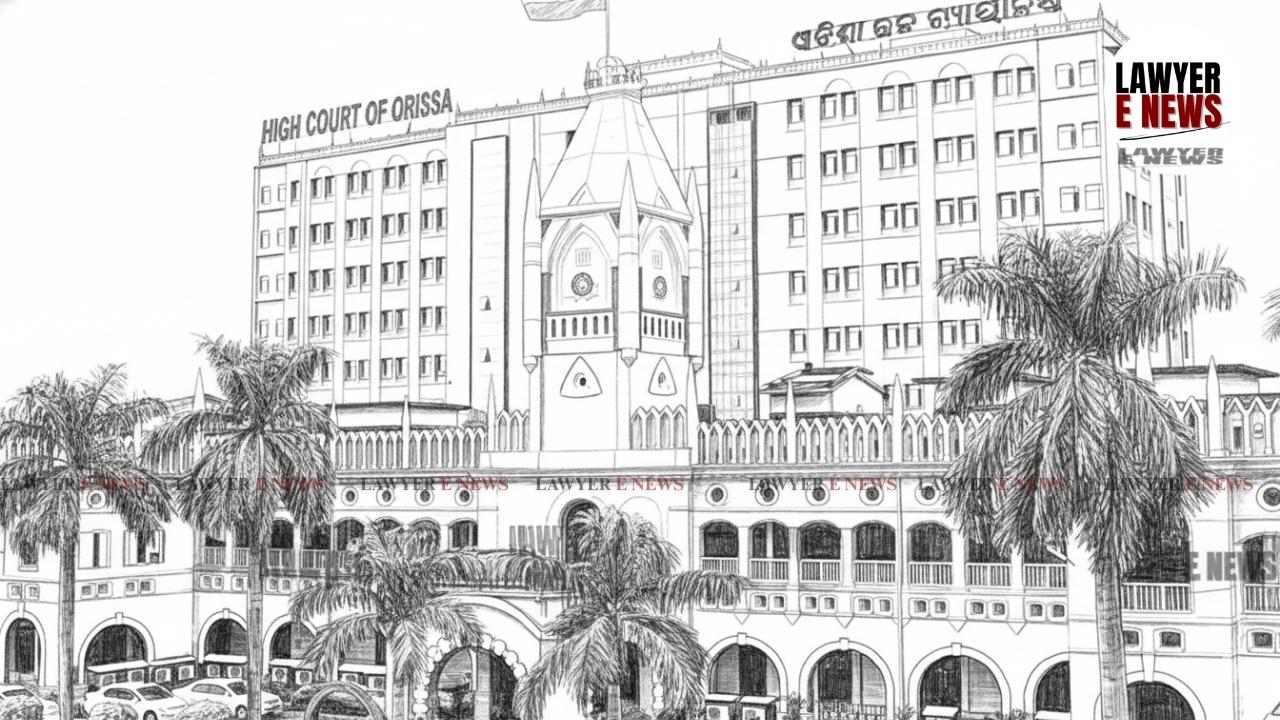
"Liberty of a person cannot be taken away without proper procedure or it should not be dealt with lightly because custody brings lot of harassment and inconvenience to such persons deprived of the liberty," Orissa High Court, in a significant ruling, held that a Magistrate should not mechanically issue a Non-Bailable Warrant of Arrest (NBWA) against an accused who fails to appear on a scheduled date, especially when they are already out on bail.
A vacation bench of Justice G. Satapathy observed that the liberty of an individual is a precious right that cannot be compromised without following due process or demonstrating compelling reasons.
The court was dealing with a petition filed under Section 528 of the Bharatiya Nagarik Suraksha Sanhita, 2023 (BNSS), challenging an order of the JMFC, Lakhanpur. The trial court had issued an NBWA against the petitioner, Trinath Guru, simply because he was found absent upon repeated calls on the date fixed for his appearance. The High Court noted that such a "straight away" approach to issuing warrants is legally unsustainable.
The petitioner, Trinath Guru, along with another individual, was an accused in a criminal proceeding where he had already been granted bail on December 23, 2025. On May 6, 2026, when the matter was put up for appearance, the petitioner remained absent despite the service of summons. Consequently, the JMFC, Lakhanpur, issued an NBWA against him and other absent accused persons for their production before the court.
The primary question before the court was whether a Magistrate is justified in issuing a Non-Bailable Warrant in the first instance of non-appearance of an accused who is already on bail. The court also examined the scope of discretionary powers vested in the trial court under the provisions of the BNSS regarding the personal attendance of the accused.
Magistrate Has Discretion To Dispense With Personal Attendance
The Court highlighted that Section 355 of the BNSS confers wide discretion upon the trial court to dispense with the personal attendance of the accused during an inquiry or trial. It observed that the issuance of an NBWA is not mandatory even if the accused is not present on the fixed date. The Magistrate has the power to proceed in the absence of the accused or direct attendance at a subsequent stage.
Bailable Warrants Should Generally Be Issued In The First Instance
Relying on the statutory framework, the High Court pointed out that Section 482(3) of the BNSS suggests that if a Magistrate decides a warrant is necessary for appearance, a bailable warrant (BW) should ideally be issued in the first instance. The bench emphasized that the trial court must exercise its discretion judiciously rather than resorting to the most extreme measure of a non-bailable warrant immediately.
"The impugned order does not disclose what was the necessity to issue NBWA against the petitioner... the Magistrate or the concerned Court may either issue notice to the bailer(s) or issue BW against the accused person."
NBWA Without Compelling Reasons Violates Personal Liberty
Justice Satapathy noted that the impugned order failed to reveal any "compelling reason" to justify the issuance of an NBWA. The Court underscored that since the petitioner was already on bail, the law is clear that such bail continues until it is formally cancelled or the granting order is set aside. Issuing an NBWA without attempting less intrusive measures like notices to sureties or bailable warrants is improper.
Court Criticises Straight Away Issuance of NBWA
The Court observed that the learned JMFC, Lakhanpur, had "straight away" issued the NBWA against the petitioner and others without resorting to the prescribed procedural safeguards. It reiterated that custody causes significant harassment and inconvenience, and therefore, procedures depriving a person of their liberty must be strictly and fairly followed.
"Law is very clear that bail once granted should continue till it is cancelled or order granting bail is set-aside."
Lack Of Notice To Sureties Renders Order Legally Infirm
Additionally, the bench found that the trial court's order did not mention any issuance of notice to the bailors/sureties before jumping to the issuance of an arrest warrant. Taking into account the ramifications of the impugned order and the need to secure the ends of justice, the Court concluded that the Magistrate's order could not withstand legal scrutiny.
In the final order, the High Court quashed the order dated May 6, 2026, specifically regarding petitioner Trinath Guru. The Court allowed him to continue on his previous bail, with the direction that he must regularize the proceedings by appearing before the trial court on the next scheduled date.
Date of Decision: 09 June 2026