
-
by sayum
25 August 2026 12:32 PM







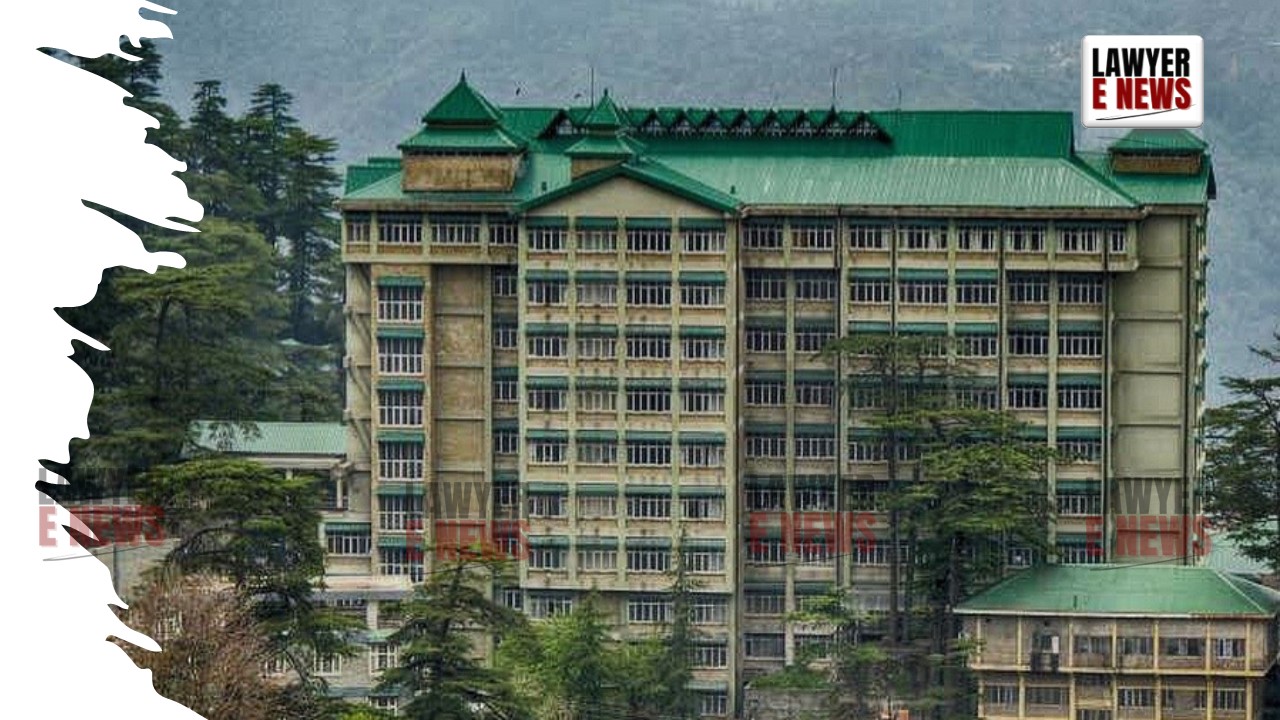
“Sanctity of Status Quo Must Be Preserved” - In a strong affirmation of judicial discipline in civil proceedings, the Himachal Pradesh High Court modified an appellate order that had effectively rewarded litigants for breaching a trial court’s injunction. Justice Ajay Mohan Goel held that ongoing construction in violation of a status quo order cannot be retrospectively legitimized, and parties cannot benefit from their own contemptuous acts.
The ruling came in CMPMO Nos. 252 and 331 of 2023, arising out of a civil dispute over joint land at Kandaghat. The plaintiffs, Umesh Kumar and another, had originally obtained an interim injunction on 30.12.2019 under Order 39 Rules 1 and 2 CPC, restraining both sides from altering the nature of the suit land, including construction or alienation. However, the defendants (respondents in CMPMO 252/2023) continued construction despite the order.
“Construction in Violation of Court Order Cannot Be Protected by Pleas of Equity or Investment”
When the plaintiffs filed an application under Order 39 Rule 2-A CPC for violation of the injunction, a Local Commissioner was appointed. His report confirmed active construction by the defendants, who had claimed they were building on their own share of joint land.
Rather than enforcing the injunction, the Appellate Court, in its order dated 24.03.2023, took the view that since the construction was already nearing completion, it would prejudice the defendants to stop them. It modified the injunction to allow them to finish the structure “at their own risk and peril,” relying on photographs and the Local Commissioner’s findings.
The High Court, however, sharply disagreed:
“Once an injunction order was granted and the Local Commissioner confirmed that it was being flouted, the Appellate Court erred in using that very report to justify the breach. Such a course rewards defiance and dilutes the authority of interim orders.”
“Equity Does Not Favour the Wrongdoer” — Construction Rights Cannot Override Status Quo
The High Court underscored that the concept of equity invoked by the appellate court was misapplied. While the defendants claimed they had invested substantial sums in construction and were only completing an existing structure, the Court emphasized:
“By permitting construction in the name of equity, the Appellate Court effectively condoned the breach of an existing injunction. That is not permissible in law.”
Justice Goel reaffirmed the principle that equity must be clean-handed and cannot support parties who knowingly act in violation of judicial orders.
Status Quo Restored—Respondents Barred From Further Construction, Sale or Encumbrance
In exercise of its supervisory jurisdiction, the High Court modified the appellate order and reinstated the original trial court’s interim directions. The operative portion of the order reads:
“The respondents shall not carry out any further construction on the suit land, nor shall they alienate or create any charge over it during the pendency of the suit or without leave of the Trial Court.”
The Court directed all parties to maintain status quo qua the nature and possession of the suit land and extended the effect of its interim order dated 26.05.2023.
Violation of Court Orders Cannot Be Cured by Subsequent Judicial Leniency
This judgment reinforces a crucial message in civil litigation: “The sanctity of interim orders must be preserved. Any party defying such orders cannot seek refuge under claims of financial loss, equity, or investment.”
By setting aside the lenient approach of the appellate court, the High Court has sent a clear signal that construction carried out in defiance of court orders cannot be validated through judicial discretion.
Date of Decision: 28 October 2025





