-
by sayum
28 August 2026 10:07 AM








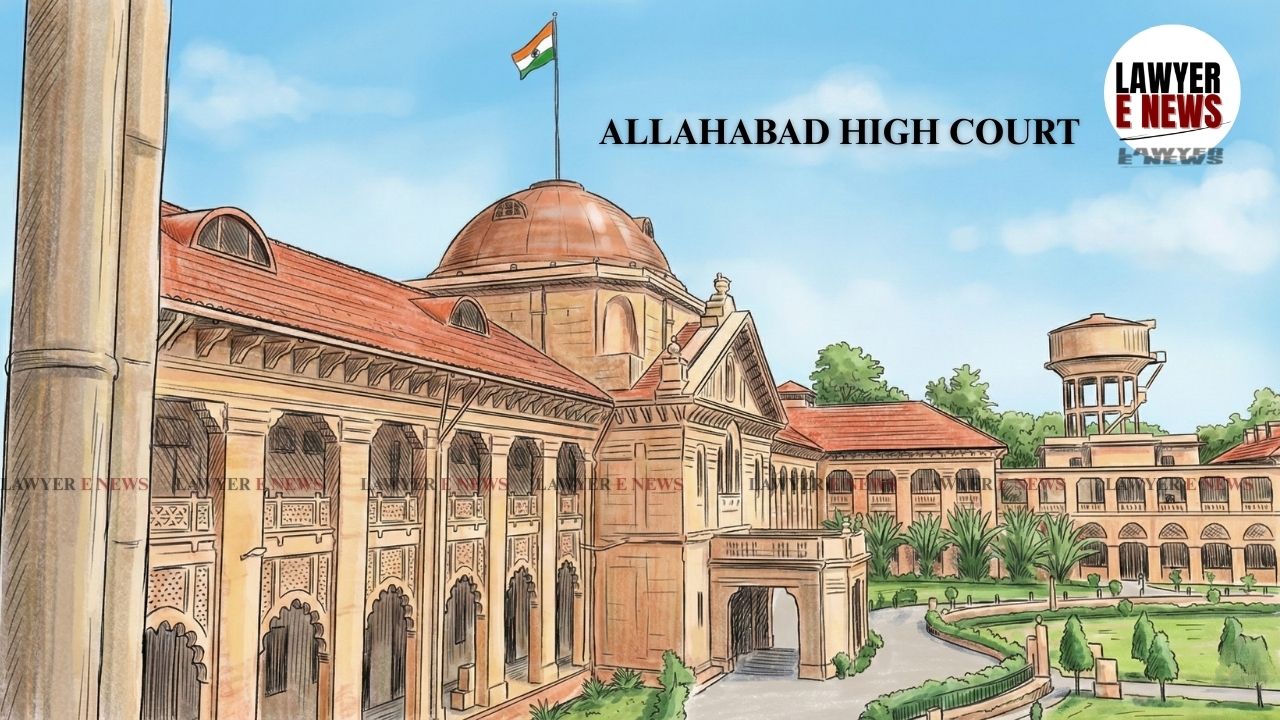
“A recorded tenure-holder having prima facie title can hardly be directed to approach the revenue court for seeking relief for cancellation of a void document” — Allahabad High Court (Lucknow Bench) dismissed Second Appeal and affirming that the widow of a recorded tenure-holder was legally entitled to approach the civil court for cancellation of a sale deed that was allegedly executed by her husband under suspicious circumstances. Justice Rajnish Kumar held that civil court jurisdiction is not barred under Section 229-B of the U.P. Zamindari Abolition and Land Reforms Act where the plaintiff has a prima facie title and alleges that the sale deed is the product of fraud, impersonation, and lack of consideration.
The Court emphasized, “Where a person or their predecessor-in-interest was a recorded tenure-holder and challenges a transaction on the ground of fraud, coercion or impersonation, such a suit for cancellation can be very well entertained by the civil court.”
“A woman deprived of everything, including her home, on the basis of a dubious sale deed — this Court finds no justification for such injustice”
The case arose from a suit filed in 1992 by Pran Dei, widow of Ram Dev, challenging the sale of his agricultural land to Ram Baran and Radhey Shyam through a deed allegedly executed in April 1987. She asserted that her husband, aged around 80 years at the time, was mentally frail and incapable of understanding or executing such a transaction. The sale was claimed to have been made without any need, without consideration, and without her knowledge. After receiving certified copies of the sale deed, she filed the suit alleging fraud and impersonation.
The trial court, and later the appellate court, found that Ram Dev was indeed the recorded tenure-holder, and after his death, Pran Dei became his sole legal heir, given they had no sons. The Courts found that the sale deed was not executed voluntarily, and its circumstances were shrouded in suspicion.
“The purchaser’s own brother denied execution — sale consideration story collapses under its own weight”
What fortified the Court’s decision was the testimony of Radhey Shyam, one of the purported purchasers and brother of the appellant. He testified that he never paid any money, never got any deed executed, and that Ram Baran had in fact asked him to get someone to impersonate Ram Dev for the execution of the deed. This testimony turned the entire defense case on its head.
Justice Rajnish Kumar noted, “The very person in whose favour the sale deed is alleged to have been executed turned hostile and corroborated the plaintiff’s case of fraud. His evidence firmly dislodges the appellant’s claim of lawful purchase.”
The Court also found the claim that Ram Dev would sell his entire estate without leaving anything for his wife to be implausible: “It is not believable that a husband would not leave anything or make any arrangement for the livelihood of his wife, unless there is any cogent reason, which could not be shown or proved.”
“Sale deed based on impersonation cannot survive — fraud vitiates even the most solemn acts”
The High Court relied heavily on authoritative precedents including:
• Ram Padarath v. II ADJ Sultanpur, where it was held that “suit or action for cancellation of void document will generally lie in the civil court”
• Shri Ram v. 1st ADJ (2001) 3 SCC 24, affirming that a suit for cancellation on grounds of fraud and impersonation falls squarely within civil jurisdiction
• Jai Ram Singh v. 1st ADJ Bijnore, reiterating that the civil court can grant cancellation if the plaintiff or their predecessor was a recorded tenure-holder immediately before the sale
The Court observed that all these conditions were satisfied by Pran Dei, and there was no necessity to redirect her to the revenue court under Section 229-B.
“Concurrent findings on facts supported by evidence — no perversity shown, appeal fails”
Dismissing the appeal, Justice Rajnish Kumar reiterated the principles governing second appeal under Section 100 CPC, noting that unless there is perversity or the findings are based on no evidence, the High Court cannot interfere with concurrent decisions of the lower courts.
Quoting from Shivah Balram Haibatti v. Avinash Pawar, the Court reminded:
“The findings being concurrent findings of fact were binding on the High Court and, therefore, the second appeal should have been dismissed in limine.”
Final Word: “Fraud, impersonation, and denial of consideration proven — sale deed rightly cancelled by civil court”
Finding no merit in the challenge to the trial and appellate decisions, the Court ruled:
“The substantial question of law framed does not arise in this case. The Second Appeal has been filed on misconceived and baseless grounds, which lacks merit and is liable to be dismissed.”
Date of Decision: 21 April 2025