-
by sayum
26 August 2026 12:18 PM







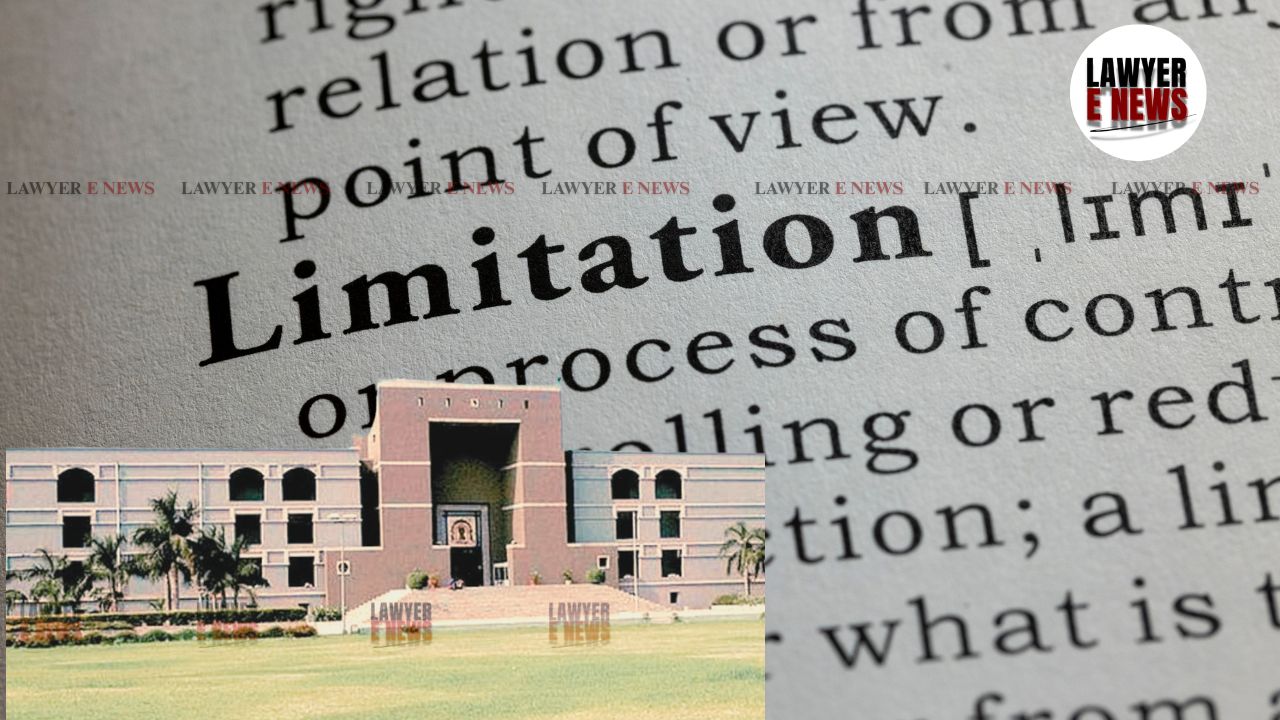
“Mere Allegation of 'Fraud' Cannot Revive Time-Barred Claims ” — Gujarat High Court filed under Order VII Rule 11 of the Code of Civil Procedure, holding that the Plaintiffs’ suit seeking to annul sale deeds from 2007 and 2014, as well as a consent decree of 2015, was ex facie barred by limitation, failed to disclose any real cause of action, and constituted a classic case of clever pleading designed to circumvent statutory bars. The Court set aside the Trial Court’s refusal to reject the Plaint and summarily dismissed the Plaint as barred by law.
High Court Slams “Artful Drafting” to Overcome Limitation Bar
Delivering a detailed and scathing judgment, Justice Sanjeev J. Thaker held that the Plaintiffs’ attempt to challenge transactions they were fully aware of as far back as 2012 by cloaking the suit in vague allegations of “fraud” amounted to a misuse of judicial process. The Court applied the well-settled principle that “a suit which discloses no cause of action or is barred by law should be dismissed at the threshold”, citing Dahiben v. Arvindbhai Kalyanji Bhanusali (2020) 7 SCC 366 and T. Arivandandam v. T.V. Satyapal (1977) 4 SCC 467.
Plaintiffs Challenge Old Sale Deeds and Consent Decree Citing Alleged Fraud
The Plaintiffs had filed Special Civil Suit No. 235 of 2017, seeking to declare a 2007 sale deed, a 2014 sale deed, and a 2015 consent decree as void on grounds of fraud and misrepresentation. They also claimed 4/5th ownership rights in the ancestral property and sought permanent injunction. The 2007 sale was executed by Defendant No.1, the Plaintiffs' own brother and son, acting under a Power of Attorney given by the Plaintiffs. Notably, the Plaintiffs had not challenged this Power of Attorney, nor the 2014 sale deed, in which they appeared as confirming parties.
The Trial Court rejected the Defendants' application under Order VII Rule 11, stating that the issue required evidence and could not be decided at the preliminary stage. Aggrieved, the Defendants approached the High Court in revision.
Limitation: When Did the Right to Sue Accrue?
The Court unequivocally held that the suit was barred under Article 56 of the Limitation Act, which provides a three-year limitation from the date the Plaintiff becomes aware of the impugned instrument.
“The Plaint reveals that the Plaintiffs had knowledge of the sale deed as early as 2012, and even issued a legal notice in that year. The suit filed in 2017 is clearly beyond the limitation period.”
The Court emphasized that the right to sue accrued in 2007 when the sale deed was registered, or at the latest by 2012, when the Plaintiffs acknowledged their knowledge of the transaction.
Quoting from Khatri Hotels Pvt. Ltd. v. Union of India (2011) 9 SCC 126, the Court noted:
“The period of limitation begins to run from the date when the right to sue first accrues. Successive violations do not give rise to a fresh cause.”
Consent Decree Challenge by Non-Party: Not Maintainable in a Separate Suit
The Plaintiffs also sought to set aside the 2015 consent decree passed in Civil Suit No.381/2013, even though they were not parties when the decree was passed.
Relying on the Supreme Court’s decision in Sakina Sultanali Sunesra v. Shia Imami Ismaili Momin Jamat Samaj, (2025 AIJEL-SC-75165), the Court held:
“A separate suit to challenge a consent decree by a person who was not a party thereto is not maintainable. The only remedy lies under Section 96(1) CPC by way of an appeal with leave or by review before the same Court.”
Hence, this relief was barred by law, and the Plaint was rightly assailed under Order VII Rule 11(d) CPC.
Fraud Allegations: Lack of Particulars Defeats Plea Under Order VI Rule 4
The Plaintiffs claimed they were misled into signing the 2014 sale deed as confirming parties under the belief that it was for cancellation of the earlier sale.
The Court decisively rejected this: “Use of the word ‘fraud’ without concrete particulars cannot extend limitation or create a cause of action. Vague allegations unsupported by facts do not meet the standards of pleading under Order VI Rule 4 CPC.”
Quoting from Jaman Shamji Fadadu v. Sadik Mahmad Sidik, 2023 (3) GLH 441, the Court reiterated:
“Merely by using the word ‘fraud’, Plaintiffs cannot camouflage a time-barred suit. Clever drafting cannot cure fatal legal defects.”
Order VII Rule 11: “Illusory Cause of Action” Must Be Rejected at Threshold
On the larger legal principle, the Court stressed that courts must exercise powers under Order VII Rule 11(a) & (d) to reject Plaints that disclose no real cause of action or are barred by law.
“If clever drafting has created the illusion of a cause of action, nip it in the bud at the first hearing,” quoted the Court from T. Arivandandam v. T.V. Satyapal.
The Court also noted the Plaintiffs' active participation in the sale transactions, including appearing before the Sub-Registrar in 2014, and not challenging the Power of Attorney, as clear evidence that their belated claim was nothing but a strategic afterthought.
Suit Hopelessly Barred – Plaint Rejected Under Order VII Rule 11
In conclusion, the Court allowed the revision application and set aside the Trial Court’s order dated 04.07.2024. The Plaint in Special Civil Suit No.235 of 2017 was ordered to be rejected in its entirety, and the request for stay of the order was also declined.
“The plaint fails to disclose any real or legally sustainable cause of action and stands squarely barred by law. It deserves to be rejected at the threshold, sparing the parties unnecessary litigation and safeguarding the sanctity of judicial time.”
The judgment serves as a firm reiteration of the principle that courts must act swiftly to prevent vexatious litigation, especially when the Plaint itself reveals fatal legal bars.
D.D. 16 October 2025