-
by sayum
25 August 2026 12:32 PM







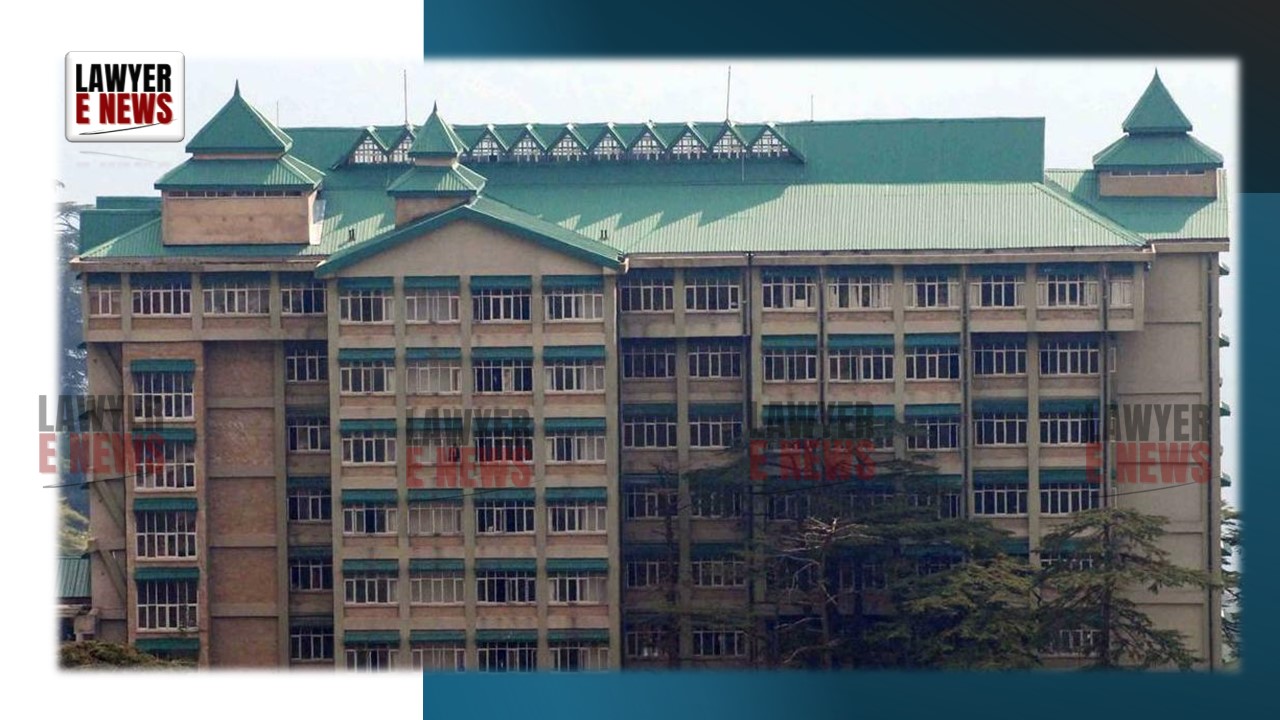
“Where there is doubt about identity, the benefit must go to the accused” — In a significant reaffirmation of the evidentiary principle that dock identification alone is insufficient when the accused is a stranger, the Himachal Pradesh High Court dismissed the State’s appeal against the acquittal of Vikash @ Sonu, who was charged in a hit-and-run motorcycle accident under Sections 279 and 337 IPC and Sections 181 and 196 of the Motor Vehicles Act.
Justice Rakesh Kainthla, while hearing Criminal Appeal No. 416 of 2012, held that no reliable evidence had been presented to establish that the accused was the rider of the offending motorcycle, and that the Trial Court’s decision to acquit was reasonable and well-founded.
“No Test Identification Parade? Court Finds Prosecution’s Case Crumbles on Identity”
“The identification of the accused made in the Court for the first time after the incident was not of much value” – Trial Court, affirmed by High Court.
The core weakness in the prosecution’s case was the failure to conduct a Test Identification Parade (TIP), despite the fact that the accused was not previously known to any of the witnesses.
Darshan Kumar (PW1), the informant, explicitly stated in his statement (Ex. PW1/A) that he could identify the motorcyclist if shown to him. Yet, the Investigating Officer (PW8) failed to hold a TIP and could not explain how the accused was connected to the incident.
Justice Kainthla cited authoritative decisions, including Subhash Chand v. State of Rajasthan and P. Sasikumar v. State of T.N., reiterating:
“The investigation lacked rhythm… it must explain step by step how the accused was identified. Here, there is no such chain of events.”
“Dock Identification Is Not Always Enough—Especially When Accused Was a Stranger”
“It is well settled that dock identification alone is a weak piece of evidence, especially when there’s a long delay and no prior TIP” – Supreme Court in P. Sasikumar v. State of T.N.
The Court expressed serious reservations about relying on in-court identification alone, particularly where visibility was low (incident occurred at 6:45 PM), the accused was unknown, and witnesses had only a fleeting glance. The court drew from Halsbury’s Laws of England and Cross on Evidence, noting:
“It is undesirable that a witness should be asked to identify the defendant for the first time in the dock at his trial.”
“Even friends and relatives have misidentified people—how can a stranger’s fleeting view be reliable without corroboration?”
“Witnesses' Testimony Tainted by Delay, Darkness, and Lack of Prior Acquaintance”
Witness Prem Chand (PW2) admitted that it was dark, and that the accused had run away from the spot immediately after the accident. He offered no explanation as to how he could identify the rider in those conditions.
Other witnesses, such as Sanjeev Kumar (PW6) and Virender Kumar (PW10), also failed to mention the accused’s name in their earlier statements and were found to be related to the informant or from the same community, raising questions of bias. One was even declared hostile and cross-examined by the prosecution.
“When key witnesses are either hostile or make improvements in Court, their testimony becomes unreliable,” noted Justice Kainthla.
“Investigative Oversight: IO Failed to Link Accused to the Scene”
Despite the seizure of the motorcycle and the injuries to the victims being medically confirmed, no explanation was provided as to how Vikash @ Sonu was identified as the rider.
The High Court cited Subhash Chand, stating:
“The IO must explain how the accused was picked up—without this, even genuine investigation becomes suspect.”
“Acquittal Is a Possible and Plausible View—No Ground for Appellate Interference”
Relying on Surendra Singh v. State of Uttarakhand and Rajesh Prasad v. State of Bihar, the Court reiterated the limited scope for interference in appeals against acquittal:
“The appellate court cannot substitute its view merely because another view is possible. Unless the acquittal is perverse, it must stand.”
Here, Justice Kainthla concluded:
“The Trial Court’s finding that the identity of the accused was not proved is reasonable. There is no other credible evidence to prove the accused was driving the motorcycle.”
Acquittal Affirmed, State’s Appeal Dismissed
Finding no perversity or illegality in the Trial Court’s approach and no compelling evidence to overturn the acquittal, the High Court dismissed the State’s appeal.
“The prosecution’s case leaves reasonable doubt, and the accused is entitled to the benefit of such doubt.”
The accused was directed to furnish a personal bond of ₹25,000 under Section 437-A CrPC / Section 481 BNSS for future appearance before the Supreme Court, if necessary.
Date of Decision: 04/11/2025