-
by sayum
28 August 2026 12:24 PM







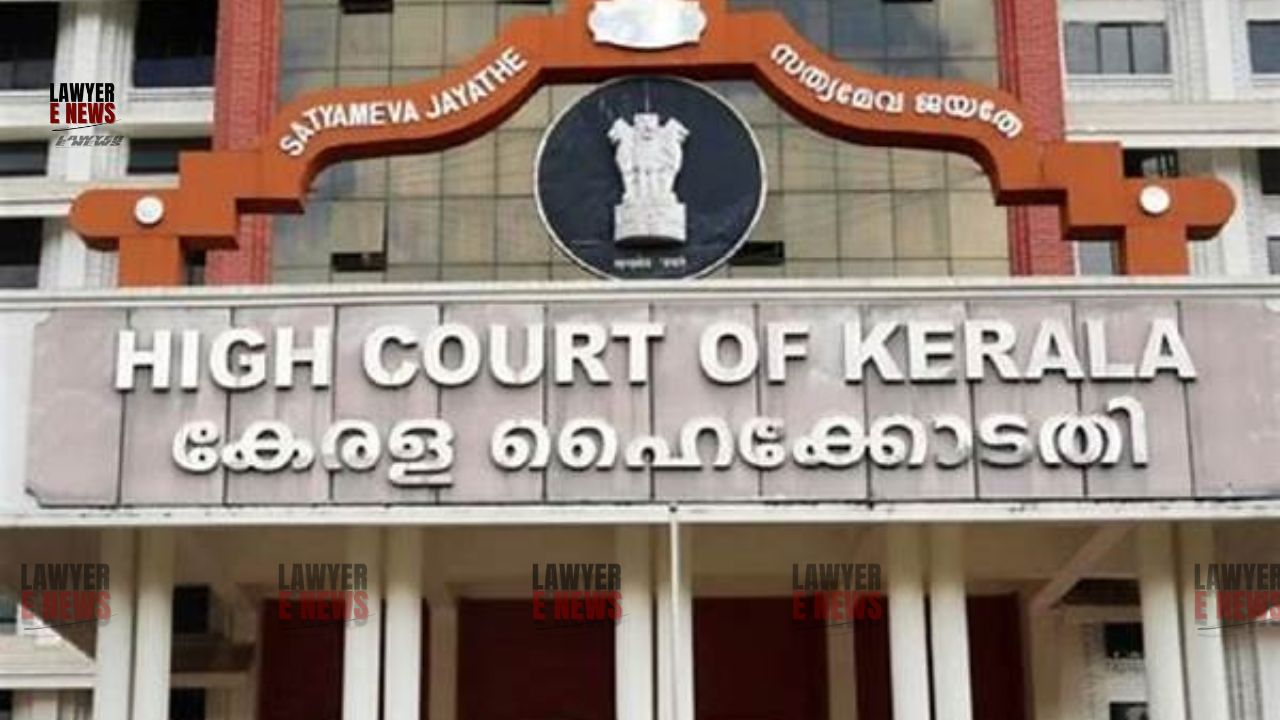
Kerala High Court, in a significant ruling dated June 3, 2026, granted transit anticipatory bail to a man from an inter-faith couple who fled Madhya Pradesh to marry in Kerala, citing a well-founded fear of "honour killing" and inter-state arrest.
A bench of Dr. Justice Kauser Edappagath observed that while the court cannot grant regular pre-arrest bail for crimes registered outside its territorial jurisdiction, it is fully empowered to pass an order of transit bail to protect the personal liberty of the accused.
The case involved two film actors from Madhya Pradesh—a Muslim man and a Hindu woman—who moved to Kerala, got married, and registered their union under the Kerala Registration of Marriage (Common) Rules, 2008. Following their marriage, the woman's father filed a complaint at the Maheshwar Police Station in Khargone, Madhya Pradesh, alleging that the man had kidnapped his daughter. Consequently, an FIR was registered under Section 137(2) of the BNS, with subsequent additions of charges under the Prohibition of Child Marriage Act and the SC/ST (Prevention of Atrocities) Act.
Court Frames Legal Issue Regarding Territorial Jurisdiction
The primary question before the court was whether it could exercise its inherent powers to grant transit anticipatory bail to an applicant apprehending arrest by the police of another state. The court was also called upon to determine if the threat to the applicants' lives, stemming from their inter-faith marriage, justified the grant of such interim protection to allow them to approach the jurisdictional court in Madhya Pradesh.
High Court Relies On Supreme Court's Priya Indoria Precedent
Dealing with the question of jurisdiction, the High Court noted that the legal landscape regarding transit bail has been clarified by the apex court. The bench observed that although a High Court cannot grant final pre-arrest bail in cases where crimes are registered outside its territorial limits, it possesses the power to grant temporary protection.
The Court specifically referred to the Supreme Court's decision in Priya Indoria v. State of Karnataka [(2024) 4 SCC 749]. It noted that this precedent empowers the court to pass an order of transit bail to ensure that the accused is not deprived of the opportunity to seek legal recourse in the appropriate forum due to the threat of immediate arrest in a distant jurisdiction.
Court Analyzes Conflict Between State Claims And Prima Facie Evidence
A major point of contention was the age of the second applicant. While the Madhya Pradesh police and the Additional Solicitor General (ASGI) contended that the woman was a minor and that her birth certificate was forged, the applicants produced an Election ID card and a bank passbook showing her date of birth as January 1, 2008.
The Court observed that the documents produced by the applicants prima facie show that the second applicant is a major. The bench further noted that the woman had sworn an affidavit asserting her majority and stating that she had voluntarily contracted marriage with the first applicant and was residing with him as his wife.
Apprehension Of 'Honour Killing' Renders Transit Bail Necessary
The applicants submitted that they belonged to different religions and feared being subjected to "honour killing" by fundamentalists if they returned to Madhya Pradesh without protection. They argued that they were not in a position to travel and engage counsel in their home state without an order protecting them from arrest.
Protection Of Life And Personal Liberty Paramount
The bench found these apprehensions to be well-founded. It held that the grounds raised for an order of transit bail were reasonable, specifically to avoid a threat to the applicant's life. The court emphasized that the first applicant had successfully satisfied the court regarding his inability to seek anticipatory bail immediately from the jurisdictional court in Madhya Pradesh.
The Court also addressed the ASGI’s submission that the marriage, having been solemnized in a temple between a Muslim and a Hindu, might not be legally valid. The bench noted that regardless of the technical validity of the marriage certificate, the fact that the woman admitted to residing voluntarily with the man substantiated the need for protection against arbitrary inter-state arrest.
Final Directions and Grant of Protection
Disposing of the application filed under Section 482 of the BNSS, the High Court granted the first applicant liberty to approach the jurisdictional court in Madhya Pradesh to seek regular anticipatory bail in accordance with the law. To facilitate this, the Court ordered that the applicant shall not be arrested for a period of one month from the date of the order.
Date of Decision: June 3, 2026