-
by sayum
26 August 2026 12:18 PM







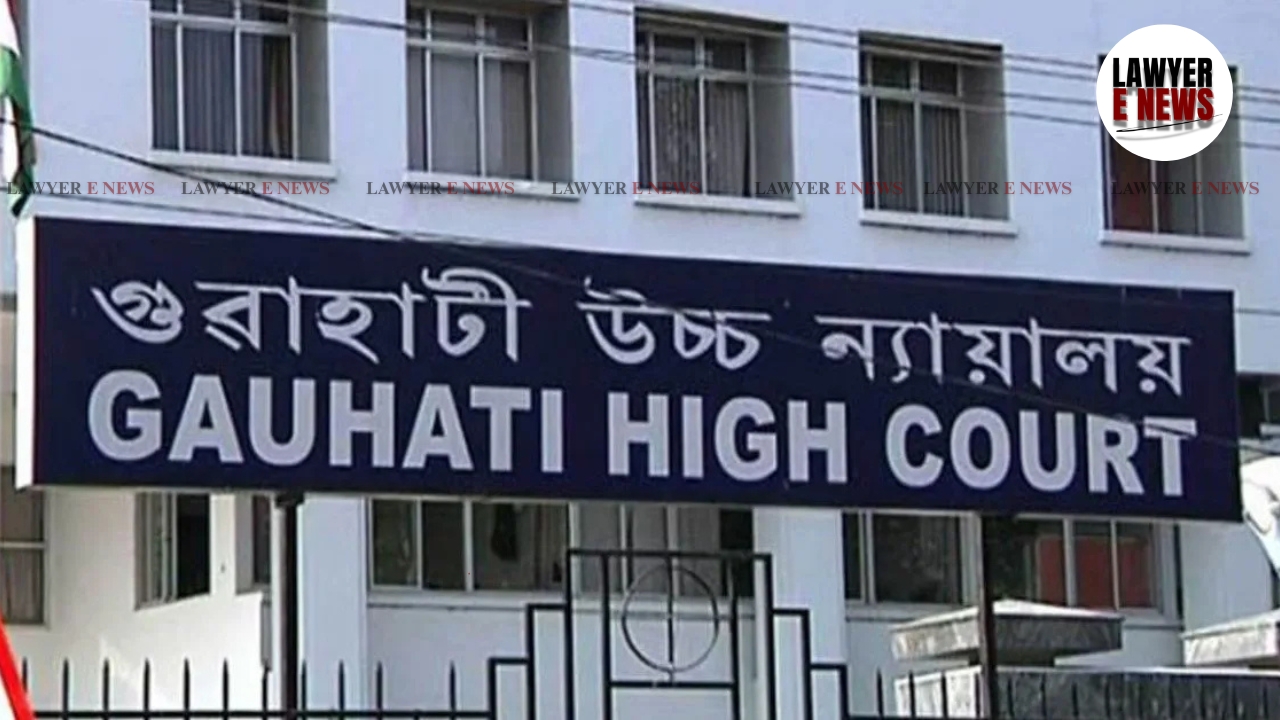
In a significant criminal ruling, the Gauhati High Court on 30 October 2025 modified a life sentence awarded to two brothers convicted for murder, reducing their conviction from Section 302/34 IPC to Section 304 Part I read with Section 34 IPC, recognizing that the fatal assault arose from grave and sudden provocation, thereby invoking Exception 1 to Section 300 IPC.
The Division Bench of Justice Michael Zothankhuma and Justice Mitali Thakuria, while deciding Criminal Appeal, found that although the deceased’s oral dying declaration naming the accused was admissible and credible, the circumstances of the incident — particularly the intoxicated state of the accused and the absence of prior enmity — warranted a conviction for culpable homicide not amounting to murder.
“Oral Dying Declaration Can Be Sole Basis of Conviction Even If Made to Related Witnesses, Provided It Inspires Confidence”: Court Upholds Evidence from Wife and Relatives
The pivotal issue in the appeal revolved around the admissibility and reliability of an oral dying declaration allegedly made by the deceased to his wife, brother, cousin, and nephew (PWs 1, 2, 3, and 5) — all close relatives. The trial court had convicted both appellants under Section 302/34 IPC based primarily on these testimonies.
Rejecting arguments that statements made to related witnesses should be inherently distrusted, the High Court observed:
“There is no reason to disregard the testimonies of PWs 1, 2, 3 & 5, which is to the effect that the appellants had assaulted the deceased with a knife, which ultimately led to his death.”
The Court relied on consistent Supreme Court precedents, including Rajendra v. State of Maharashtra (2024) and Kamal Khudal v. State of Assam (2022), to reiterate that an oral dying declaration, even if made to related witnesses, can form the sole basis of conviction, provided the Court is convinced of its voluntariness and truthfulness.
“Victim’s Reprimand to Drunk Accused Triggered Sudden Loss of Self-Control”: Provocation Recognized as Grave Under Objective Test
The Court found that the deceased, a man in his 40s, had admonished the accused—both in their early 20s and under the influence of alcohol—for creating nuisance on the public road, provoking a quarrel that quickly escalated into a fatal stabbing.
Relying extensively on the Supreme Court's exposition of Exception 1 to Section 300 IPC in Vijay @ Vijaykumar v. State (2025) and Dhirajbhai Gorakhbhai Nayak v. State of Gujarat (2003), the Court emphasized:
“The appellants being under the influence of liquor at the time when they were admonished by the deceased… were subject to a grave and sudden provocation, and as a quarrel had apparently ensued… the same apparently deprived the appellants of the power of self-control.”
The judgment applied the “reasonable man” test to determine whether the provocation was grave:
“Though a reasonable person may not lose self-control as a result of such provocation, it would not be unexpected for a person under the influence of liquor to regard and react to the said provocation as grave.”
Thus, the Court held that the act of stabbing was not premeditated but was committed in a state of temporary loss of self-control, satisfying the requirements for Exception 1 to Section 300 IPC.
“Common Intention Developed on the Spot; Liability Under Section 34 IPC Established”: Bench Reaffirms Constructive Liability Doctrine
Although only one appellant was shown to have stabbed the deceased, the dying declaration named both appellants, and witnesses saw them acting together during the incident. The High Court held that common intention under Section 34 IPC was made out, citing Virendra Singh v. State of MP (2010) and Krishnamurthy @ Gunodu v. State of Karnataka (2022).
“Only because one of the two appellants had been the person who had stabbed the victim… does not exclude the liability of the other appellant from attracting Section 34 IPC.”
The Court clarified that common intention can develop on the spot and need not be pre-planned. The psychological unity of purpose and simultaneous participation were deemed sufficient.
“Failure to Explain Circumstances During 313 CrPC Examination Strengthens Prosecution’s Case”: Adverse Inference Drawn Against Accused
During their examination under Section 313 CrPC, both appellants offered blanket denials. The Court relied on Wajir Khan v. State of Uttarakhand (2023) and Raj Kumar v. State of U.P. (2014) to hold that such silence permits adverse inference, especially in a case built partly on circumstantial evidence.
Further, extra-judicial confessions made by each appellant blaming the other for the stabbing (as deposed by PWs 4 and 6) added an additional layer of corroboration.
“Dying Declaration Passed the Tests of Voluntariness, Consistency, and Medical Possibility”: Court Applies ‘Rule of First Opportunity’
Applying the parameters laid down in Irfan @ Naka v. State of UP (2023) and Laxman v. State of Maharashtra (2002), the Court ruled that the dying declaration:
Was made at the earliest opportunity;
Showed no signs of prompting or tutoring;
Was supported by medical evidence (two stab wounds on vital parts);
Was consistent across multiple prosecution witnesses;
Showed that the deceased was fit to speak, and the declaration was voluntary.
“We are of the view that the dying declaration was voluntary and was a statement of fact… there was nothing to show that the deceased was not in a fit state of mind.”
The Doctor (PW-10) confirmed that the deceased died of shock and haemorrhage due to stab injuries, aligning with the nature of assault described.
Court Rejects Applicability of Exception 4 to Section 300 IPC Due to Lack of Mutual Provocation or Fight
Although the defence argued that Exception 4 to Section 300 IPC (sudden fight without premeditation) should apply, the Court disagreed. There was no evidence of mutual blows or an actual physical altercation before the assault. Hence, the Court held that only Exception 1 applied.
Conviction and Sentence Modified: Life Imprisonment Set Aside, Appellants Sentenced to 10 Years RI under Section 304 Part I IPC
Holding that the assault was intentional but committed under grave provocation, the Gauhati High Court set aside the trial court’s conviction under Section 302/34 IPC. Instead, it convicted both appellants under Section 304 Part I read with Section 34 IPC, sentencing them to:
10 years rigorous imprisonment and a fine of ₹5,000 each, with six months additional imprisonment in default of payment.
The Court directed that Trial Court Records (T.C.R.) be returned and ordered the Assam State Legal Services Authority to compensate the Amicus Curiae who assisted in the appeals.
Date of Decision: 30 October 2025