-
by sayum
26 August 2026 1:49 PM







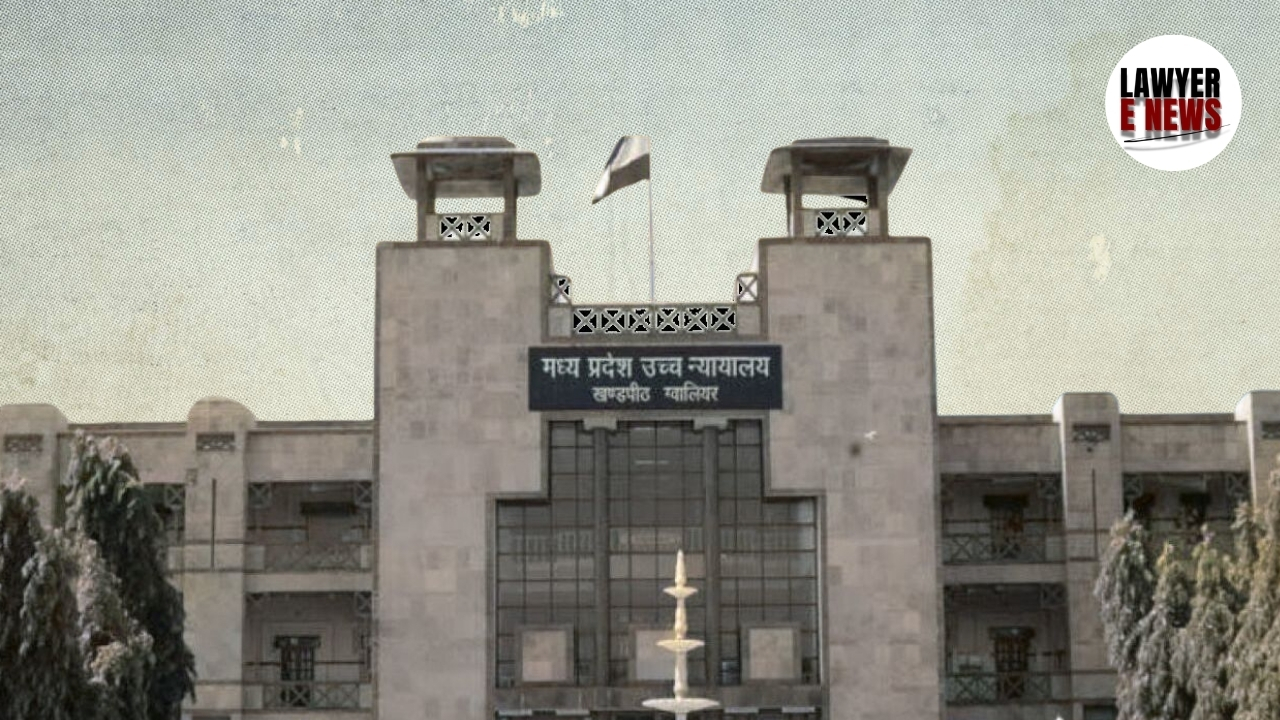
"Apparently, the reasons are an excuse rather than an explanation… There is apparent lack of diligence, inaction and gross negligence", ruled the Madhya Pradesh High Court, delivering a scathing indictment of administrative lethargy in litigation. Dismissing a 435-day delayed appeal by the State of Madhya Pradesh, the Court declared that government entities are no longer entitled to indulgence merely because of their institutional identity.
"Public Interest Lies in Rule of Law, Not in Condoning Governmental Negligence": Court Declines Delay Condonation Under Section 5, Limitation Act
On 27 October 2025, the Madhya Pradesh High Court (Indore Bench) pronounced a significant verdict in State of Madhya Pradesh v. Ratlam Sarva Sewa Sangh & Another, First Appeal No. 457 of 2024, where it dismissed the State's application for condonation of a 435-day delay in filing an appeal against a civil decree passed on 10 September 2022.
Justice Sanjeev S. Kalgaonkar observed that the explanation offered by the State was neither credible nor sufficient and was clearly an afterthought, manufactured to overcome the barrier of limitation. The Court held that bureaucratic processes and internal file movement cannot substitute for the diligence required under law.
"The State Was Aware, But Still Slept": Collector's Prior Knowledge of Decree Fatal to Delay Plea
The factual background laid bare the State’s misplaced claim of ignorance. The original decree was passed in September 2022, yet the appeal was filed only in March 2024. The State alleged it came to know about the decree only in February 2024 while preparing a reply in an unrelated writ petition. However, the respondent’s counsel placed on record compelling evidence demonstrating that the Collector, Ratlam had acknowledged the decree in August 2023, through official correspondence, including a note-sheet dated 18 August 2023 and a show-cause notice dated 24 August 2023 that explicitly mentioned the impugned judgment.
Despite this, the certified copy was sought only in February 2024, and the appeal was filed on 2 March 2024—without any explanation for the intervening period of over six months. The Court noted:
"The veracity and authenticity of these documents have not been assailed by the appellant. The learned counsel for the appellant was at loss to explain the reason for delay, when the Collector, Ratlam was aware of the impugned Judgment in August, 2023."
Equal Standards for State and Private Litigants in Delay Matters
The core legal issue was whether the government could invoke bureaucratic delay as a "sufficient cause" under Section 5 of the Limitation Act, 1963. The Court firmly rejected this notion, observing that judicial interpretation has evolved far beyond the earlier doctrine that granted special leeway to the State.
Justice Kalgaonkar drew strength from a line of decisions of the Supreme Court, including Postmaster General v. Living Media India Ltd. (2012), Bherulal (2020), and the most recent Shivamma v. Karnataka Housing Board (2025 INSC 1104), holding:
"The law has now evolved to insist upon parity between the government and private litigants… No litigant, be it a private party or a State, is entitled to a broader margin of error in matters of limitation."
The Court emphasized that the words “sufficient cause” demand genuine explanation, not a ritualistic narrative of hierarchy and red tape. It clarified:
"An ‘explanation’ is a reasoned account showing due diligence. An ‘excuse’, on the other hand, is a convenient defence lacking credibility. What has been offered here is clearly an excuse."
“Delay Is Not a Matter of Generosity”: Court Rejects Any Presumption of Governmental Good Faith
The Court squarely confronted the outdated judicial mindset that delay by the State should be treated more liberally. Citing DDA v. Tejpal (2024) and Shivamma, the Court said:
“Public interest does not lie in condoning governmental negligence, but in compelling efficiency, responsibility, and timely decision-making.”
It was further observed that repeated indulgence on grounds of governmental procedural delays "would erode the very object of the Limitation Act, which is to bring finality and certainty to legal proceedings."
Rejecting the State’s plea for condonation as a “desperate attempt to revive a lapsed remedy,” the Court ruled that neither the length of the delay nor the identity of the litigant could justify condonation absent genuine diligence.
Appeal Dismissed as Time-Barred
After a detailed examination of the pleadings, documentary evidence, and legal precedents, the Court concluded:
“The appellant/applicant has failed to give ‘sufficient reasons’ for condoning the delay in filing of the appeal… The explanation appears to be an attempt in despair to somehow revive the litigation.”
Accordingly, the Court dismissed I.A. No. 2236 of 2024 for condonation of delay and First Appeal No. 457 of 2024 as barred by limitation.
In conclusion, the Court reiterated that the Limitation Act is not a procedural technicality to be brushed aside, but a legislative command aimed at ensuring discipline and certainty in civil litigation.
This judgment adds to the growing jurisprudence that dismantles the myth of sovereign privilege in litigation delays. It reinforces the principle that state actors, as trustees of public interest, must act with greater—not lesser—diligence. The Madhya Pradesh High Court’s refusal to condone the delay sends a clear message: “Bureaucratic inertia cannot be masked as legal explanation.”
“To protect public interest is not to protect the government—it is to uphold accountability, ensure diligence, and safeguard the rule of law.
Date of Decision: 27 October 2025