-
by sayum
28 August 2026 10:07 AM







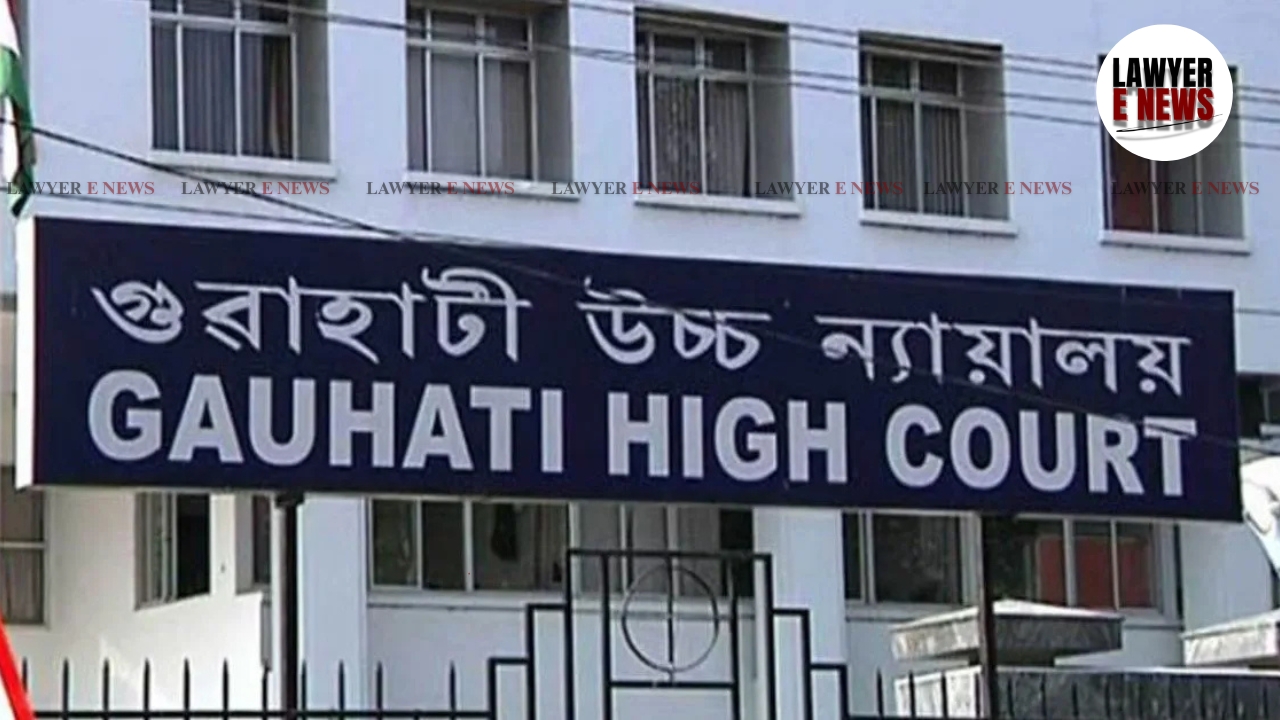
"It is possible that in a given situation, the collective interest of the society may outweigh the right personal liberty of an individual concerned, " Gauhati High Court, in a significant order, has rejected the bail application of Shyamkanu Mahanta, the key organizer of the North East India Festival, in connection with the death of iconic singer Zubeen Garg.
A bench of Justice Mitali Thakuria observed that while personal liberty is a precious constitutional value, it must be balanced against the collective interest of society, especially in cases that trigger widespread public outcry and involve the loss of a "legend."
The petitioner, Shyamkanu Mahanta, was arrested on October 1, 2025, following the death of singer Zubeen Garg during a festival in Singapore. The prosecution alleged that Mahanta, acting through his organization Trend MMS, conspired to exploit the singer and intentionally exposed him to life-threatening conditions. It was alleged that despite knowing Garg’s medical history of epilepsy and alcohol de-addiction, the petitioner facilitated the supply of alcohol and permitted a dangerous yacht trip which led to the singer's death by drowning.
The primary question before the court was whether the petitioner was entitled to bail under Section 483 of the BNSS, 2023, considering his eight-month incarceration and the prolonged nature of the upcoming trial involving 394 witnesses. The court was also called upon to determine if the petitioner’s conduct post-incident, including his travel to Malaysia, established a flight risk that necessitated continued detention.
Prima Facie Evidence Of Conspiracy
The Court noted that materials collected by the Investigating Officer prima facie revealed a deeper conspiracy involving the petitioner and other co-accused. The bench observed that although the petitioner was not present on the yacht where the drowning occurred, he was the person under whose consultation and advice the trip was organized. The Court emphasized that Mahanta was well aware of Zubeen Garg’s medical restrictions regarding water, fire, and alcohol consumption.
Organizer’s Responsibility Toward Deceased's Safety
The bench took a grim view of the allegation that the petitioner had treated the singer as a commercial commodity. The prosecution’s evidence suggested that the petitioner forced the deceased to attend the Singapore event by threatening suicide. The Court observed that as the organizer, Mahanta was exclusively responsible for the safety, security, and medical arrangements of the "Brand Ambassador," yet he allegedly facilitated the continuous supply of alcohol.
"The accused petitioner was the person under whose instruction the room chart was changed... only with an intention to provide continuous supply of alcohol inspite of knowledge about the health condition of the deceased."
Intentional Exposure To Life-Threatening Danger
Regarding the yacht party, the Court found that the petitioner had at least three opportunities to stop the trip but deliberately chose not to. Justice Thakuria noted that the petitioner failed to inform the yacht operators about the singer’s epilepsy. The Court found merit in the prosecution’s argument that Mahanta had a grudge against Garg for previous public rebukes and exploited his vulnerabilities, leading to the fatal incident in the deep sea.
Conduct Of Accused and Flight Risk
The Court expressed serious concern over the petitioner’s conduct immediately following the singer’s death. Instead of cooperating with the investigation at Guwahati, the petitioner fled to Malaysia with his family. The bench held that his previous conduct of avoiding arrest, which required the issuance of a lookout notice and alerting Interpol, supported the apprehension that he remains a flight risk.
"His previous conduct of fleeing away to Malaysia, immediately after the incident prima facie supports the plea of the prosecution that there is a flight risk of the accused petitioner."
Balancing Article 21 With Social Interest
The petitioner’s counsel heavily relied on the principle that "bail is the rule, jail is the exception," citing the Supreme Court’s rulings in K.A. Najeeb and Arnab Goswami. However, the High Court distinguished these precedents, noting that in those cases, the accused had suffered incarceration for five years or more. In the present case, the Court held that eight months of detention does not constitute an "undue delay" violating Article 21 of the Constitution of India.
Public Outcry and Collective Conscience
The Court highlighted the unique nature of this case, involving the death of an "Iconic Singer" which led to a "sea of mourners" and widespread public outcry. The bench observed that in such situations, the collective conscience of society and public order become paramount considerations. The Court held that the safety of the accused and the need to maintain faith in the justice system outweighed the petitioner’s claim to personal liberty at this stage.
"In the given situation the collective consciences and public order becomes paramount... parties should not lose faith in the institution and indulge in private retribution."
No Violation of Constitutional Standards
The bench noted that a special designated court has already been constituted for the day-to-day trial of this specific case. Given this arrangement, the Court found that the trial is likely to proceed expeditiously. Therefore, the mere length of the witness list or the current period of detention could not be used as a mechanical ground for release under the BNSS.
The High Court concluded that it was not a fit case to enlarge the petitioner on bail. Justice Thakuria held that the magnitude of the alleged conspiracy and its devastating effect on society necessitated continued custody. The bail application of Shyamkanu Mahanta was accordingly rejected.
Date of Decision: 29 May 2026