-
by sayum
26 August 2026 12:18 PM







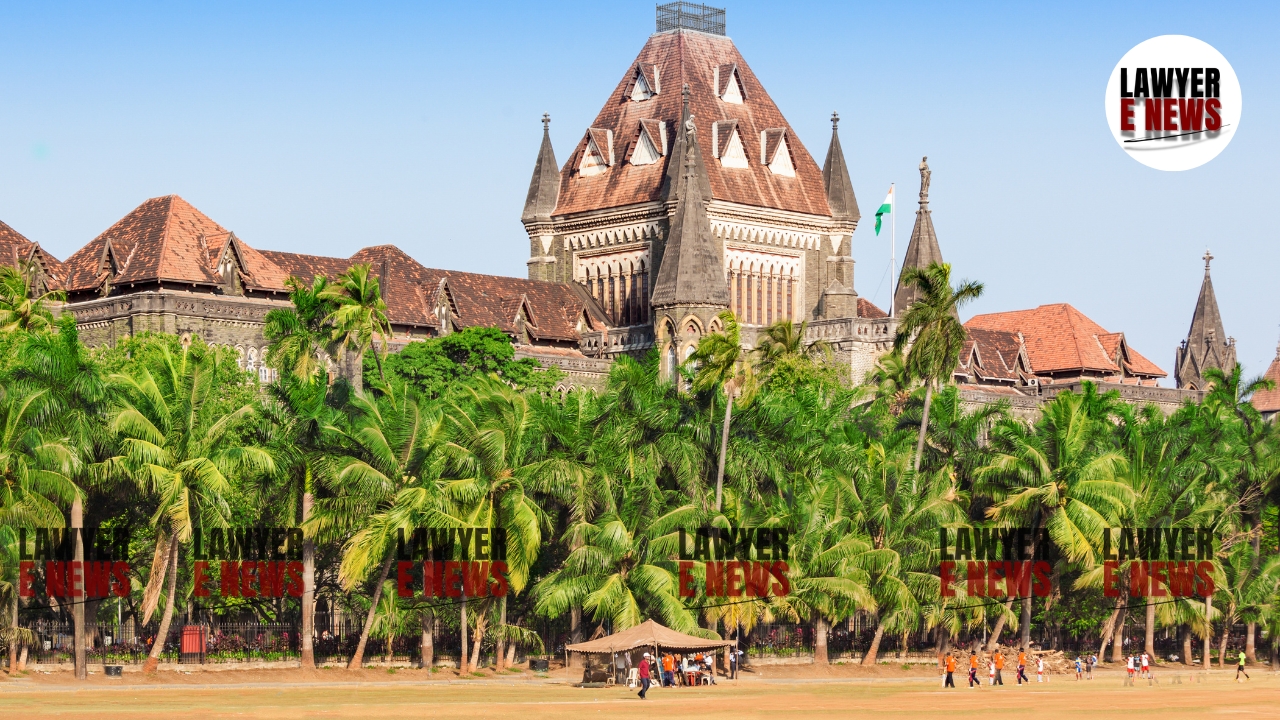
"A Bright Future Cut Short Deserves More Than Notional Pity—It Deserves Realistic Compensation": In a landmark judgment Bombay High Court (Aurangabad Bench) reaffirmed the principle that future prospects must be applied even in cases where the deceased had no fixed income but had demonstrable earning potential. High Court dismissed the MSRTC’s challenge to the compensation awarded by the Motor Accident Claims Tribunal and instead enhanced the compensation from ₹54.80 lakhs to ₹76.70 lakhs, recognising the bright academic future of a final-year MBBS student who died in a road accident.
Rejecting the state's argument that “future prospects” cannot be granted to a non-earning individual, the Court clarified that future prospects are not an exclusive entitlement of those with a fixed salary, but a principle of standardisation and fair estimation of loss, firmly rooted in social welfare jurisprudence.
“Future Prospects is not an allowance nor an add-on benefit depending upon any qualification. It is a principle of ‘standardisation’ in view of certainty, stability and consistency,” observed Justice Ajit B. Kadethankar, underlining that non-earning students with established academic merit are equally entitled to the same treatment as salaried employees under the Motor Vehicles Act, 1988.
"Refusing Future Prospects to a Promising Student is a Miscarriage of Justice": Tribunal’s Reduction to 50% and Use of Wrong Age Corrected
The deceased, Ganesh Wagh, a final-year MBBS student from Government Medical College, Aurangabad, had died in a road accident on 25 February 2015 when his motorcycle was hit by an MSRTC passenger bus. The Tribunal, while holding MSRTC liable, assessed notional income at ₹35,000/month, added 50% future prospects, applied a multiplier of 17, and awarded ₹54.80 lakhs in total.
Both the MSRTC and the claimants appealed—the former arguing that future prospects could not be granted at all, and the latter demanding enhanced compensation, contending that:
The Tribunal understated the monthly income, ignoring concrete evidence like salary slips of a similarly placed classmate (earning ₹56,000/month);
The Tribunal wrongly assessed the deceased's age as 27 years based on the post-mortem report, instead of 24 years, as clearly established by SSC and Aadhaar documents;
Future prospects should have been applied at 40%, not 50%, as income was not fixed salary.
Justice Kadethankar meticulously reviewed these issues and held:
“Exclusion of future prospects would result in a grave miscarriage of justice… The deceased was a meritorious student with high potential. The compensation must reflect his academic trajectory and realistic earning potential.”
"Age Cannot Be Determined by Post-Mortem When Aadhaar and SSC Exist": High Court Criticises Mechanical Use of Approximate Records
One of the key findings was the correction of the deceased’s age, which directly affects the applicable multiplier. The Tribunal relied on a post-mortem report and inquest panchnama to fix the age at 27, applying multiplier M-17. However, the claimants had submitted the deceased’s Aadhaar Card and SSC certificate, both clearly indicating his age as 24 years at the time of death.
The Court took serious exception to the Tribunal’s approach:
“Post-Mortem Report or Inquest Panchnama is not at all dependable as regards age because it merely puts approximate age. SSC Certificate is a public document… Instead of mechanically relying on vague reports, the Tribunal ought to have called for original age proof from the claimants. This is an ‘inquiry’ under social beneficial legislation—not a strict civil suit.”
The Court observed that correct multiplier M-18 should have been applied based on the accurate age of 24 years and 9 months.
“When a minor error in applying the multiplier can cause serious injustice or loss to the public exchequer, tribunals must act with proactive discipline and realism,” the Court remarked.
"Income of a Meritorious Medical Student Cannot Be Estimated Through Guesswork—It Must Be Grounded in Academic and Professional Trajectory"
On the issue of income, the High Court found that the Tribunal grossly undervalued the deceased’s potential by fixing income at ₹35,000/month, despite compelling evidence that his similarly placed classmate, now employed as a government medical officer, was earning ₹56,540/month.
“Ganesh Wagh was in the final year of MBBS in a Government Medical College. His academic record and proximity to employment make it unreasonable to apply a generic notional income standard. The Court cannot ignore real-world data,” the Court held.
Referring to a string of judgments including Kirti v. Oriental Insurance Co., Sharad Singh v. H.D. Narang, and Ashvinbhai Modi v. Ramkaran Sharma, the Court observed:
“For students, courts often consider the course that they are studying, their academic proficiency, and background. In this case, ₹50,000/month is a conservative but just estimate.”
The Court therefore enhanced the monthly income to ₹50,000, applied 40% future prospects, and confirmed 50% deduction towards personal expenses as the deceased was unmarried.
"Interest Is Payable on the Entire Award Including Future Prospects": High Court Affirms Principle from Supreme Court’s ‘Niru @ Niharika’ Judgment
MSRTC also contested the award of interest on the future prospects component, arguing that this portion never existed and hence should not carry interest. This argument was firmly rejected.
“Once future prospects form part of the assessed income, they are not imaginary—they become part of the legal award. The Hon’ble Supreme Court in Oriental Insurance Co. Ltd. v. Niru @ Niharika has clarified that interest must apply on the total award,” held the Court.
The interest rate of 6% p.a. from the date of filing (2 April 2015) until realisation was upheld.
Court Enhances Compensation from ₹54.80 Lakhs to ₹76.70 Lakhs
Taking into account the corrected age, enhanced income, future prospects at 40%, and standard non-pecuniary damages, the High Court recalculated the award as follows:
“The correct computation must be based on ₹50,000/month income, with 40% future prospects and multiplier of 18. After 50% deduction and addition of ₹1.10 lakhs under non-pecuniary heads, the total compensation comes to ₹76,70,000.”
The enhanced amount of ₹21.90 lakhs is to be deposited by MSRTC within 10 weeks, with 6% interest from the date of petition. The claimants were allowed to withdraw the amount in the proportion fixed by the Tribunal.
Courts Must Shift from “Mechanical Application” to “Realistic Interpretation” in Motor Accident Cases Involving Students
This judgment is not merely a resolution of an individual dispute—it is a strong jurisprudential message on how tribunals must assess compensation for non-earning victims like students. The Court stressed:
“Future Prospects are not a privilege for the employed—they are a judicial recognition of potential, especially for bright students. Arbitrary guesswork and outdated reliance on post-mortem reports must give way to evidence-backed, realistic computation.”
The ruling marks a significant step towards humanising motor accident compensation law, ensuring that a young life lost is not reduced to a mechanical calculation, but evaluated with dignity, accuracy, and fairness.
Date of Decision: 29 October 2025