-
by sayum
04 August 2026 9:39 AM







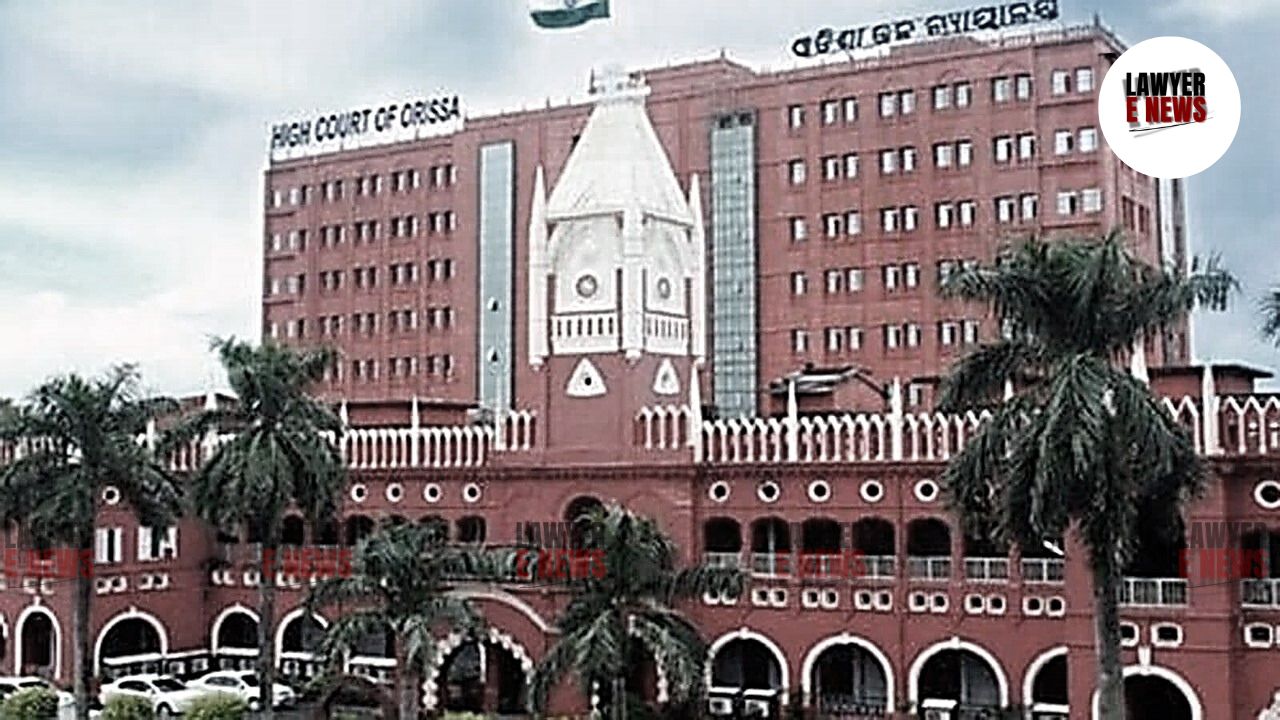
“Co-Accused’s Acquittal Has No Bearing on a Split Trial”— In a significant ruling Orissa High Court dismissed a criminal revision petition seeking discharge from trial in a case involving a multi-party chit fund fraud. The petitioner, a director of Right Max Techno Trade Company, had sought to escape prosecution by arguing that his name was not mentioned in the FIR and that co-accused had already been acquitted in earlier proceedings.
Justice G. Satapathy rejected these arguments, holding: “FIR is not expected to be an encyclopedia of the entire case… What matters is the material in the charge sheet. The petitioner’s name may not figure in the FIR, but the charge sheet narrates his involvement.”
The criminal proceedings stemmed from an FIR filed in March 2010 by an informant who had deposited ₹60,000 with the company on the promise of triple returns within 33 months. The scheme turned out to be a fraudulent money circulation venture, and the company eventually shut down without repaying the amount.
Though the petitioner was not part of the initial trial due to his non-appearance, the case against him was bifurcated and continued separately. Meanwhile, the co-accused were acquitted in 2018, prompting the petitioner to seek discharge on the ground of parity and procedural fairness.
Discharge Must Be Based on Charge Sheet, Not FIR
The High Court unequivocally held that a discharge cannot be granted merely because the petitioner’s name does not appear in the FIR. The Court stated:
“At the stage of discharge, the test is whether the material collected discloses a strong suspicion. FIR is only an initiatory document—not the touchstone for discharge.”
On the petitioner’s argument that no overt act was attributed to him and that his co-accused had been acquitted, the Court reasoned:
“The petitioner was not a party to the trial where co-accused were acquitted. The judgment in that case cannot be read as binding in a bifurcated trial.”
It further emphasized: “Merely because the co-accused were acquitted does not create an automatic right to discharge for the petitioner, especially when he never participated in that trial and the evidence was recorded in their absence.”
On Revisional Jurisdiction and Procedural Failures
The Court refused to invoke its revisional powers under Section 397 CrPC, clarifying that:
“The revisional jurisdiction is not meant to reappreciate facts or act as a second appellate court… Only glaring jurisdictional errors can be corrected.”
Noting that the proceedings were now governed by the Bharatiya Nagarik Suraksha Sanhita (BNSS), 2023, which replaced the CrPC from 01.07.2024, the Court observed that the petitioner had failed to meet even the basic procedural thresholds under Section 262(2) BNSS.
“The petitioner failed to indicate the date on which he received documents under Section 230 BNSS, nor did he justify the delay in filing his discharge petition… The application is defective both in form and substance.”
The High Court held that the material on record, including the charge sheet, clearly made out a prima facie case requiring trial and refused to quash the proceedings. It concluded that neither the absence of the petitioner’s name in the FIR nor the acquittal of his co-accused in a separate proceeding could justify discharge.
Justice Satapathy concluded: “No illegality or perversity is found in the order refusing discharge. The petitioner must face trial and contest the allegations in accordance with law.”
The revision was accordingly dismissed.
Date of Decision: April 30, 2025