-
by sayum
25 August 2026 12:32 PM







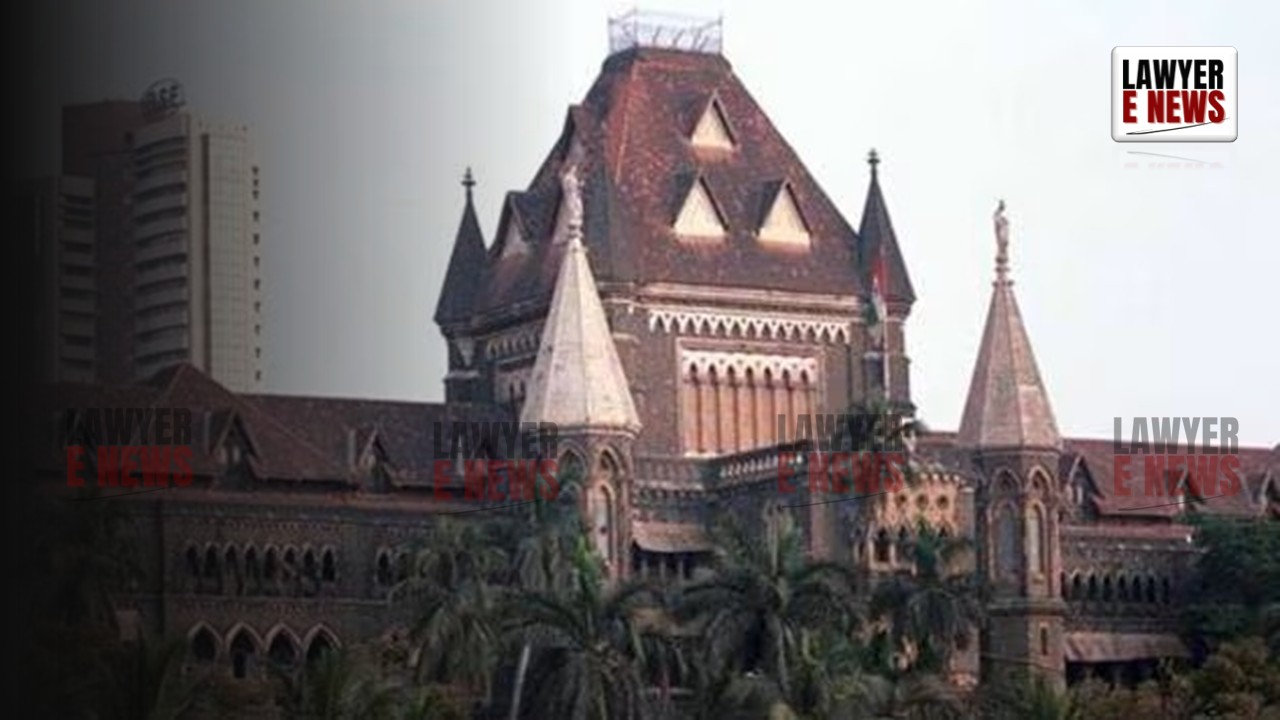
In a significant reaffirmation of settled criminal jurisprudence, the Bombay High Court at Goa delivered a strong message on the fragility of extra-judicial confessions when unsupported by reliable corroborative material. Division Bench comprising Justices Valmiki Menezes and Shreeram V. Shirsat set aside the appellant’s conviction for the alleged murder of his wife, holding that the confessional statements attributed to the accused were inconsistent, contradicted by call records, and wholly insufficient to support a conviction.
The Court held, “Extra-judicial confessions are inherently weak evidence and unless proved to be voluntary, truthful, and corroborated by other independent evidence, cannot form the sole basis for conviction.”
“Extra-Judicial Confessions Made to Interested or Inactive Witnesses Cannot Be the Sole Basis of Conviction”
The prosecution’s case hinged on alleged confessions made by the accused to his son (PW1), a neighbour (PW4), and another acquaintance (PW9), wherein the accused purportedly admitted to killing his wife by strangulation. However, the Court noted glaring contradictions and procedural lapses, both in the statements themselves and in how they were handled by the witnesses and police.
The Court pointedly observed: “The testimony of PW1 was entirely uncorroborated, riddled with contradictions, and further weakened by the witness’s failure to disclose critical information at the earliest opportunity, despite claiming to have knowledge of a confession.”
As regards PW4, who claimed that the appellant confessed in person, the Court was sharply critical:
“PW4 failed to disclose the alleged confession for over 10 days after the incident, even though he was present in the police station on the night of the recovery. This delay is unexplained and casts serious doubt on the truth of his version.”
Similarly, the statement of PW9, who claimed that the accused confessed during a casual call, was deemed vague, unverified, and never followed up with investigative action.
“Call Data Records Expose Fabrication—No Supporting Call Exists at Claimed Time of Confession”
A particularly damning piece of evidence was the Call Detail Record (CDR) analysis, which directly contradicted the timelines offered by PW1, the complainant and son of the deceased. PW1 claimed that the appellant called him at 6:30 p.m. on the date of the incident and confessed to killing his mother.
The Court, however, noted: “CDRs clearly show that no such call took place at 6:30 p.m. The call logs contradict the timeline offered by the prosecution’s prime witness. When the prosecution’s key testimony is undermined by its own documentary evidence, the edifice of the case collapses.”
The Bench invoked the Supreme Court’s judgment in Ramu Appa Mahapatra v. State of Maharashtra, (2025) 3 SCC 565, where the Apex Court held:
“An extra-judicial confession made to an interested person, not disclosed at the earliest opportunity, and unsupported by corroborative evidence is insufficient to base a conviction.”
“Failure to Examine SIM Card Owners and Mobile Data Completes the Chain of Doubt”
In another significant omission, the Court found that the mobile phones involved in the alleged confessions and location tracking were registered in third-party names, but the owners of these numbers were never examined.
“No subscriber forms, no verification of ownership, and no attempts to confirm whether the accused was indeed using the phone at the relevant time—all these omissions make the CDRs legally unreliable.”
The Bench held that when the link between the mobile number and the accused is not established, the entire superstructure of circumstantial and electronic evidence becomes questionable.
“Doctrine of Corroboration is Not Optional—Confessions Must Be Backed by Independent Evidence”
The Court summed up by emphasizing that an extra-judicial confession, though admissible, is a highly suspect form of evidence unless verified by external circumstances, quoting with approval the principle laid down in Balbir Singh v. State of Punjab, (1957) SCR 1045:
“A confession is not a conviction. The Court must ensure that the confession is voluntary, not the product of pressure or prejudice, and is corroborated in material particulars.”
In the absence of forensic support, last-seen evidence, motive, or any physical evidence connecting the accused to the crime scene, the Court held that:
“The so-called confessions in this case were nothing more than unverified, self-serving assertions recorded by interested parties and contradicted by technological evidence.”
Confession Insufficient, CDRs Contradictory, Acquittal Ordered
Accordingly, the High Court allowed the appeal, quashed the conviction under Section 302 of the IPC, and ordered the acquittal of Shri Manohar Laximan Ketkar, holding that the trial court had gravely erred in relying on uncorroborated confessional statements contradicted by scientific evidence.
“We are constrained to hold that the conviction was based on speculation rather than proof. The law does not permit such a conviction to stand,” the Bench concluded.
Date of Decision: 14.11.2025