
-
by sayum
25 August 2026 12:32 PM







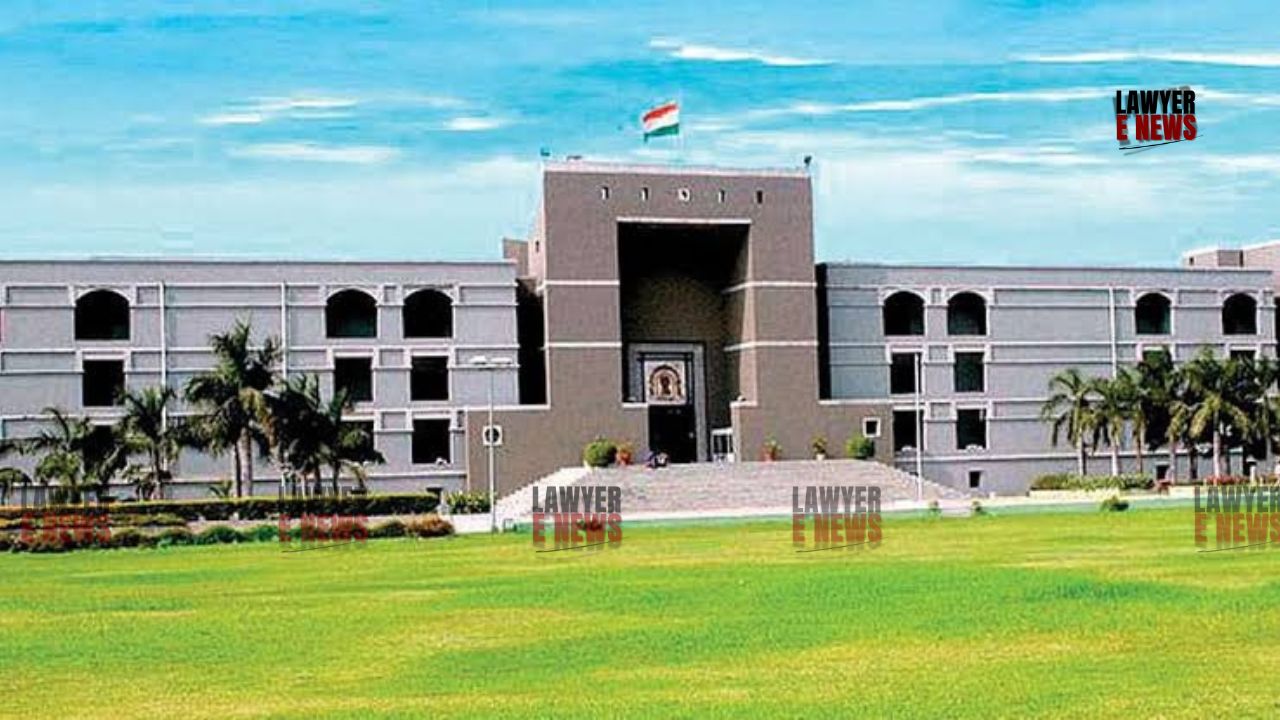
"Once Credit Is Validly Availed, It Becomes Indefeasible and Equivalent to Tax Paid" – In a significant reaffirmation of settled tax jurisprudence, the Gujarat High Court, in the case of Principal Commissioner, Customs, Ahmedabad Commissionerate v. M/s Sun Pharmaceuticals Industries Ltd. [R/Tax Appeal No. 450 of 2024], dismissed a departmental appeal challenging the legality of using accumulated CENVAT credit to pay countervailing duty (CVD) liabilities at the time of debonding from the 100% Export Oriented Unit (EOU) scheme. The Court categorically held that excise duty equal in amount to customs duty can be discharged through validly accrued CENVAT credit and need not be paid in cash.
M/s Sun Pharmaceuticals, formerly operating as a 100% EOU, exited the scheme during the financial year 2012–13. Upon initiating debonding proceedings, the respondent self-assessed its duty liability and paid a portion in cash, while discharging a substantial component of CVD amounting to ₹8.30 crores using accumulated CENVAT credit.
The Department of Customs, relying on Section 28 of the Customs Act, 1962 and Rule 3(4) of the CENVAT Credit Rules, 2004, alleged that CVD on imported goods lying in stock must be paid in cash, and raised a demand via Show Cause Notice dated 15.07.2015, invoking penalty and interest. The adjudicating authority confirmed the demand and also penalised the company’s Assistant Manager under Section 117 of the Customs Act.
Sun Pharma contested this before the Customs, Excise and Service Tax Appellate Tribunal (CESTAT), Ahmedabad, which ruled in their favour by relying on the interim High Court order in the Dishman Pharmaceuticals case.
The central question before the Court was:
“Whether an EOU, upon debonding, can discharge excise duty equal to customs duty using accumulated CENVAT credit instead of making a cash payment?”
The Department insisted that duty must be paid in cash, not through CENVAT, invoking Rule 3(4) and treating the liability as one under customs provisions. However, Sun Pharma asserted that the applicable duty on debonding was excise duty computed at customs equivalent rates, falling under Section 3 of the Central Excise Act, 1944, and thus permissibly payable using CENVAT credit.
The High Court squarely rejected the Department’s stance, affirming that the case is fully covered by its own final decision in Dishman Pharmaceuticals and Chemicals Pvt. Ltd. v. Union of India [2015-TIOL-2869-HC-AHM-CX], where it was held:
“The right to CENVAT credit becomes absolute once the input is received and the credit is validly taken. It is as good as tax paid.”
Justice A.S. Supehia, delivering the judgment for the Division Bench with Justice Pranav Trivedi, emphasized that excise duty discharged upon debonding cannot be forcibly converted into a cash obligation if valid credit exists.
The Court drew support from the Supreme Court's decision in Eicher Motors Ltd. v. Union of India, 1999 (106) ELT 3 (SC), where it was unequivocally held that:
“Credit accrued on inputs is as good as tax paid. Once validly earned, it is indefeasible and its utilisation cannot be restricted except where it is illegally taken.”
Similarly, the decision in Dai Ichi Karkaria Ltd. (1999) was relied upon to reinforce the principle that CENVAT credit is a vested right, not subject to arbitrary curtailment unless the taking of credit is illegal.
Limitation — No Suppression, No Extended Period
The Court also set aside the demand on the additional ground that the Show Cause Notice was issued after more than two years from the date of debonding (2012–13), and no suppression of facts or misstatement was alleged or proved. As such, the extended period under Section 28 of the Customs Act could not be invoked.
“The extended period of limitation cannot be applied when there is no element of suppression, fraud or wilful misstatement.” – Para 3F
Transitional Regime Under GST — Credit Still Protected
Crucially, the Court also observed that Section 142(6)(a) of the Central Goods and Services Tax Act, 2017 preserves the right to claim refund in cash where such credit cannot be utilised, thus negating any argument that GST disrupted the entitlement.
“There can be no argument to the contrary that the legitimately availed CENVAT credit could not be used for the payment of duties... the demand of the respondents to pay the excise duty on goods that would be manufactured... after debonding has to be rejected outright.” – Para 15
Dishman Pharmaceuticals Final Judgment Now Governs
Earlier, the Tribunal had relied on interim relief granted in Dishman Pharmaceuticals, but the Gujarat High Court clarified that the final decision dated 18.12.2024 in Dishman now holds the field and must be followed as binding precedent.
“Since the Tribunal had placed reliance on the interim order in Dishman... and the same has become final, the present appeal stands dismissed.”
Final Judgment and Relief Granted
The Court dismissed the departmental appeal, affirming the CESTAT’s ruling in favour of the assessee. It set aside the demand of ₹8.30 crore along with interest and penalty.
“Appeal dismissed – Question of law answered in favour of the respondent – Demand and penalties set aside.”
With this ruling, the Gujarat High Court has once again fortified the right of EOUs to discharge debonding liabilities via accumulated CENVAT credit, reinforcing the indefeasible nature of validly availed credit. It sends a clear message that tax credit, once earned lawfully, is not merely a procedural concession but a substantive right, protected both under the erstwhile excise regime and the current GST law.
Date of Decision: 06/11/2025





