-
by sayum
28 July 2026 1:44 PM








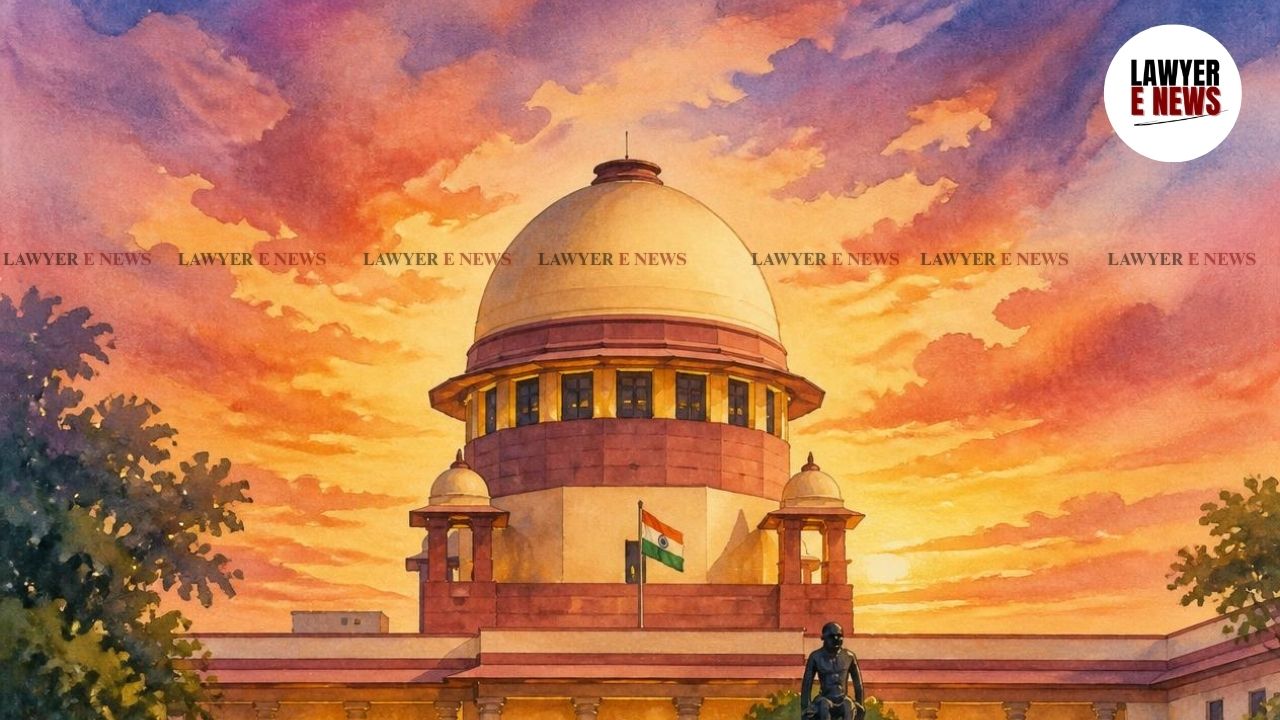
"Once the common object of the unlawful assembly stands established, every member thereof becomes vicariously liable for acts committed in prosecution of such common object." Supreme Court, in a significant ruling dated May 26, 2026, reaffirmed the conviction and life imprisonment of several appellants involved in a 1983 mass violence incident in Bihar.
A bench comprising Justice Sanjay Karol and Justice Nongmeikapam Kotiswar Singh observed that the liability contemplated under Section 149 of the Indian Penal Code (IPC) squarely applies when a mob acts with a shared common object. The Court noted that the brutality of the incident, which resulted in five deaths, "shocks the judicial conscience" and leaves no room for misplaced sympathy.
The case originated from a gruesome incident on March 29, 1983, in Village Jamalpur Kodai, Muzaffarpur, where a mob of approximately 58 persons set fire to a residential house following a long-standing village rivalry. Five members of a family were brutally murdered, and numerous others sustained grievous injuries during the attack. The appellants challenged the concurrent findings of the Trial Court and the Patna High Court, which had upheld their convictions under Sections 302/149, 436, and other provisions of the IPC.
The primary legal question before the Court was whether the conviction with the aid of Section 149 IPC was sustainable against appellants who claimed they were mere spectators without a shared common object. The Court was also called upon to determine if the incident arose from a sudden altercation rather than a premeditated plan and whether the evidence of injured eyewitnesses was sufficient to establish individual participation.
Court Explains Doctrine Of Vicarious Liability Under Section 149 IPC
The bench emphasized that once the existence of an unlawful assembly with a common object is proved, every individual who is a part of that assembly at the relevant time is liable for the acts committed by the assembly. The Court held that the High Court’s assessment of the evidence was detailed and reasoned, as it meticulously summarized the specific roles of each accused person.
The judges observed that the consistent testimonies of injured eyewitnesses narrated how the assailants, without any justified cause, set the house on fire and brutally killed defenceless victims. This version was further corroborated by independent witnesses who had no animus against the accused. The Court underscored that in such cases of mass violence, the collective action of the mob defines the criminal liability of its members.
"The liability contemplated under Section 149 IPC squarely stands attracted in the facts of the present case."
Rejection Of 'Mere Spectator' Plea In Active Mob Violence
The Court summarily rejected the contention that some of the appellants were mere spectators at the scene. It noted that the evidence-on-record clearly established active participation at different stages, including surrounding the house, setting it ablaze, and chasing the fleeing victims with lethal weapons. The Bench remarked that such conduct is irreconcilable with the plea of being an innocent bystander.
The bench further clarified that active participation does not necessarily require every member of the mob to commit a separate overt act of killing. The mere presence as a member of an unlawful assembly, while being aware of the common object and the likelihood of the offence being committed, is sufficient to attract vicarious liability for the end result.
"The contention that some of the appellants were mere spectators deserves outright rejection. The evidence-on-record clearly establishes active participation."
Magnitude Of Assembly Negates Plea Of Sudden Altercation
Addressing the submission that the violence arose from a sudden dispute over a pumping set, the Court held that even assuming prior hostility existed, it could never justify the formation of an unlawful assembly of such magnitude. The Court found that the assembly was armed with deadly weapons, including farsa, bhala, and garasa, which indicated a clear intent to cause death and destruction.
The bench noted that the prosecution had successfully proved beyond reasonable doubt that the accused acted in furtherance of their common object. The Court maintained that the nature of the weapons used and the subsequent acts of setting the house on fire and lynching the inmates pointed towards a premeditated and shared criminal goal among the members of the assembly.
Circle Officer’s Conviction For Abetment Upheld
A notable aspect of the judgment was the affirmation of the conviction of Jagannath Ravidas, the then Circle Officer. Both the Trial Court and the High Court had concurrently found that he had actively facilitated the commission of the offence. The prosecution established that Ravidas disarmed the victims of their licensed firearms at a crucial stage, thereby emboldening the mob to proceed with the attack.
The Supreme Court found no reason to deviate from this finding, noting that the public servant’s actions directly contributed to the victims' inability to defend themselves. By seizing the weapons and displaying them before the mob, the officer provided the necessary emboldenment that allowed the massacre to reach its brutal conclusion.
"The Courts below have rightly observed that the case leaves no room for misplaced sympathy or leniency."
In conclusion, the Supreme Court dismissed the appeals and upheld the concurrent findings of the lower courts. It directed the surviving accused persons, who were not granted the benefit of juvenility, to surrender forthwith to serve the remainder of their life sentences. The Court reiterated that the brutality of the crime, involving the loss of five lives and injuries to women and children, demanded the full rigour of the law.
Date of Decision: May 26, 2026