
-
by sayum
04 August 2026 9:39 AM







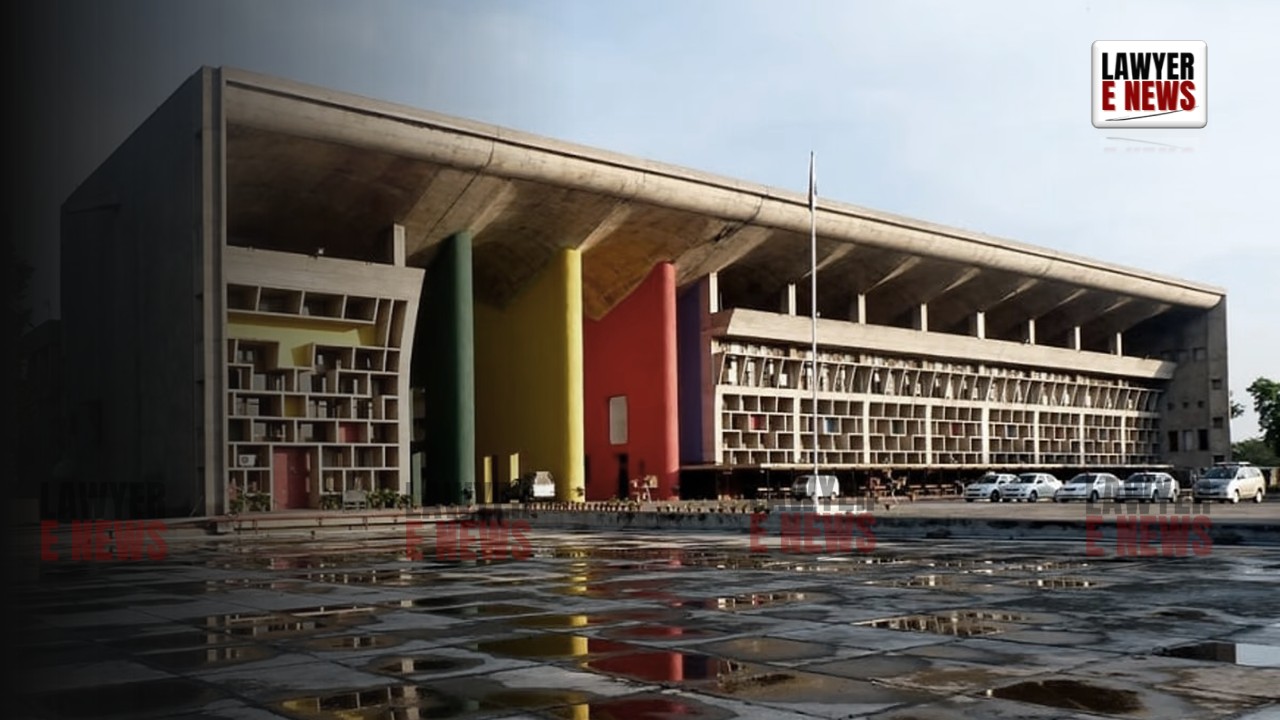
Voluntary Handover Must Be Proved by Evidence—Oral Settlement Claim Without Written Proof is Unreliable - Punjab and Haryana High Court upheld a trial court decree granting possession to a widow and her children, dispossessed from their home in Panchkula. The Court dismissed the revision petition filed by the defendants, emphasizing that in suits under Section 6 of the Specific Relief Act, 1963, the question of ownership is irrelevant and the only issue is unlawful dispossession.
Justice Vikram Aggarwal, while pronouncing a strongly worded judgment, observed: “Even a trespasser in settled possession is not required to prove title… Only lawful long possession is required to invoke Section 6.”
“Fifteen Years of Litigation and the Widow Still Fights for Her Home”: Background of the Dispute
The case arises from a familial property dispute following the 2009 murder of Harjinder Pal, a postal employee. The plaintiffs—his widow Jaswinder Kaur and two children—were living in a portion of a residential property (GHIJ on Ex.P1) in Village Jaisingh Pura, Panchkula.
The defendants, including the father-in-law Ram Swaroop and other relatives, were part of the same extended family. The family had faced multiple rounds of litigation over compensation and shares in ancestral property—mostly decided in the plaintiffs' favour.
“They Broke the Locks, Took the Furniture and Moved In—No Written Family Settlement Produced”
On 03.09.2021, the plaintiffs alleged they were forcibly dispossessed, with locks broken and household items removed. Complaints to police yielded no result—ironically, the widow herself was challaned under Section 107/150 CrPC, based on a counter-report.
The defendants claimed the plaintiffs had voluntarily handed over possession pursuant to an oral family settlement made on 03.08.2021, after which the defendants took over the premises.
Rejecting this narrative, the Court observed: “If some family settlement had been arrived at, some writing must have been executed… The parties had been litigating for 15 years—trust under such circumstances is unimaginable.”
“Suit Was Filed Within 6 Months—Exact Date of Dispossession Becomes Irrelevant”
The Court held that dispossession—whether in August or September—was clearly established, and the suit under Section 6 was filed within the six-month limitation.
While the petitioner argued that cross-examination revealed the date as August 2021, contrary to the plaint’s 03.09.2021 claim, the Court ruled: “Cross-examination must be seen holistically. The fact remains that the plaintiffs were dispossessed. The argument on exact date is devoid of merit.”
“Ownership Is Not a Requirement—Only Possession Counts in Section 6 Suits”
In a key reiteration of settled law, the Court held: “The plaintiffs not being owners is irrelevant… Section 6 protects possession regardless of title. Even a trespasser cannot be dispossessed without due process.”
Quoting Rame Gowda v. Varadappa Naidu, (2004) 1 SCC 769, and Sudhir Jaggi v. Sunil Akash Sinha Choudhary, 2004 (4) RCR (Civil) 241, the Court reiterated: “A person in settled possession cannot be ousted otherwise than by law—even if they have no title.”
“Police Report is Not Gospel Truth—Support Is Often Denied to Widows”
Criticising reliance on a police report (Ex.RX) that declared the widow’s complaint false, the Court took judicial notice of social dynamics: “A widow and her two children have less support compared to relatives with local influence. The police report is not sacrosanct.”
The Court found the plaintiffs’ case supported by prior litigation history, physical possession, and timing of the dispossession and suit.
Finding no jurisdictional error in the trial court's decision and no credible proof of voluntary handover, the High Court refused to interfere under Section 115 CPC.
It concluded: “The learned trial Court examined the matter from all angles… I find nothing that could even prima facie justify interference in revisional jurisdiction.”
This decision is a reaffirmation of possessory rights over property disputes clouded by emotion, custom, and intra-family politics. It reinforces that lawful possession, even without ownership, enjoys constitutional and statutory protection.
In a society where widows are often marginalised, the judgment offers judicial solace, declaring: “Law stands with the dispossessed, even when family does not.”
Date of Decision: 10 March 2025