-
by sayum
26 August 2026 12:18 PM







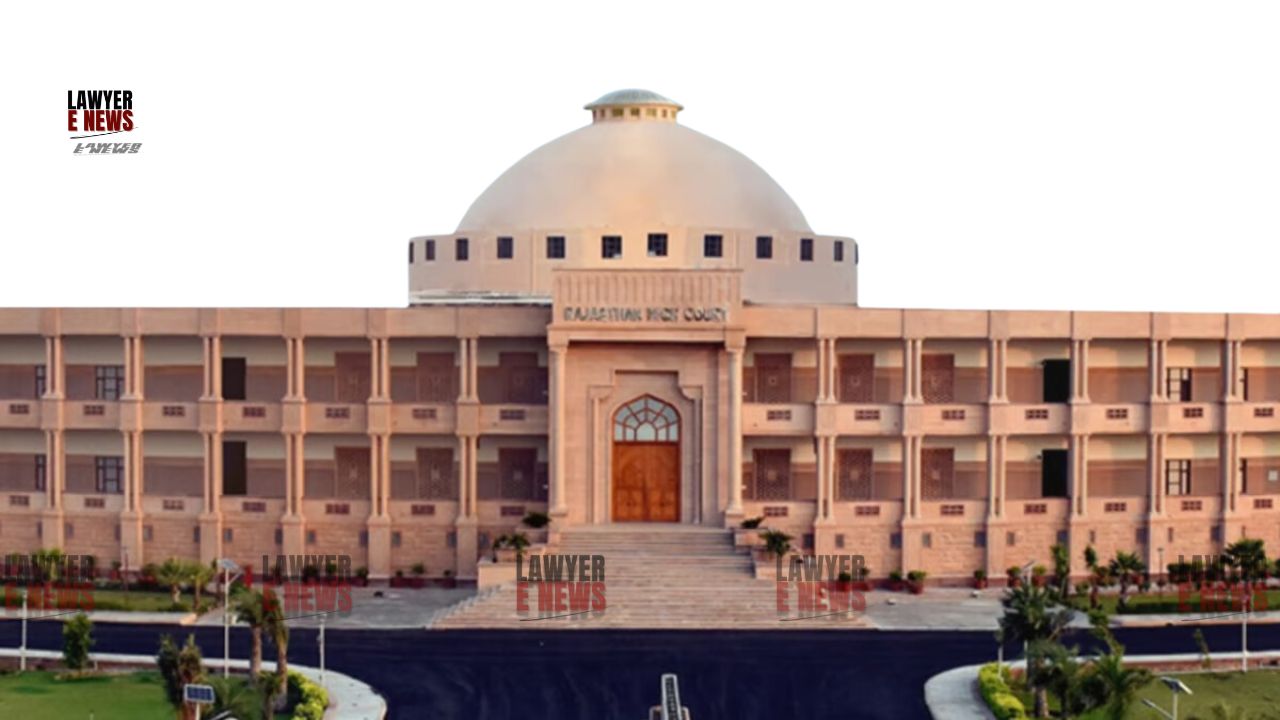
In a notable judgement, Rajasthan High Court quashed environmental compensation demands issued by the Rajasthan State Pollution Control Board (RSPCB). Justice Sunil Beniwal held that without a statutory framework in place, RSPCB lacked legal competence to impose such compensation, which had been calculated solely on the basis of non-binding CPCB guidelines. The Court directed that any amounts recovered must be refunded within six weeks, and no coercive action could be taken unless rules are framed as per Supreme Court’s ruling in Lodhi Property Co. Ltd. v. DPCC, 2025.
“Power to Impose Compensation Must Be Backed by Subordinate Legislation”: Court Finds RSPCB Orders Ultra Vires
The core issue before the Court was whether the Rajasthan State Pollution Control Board had the authority under Sections 31A and 33A of the Air (Prevention and Control of Pollution) Act, 1981 and the Water (Prevention and Control of Pollution) Act, 1974 respectively, to impose environmental compensation in the absence of any formal rules or regulations detailing the procedure, formula, or safeguards for such imposition.
Justice Beniwal held:
“The RSPCB could not have demanded Environmental Compensation while considering the fact that there is no statutory backing with regard to the mechanism to calculate Environmental Compensation so also to have an authority to demand such Environmental Compensation.”
Citing extensively from the Supreme Court’s authoritative decision in Lodhi Property Co. Ltd. v. DPCC [2025 SCC OnLine SC 1601], the Court reiterated that while pollution control boards may have the power to impose environmental damages, this power must be exercised only after subordinate legislation is enacted, incorporating principles of transparency, natural justice, and objective calculation criteria.
CPCB Guidelines of 2022 Have “No Legislative Force”: High Court Declines to Recognize Administrative Directives as Law
The CPCB’s “General Framework for Imposing Environmental Damages” issued in December 2022 had been relied on by RSPCB to justify the compensation amounts levied. However, the Court categorically held that:
“These guidelines have no statutory backing and, therefore... the RSPCB has no authority of law in demanding such Environmental Compensation.”
Emphasizing the Supreme Court’s directive in Lodhi Property, the High Court noted that guidelines must be translated into binding rules or regulations before they can have the force of law. The apex court had expressly stated that the power to impose environmental compensation must be backed by subordinate legislation, and without such a framework, any recovery would be legally unsustainable.
“Composite Orders Under Air and Water Acts Not Appealable Before NGT”: Writ Petition Maintainable Despite Alternative Remedy
Rejecting the RSPCB’s objection that the petitioners should have availed statutory remedies, the Court upheld the maintainability of the writ petition under Article 226 of the Constitution, reasoning that the orders passed were composite in nature—under both the Air Act and the Water Act—and no clear appellate mechanism existed for such mixed orders.
Citing Whirlpool Corporation v. Registrar of Trade Marks, (1998) 8 SCC 1, and Sterlite Industries v. Tamil Nadu PCB, (2019) 19 SCC 479, the Court observed:
“If order/action is without jurisdiction, then writ petition is maintainable despite alternative remedy being available.”
Accordingly, the Court held that the absence of jurisdiction and lack of statutory basis for the imposition of environmental compensation rendered the impugned orders liable to be quashed by the High Court.
Judicial Decisions Apply Retrospectively: Supreme Court Ruling in Lodhi Property Applicable to Past Demands
Although the RSPCB’s compensation demands were raised prior to the Supreme Court’s ruling in Lodhi Property Co. Ltd. (dated August 4, 2025), the High Court held that the apex court’s judgment applied retrospectively. Relying on Kanishk Sinha v. State of West Bengal, 2025 INSC 278, the Court explained:
“The judgment of the Court will always be retrospective in nature unless judgment itself specifically states that the judgment will operate prospectively.”
Thus, compensation demands issued in 2022–23, even before Lodhi Property was pronounced, were declared unsustainable on the same legal grounds.
Administrative Directions from NGT Do Not Authorize Boards to Assume Judicial Functions
Another important facet addressed by the Court was whether RSPCB could impose compensation solely based on directions from the National Green Tribunal. The Court agreed with the petitioners’ argument that NGT’s judicial functions under Section 15 of the NGT Act are non-delegable, and administrative bodies like the RSPCB cannot act as quasi-judicial authorities in imposing damages.
The Court stated:
“It is the NGT alone, who has been entrusted by the Act... and it is rather core adjudicatory function, which cannot be delegated to any administrative expert body.”
Hence, directions from the NGT did not cure the defect of lack of statutory competence on the part of the RSPCB.
“No Formula, No Transparency, No Damage Proven”: Court Finds Fundamental Flaws in RSPCB’s Demands
The Court further noted the arbitrary and vague manner in which environmental compensation was calculated in the present case. It observed that the compensation was imposed in a cyclostyled manner, without any explanation of how the amount was arrived at, who suffered damages, or what actual environmental harm occurred.
“There is no material available on record nor any impugned orders to reflect as to who has suffered damages or harmed.”
Without a transparent and rule-based process grounded in law, the Court held that RSPCB’s demands could not stand judicial scrutiny.
Compensation Demands Quashed, Refund Directed, Future Action Allowed Only Under Legal Framework
The High Court conclusively ruled that all impugned notices and orders imposing environmental compensation by RSPCB in the batch of writ petitions must be quashed. The RSPCB was barred from taking any coercive action on such basis, and any amount already collected was directed to be refunded within six weeks.
Justice Beniwal clarified that:
“The RSPCB can impose and collect restitutionary and compensatory damages... only after subordinate legislation is enacted detailing the principles and procedure incorporating basic principles of natural justice.”
Thus, while affirming the importance of environmental accountability, the Court firmly enforced the principle that statutory powers must be exercised within the bounds of law.
The Rajasthan High Court’s decision in M/s. Tata Bricks Company v. RSPCB is a significant reaffirmation of the doctrine that executive and regulatory bodies cannot bypass legislative requirements in the name of environmental governance. While environmental protection remains a constitutional mandate under Article 48A and 51A(g), such objectives must be pursued through lawful, fair, and transparent means.
By grounding its judgment in the Supreme Court’s authoritative pronouncement in Lodhi Property, the Court has ensured that rule of law and procedural fairness prevail even in environmental matters, where administrative overreach is often justified in the name of urgency. This judgment is likely to have far-reaching implications for pollution control boards across India, compelling them to adopt legally valid mechanisms before resorting to imposition of compensation.
Date of Decision: October 30, 2025