-
by sayum
04 August 2026 6:31 AM







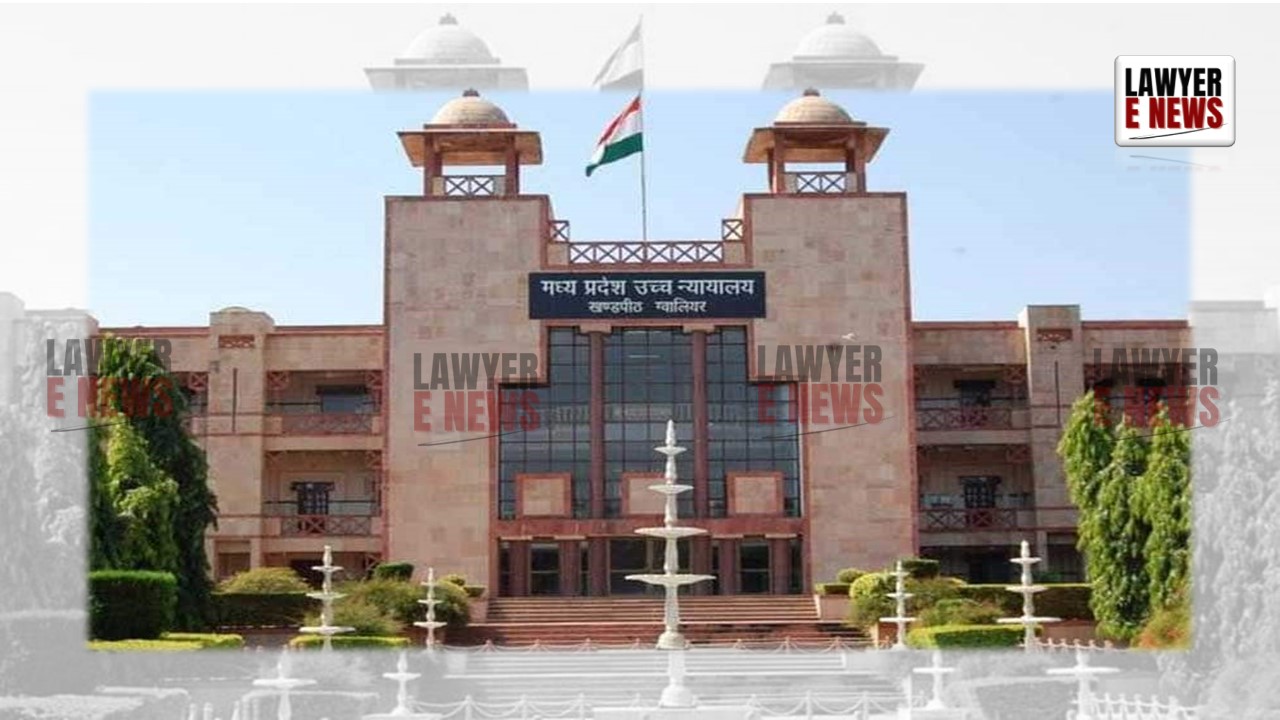
"When Suit Itself Is Founded On An Unproven Diary Entry, The Base Of The Suit Collapses" – Madhya Pradesh High Court, Indore Bench refused specific performance of a claimed agreement to sell agricultural land. Justice Prem Narayan Singh emphasized that mere entries in a diary or books of accounts are insufficient to establish a binding contract, reiterating that "the plaintiff must show continuous readiness and willingness" to perform his obligations. The Court's ruling reinforces that claims for specific performance demand unimpeachable proof and consistent conduct.
The dispute centered on a parcel of land at Khajrana, Indore. Firoz Khan, the appellant, alleged that the respondents had orally agreed to sell the land in 1995, followed by a written agreement dated 30/08/2000. It was asserted that part payments were made, recorded in a diary (Exhibit P/1). The appellant claimed continuous possession and filed a suit for specific performance when the respondents allegedly refused to execute the final sale deed. The Trial Court rejected the suit, citing lack of proof, leading to this appeal.
Justice Prem Narayan Singh, while examining the evidence, stressed, "Entries in books of account regularly kept in the course of business are relevant but not sufficient alone to charge any person with liability." Relying on Chandradhar Goswami v. Gauhati Bank Ltd., the Court refused to accept the diary (Exhibit P/1) as sole evidence of an agreement.
Regarding the validity of the written agreement (Exhibit P/2), the Court noted: "Since the agreement was executed by a power of attorney-holder on behalf of dead persons, it cannot have legal effect."
This struck a fatal blow to the appellant's claim of a subsisting enforceable contract.
As for the essential element of readiness and willingness, the Court found the appellant wanting. Highlighting contradictions, the Court quoted: "It is evident from the record that the appellant sought waiver of court fees on grounds of financial incapacity. This clarifies that the appellant was not ready and willing to perform his part."
The Court placed strong reliance on J.P. Builders v. A. Ramadas Rao and N.P. Thirugnanam v. Dr. R. Jagan Mohan Rao, underscoring that mere possession or assertions of readiness, without financial means, is insufficient.
The High Court also rejected the appellant's attempt to introduce fresh evidence at the appellate stage under Order 41 Rule 27 CPC, observing:
"Documents like Aadhaar card, passbooks, electricity bills were available earlier but were deliberately withheld at trial."
Ultimately, the Court ruled that: "When the suit itself is founded on belief in an unproven diary entry, the entire base of the suit collapses."
The Madhya Pradesh High Court’s decision crystallizes an important legal principle: for specific performance, claimants must not only prove the agreement clearly but also demonstrate unbroken financial readiness and willingness throughout. The judgment serves as a stern reminder that "Courts do not enforce uncertain, vague, or speculative claims based on questionable or insufficient evidence."
Date of Decision: 23 April 2025