-
by sayum
28 August 2026 12:24 PM







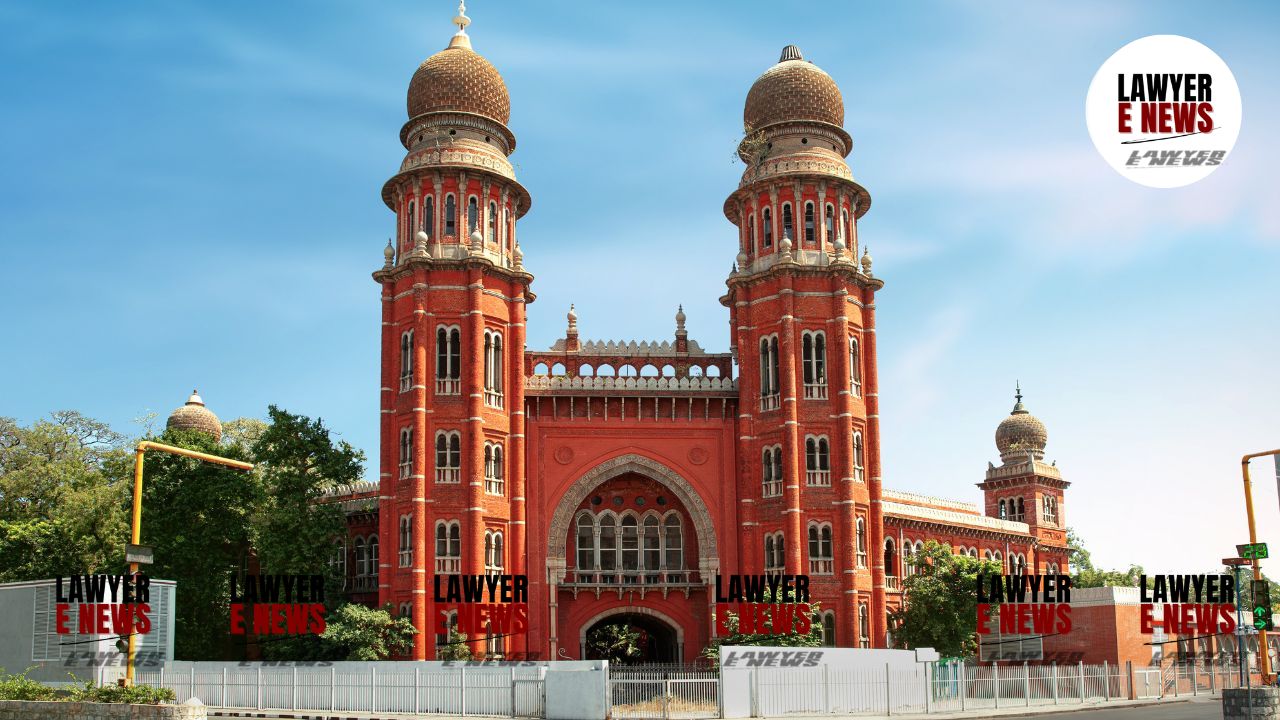
"Term ‘unfortunate’ may not be an adequate expression to describe the present case since in view of this Court, a grave mockery of justice, under the guise of dispensing justice been committed to the people of India," Madras High Court, in a scathing judgment, has declared Mr. M. Appavu as the duly elected representative of the Radhapuram Assembly Constituency for the 2016-2021 term, a full five years after the term expired.
A bench of Dr. Justice G. Jayachandran observed that the six-year stay by the Supreme Court on the declaration of recount results led to a situation where the constituency was represented by a person who was not actually elected by the people.
Court Recalls Decade-Long Litigation History
The matter originated from the 2016 Tamil Nadu Legislative Assembly elections where the petitioner, Mr. M. Appavu, lost to the first respondent, Mr. I.S. Inbadurai, by a slim margin of 49 votes. The petitioner alleged that valid postal ballots in his favour were wrongly rejected and sought a recount. After a prolonged trial, the High Court had ordered a recount of postal ballots and specific rounds of EVM counting in October 2019.
Recount Results Reveal Petitioner Had Won
Following the 2019 recount order, the results disclosed a significant shift in the tally. Out of 203 postal ballots previously rejected as invalid, the recount showed that 153 were validly cast in favour of Mr. Appavu, while only one was cast for the respondent. This resulted in Mr. Appavu winning the election by a total margin of 103 votes, effectively overturning the original declaration by the Returning Officer.
Impact Of Supreme Court Stay On Election Trials
The High Court expressed deep concern over the efficiency of election trials, noting that the Supreme Court entertained a Special Leave Petition in October 2019 and stayed the declaration of results for over six years. During this period of stay, two subsequent General Elections were conducted in 2021 and 2026. The Court noted that such delays reduce the adjudicatory process into a "mockery of justice" for the voters.
Non-Adherence To Section 86(7) Of RP Act
The Court highlighted that Section 86(7) of the Representation of the People Act, 1951, mandates that election petitions should be tried as expeditiously as possible and concluded within six months. Justice Jayachandran remarked that this mandate was "conveniently ignored" in the present case. The Court emphasized that the tenure of legislative bodies is relatively short, making the timely resolution of disputes a sacred responsibility under the Constitution.
"Delay Damages Credibility Of Judiciary"
Relying on the precedent in Mohd. Akbar vs. Ashok Sahu (2015), the Court observed that the resolution of election disputes rarely happens during the tenure of the declared candidate. The Court noted that the kind of delay seen in this adjudication exposes the judiciary to unpleasant criticism and damages the institutional credibility. It stressed that the right of appeal should not be used as a tool to protract litigation until the disputed term itself expires.
"Non-adherence to the mandate contained in Section 86(7) of the Representation of the People Act, 1951, will undermine democracy and the true spirit of adult franchise."
Headmasters Of Middle Schools Held As Gazetted Officers
A core legal issue in the petition was whether the rejection of 203 postal ballots was valid based on the status of the attesting officers. The Returning Officer had rejected them on the grounds that Middle School Headmasters are not Gazetted Officers. The High Court affirmed its earlier finding that under the Tamil Nadu Government Servants Conduct Rules, 1973, such Headmasters are indeed Gazetted Officers authorized to attest Form-13A.
Supreme Court Left Legal Question Open
The Court noted that when the Supreme Court finally disposed of the Civil Appeal in May 2026, it left the question of the Headmasters' status "open" due to the lapse of time and expiry of the term. Justice Jayachandran expressed that the Apex Court should have answered the question definitively, given that the High Court, as the Court of first instance, had already rendered a categorical finding on the matter.
Final Directions and Declarations
The High Court allowed the Election Petition, declaring the 2016 election of Mr. I.S. Inbadurai as void and Mr. M. Appavu as the duly elected member for the 2016-2021 term. The Court directed the Secretary of the Tamil Nadu Legislative Assembly to substitute Mr. Appavu's name in all official records for that period. However, it clarified that the respondent would not be disqualified but would be ineligible for pensionary benefits for that specific term.
The judgment serves as a stern reminder of the systemic failures in the Indian election dispute resolution mechanism. By the time the rightful winner was legally recognized, two more election cycles had commenced, rendering the practical relief of sitting in the Assembly impossible. The Court concluded that such delays fundamentally undermine the democratic pride of the nation as one of the largest democracies in the world.
Date of Decision: 03 June 2026