-
by sayum
28 August 2026 10:07 AM







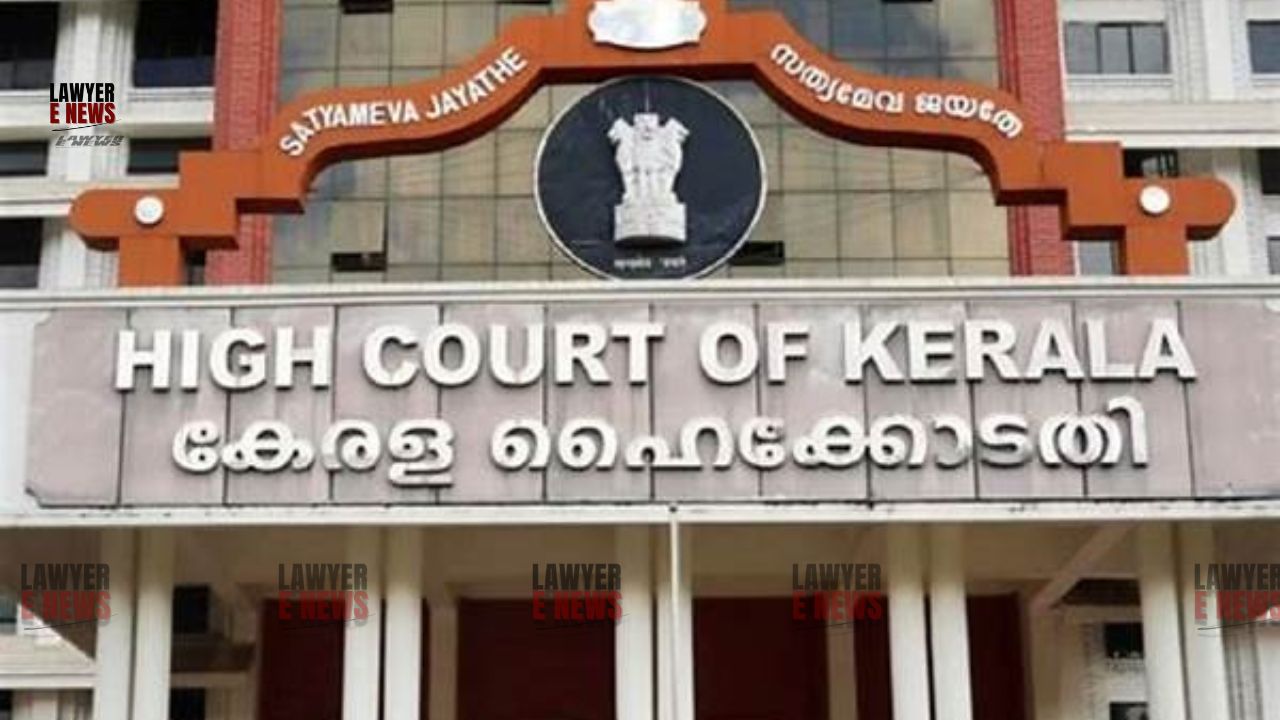
"It was the duty of the appellant to verify whether the 4th respondent was having valid title to mortgage the property to the Bank, before accepting it as security for the loan," Kerala High Court has held that the Debts Recovery Tribunal (DRT) cannot order the sale of Government land in cases where the allottee only possessed a mortgageable right over the superstructure and not the land itself.
A Division Bench comprising Justice Anil K. Narendran and Justice Muralee Krishna S., in a judgment dated June 2, 2026, observed that banks are duty-bound to verify whether a borrower has a valid title before accepting property as security. The Court emphasized that an order passed by the Tribunal without considering the State’s contentions regarding land ownership constitutes a gross violation of procedural fairness and natural justice.
The case originated when the Government of Kerala allotted ten acres of land on hire purchase to M/s ABN Granites Ltd for establishing an industrial unit. While permission was granted to mortgage the superstructure to IDBI Bank, the Government never assigned the land title (patta) as the company failed to start commercial production and abandoned the unit. Subsequently, the Government resumed the unutilised land and re-allotted it to a Powerloom Co-operative Society, but the Bank approached the DRT seeking to sell the entire land to recover debts exceeding ₹35 Crores.
The primary question before the court was whether a writ petition under Article 226 was maintainable against a DRT judgment when an alternative remedy of appeal existed under the Recovery of Debts and Bankruptcy Act, 1993. The court was also called upon to determine if a Bank could claim a mortgage over Government land when the allottee had not been granted ownership rights or title.
Writ Maintainable Despite Alternative Remedy If Natural Justice Violated
The Court addressed the Bank's contention that the State should have approached the Appellate Tribunal under Section 30 of the Recovery of Debts and Bankruptcy Act, 1993. The Bench noted that while the High Court usually refrains from entertaining writs when an efficacious alternative remedy exists, this is a rule of policy and discretion rather than a rule of law.
The Bench observed that where an order is passed in scant disregard to the provisions of law or in procedural violation, the High Court’s extraordinary jurisdiction under Article 226 remains intact. The Court held that since the DRT had passed its decree without looking into the detailed written statement filed by the State Government, the order was fundamentally flawed.
"The power to issue prerogative writs under Article 226 is plenary in nature. Any limitation on the exercise of such power must be traceable in the Constitution itself."
Bank Failed In Due Diligence Regarding Land Title
Regarding the merits of the mortgage, the Court found that the property in question was never assigned to the borrower by the Government. The records indicated that the right to mortgage was strictly limited to the superstructure and machinery, not the land. The Bench pointed out that the General Manager of the District Industries Centre had explicitly stated in certificates that the documents did not guarantee the issuance of a patta.
The Court highlighted that the Bank accepted the mortgage based on mere recommendations and clarifications that did not confer ownership. It ruled that the Bank had a legal obligation to ensure the borrower held a valid, transferable title before sanctioning the loan against the land as security.
"From the documents produced, it is prima facie established that the right to mortgage was given to the borrower only in respect of the superstructure and not the land in question."
DRT Order Ignored State's Contentions On Public Property
The Division Bench expressed concern that the DRT judgment did not mention a single word regarding the contentions raised by the Government of Kerala, despite the State having filed a comprehensive written statement. The Court noted that even though the Government was represented by a Government Pleader, the Tribunal failed to frame issues pertaining to the title of the borrower.
The Bench remarked that when public money and public property are involved, the courts must ensure that the rights of the State are not compromised through procedural irregularities. The Court affirmed the Single Judge's decision to set aside the DRT's decree, finding it necessary to remand the matter for a fresh adjudication that considers the State's ownership claims.
"Ext.P20 judgment can only be termed as one passed without following the procedure and in violation of the principles of natural justice."
Delay Immaterial When Public Money And Land Are At Stake
The Court rejected the Bank’s argument that the writ petition should have been dismissed due to a four-and-a-half-year delay. Citing Supreme Court precedents, the Bench held that in cases involving patent illegality in the treatment of public land, a lenient view on delay must be taken to further the interests of justice.
The judges noted that the resumed land had already been re-allotted to a Co-operative Society which had invested heavily in a powerloom complex. Allowing the Bank to sell this land for the debts of a previous allottee who never owned the land would result in a gross miscarriage of justice and loss to the public exchequer.
The Division Bench dismissed the writ appeal filed by IDBI Bank, confirming the Single Judge’s order to quash the DRT’s recovery certificate against the land. The Court directed the Tribunal to reconsider the matter after giving the State Government and all concerned parties a fair hearing to determine the true extent of the Bank's security interest.
Date of Decision: 02 June 2026