-
by sayum
28 August 2026 8:44 AM







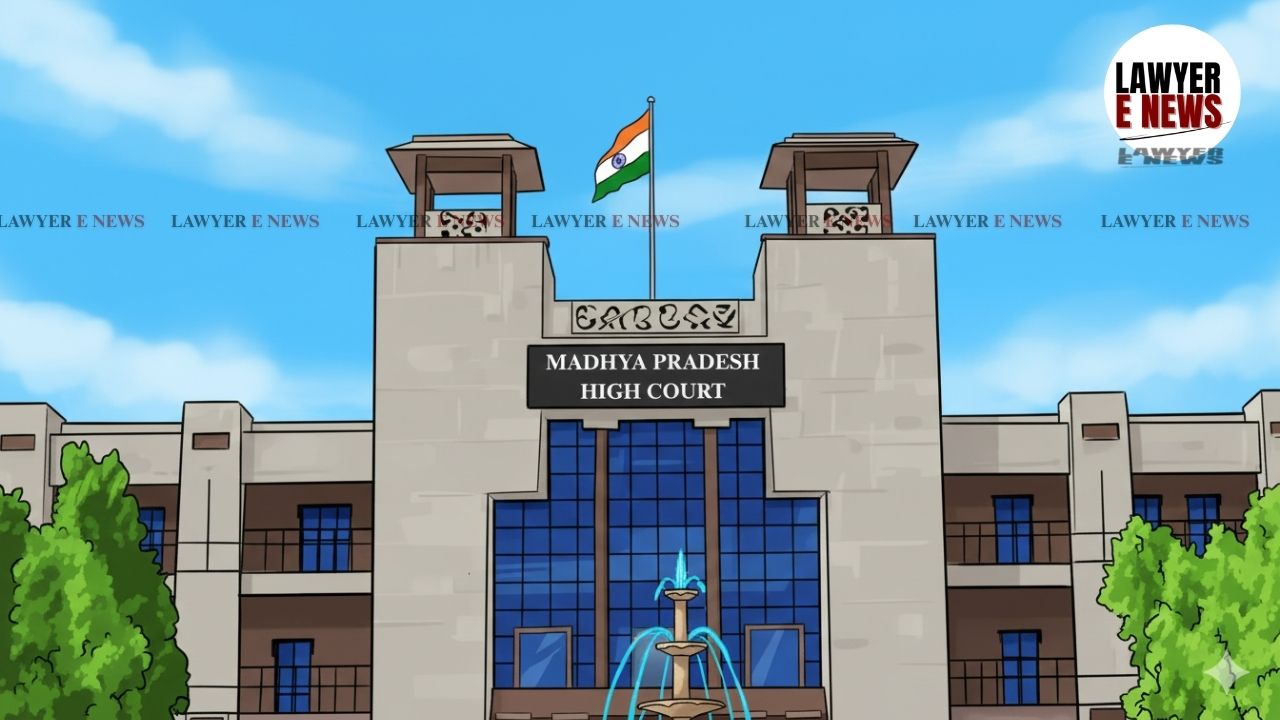
"If divorce daughters are not included within definition of family then fundamental rights guaranteed under Article 14 of the Constitution of India shall be violated as there is no difference between unmarried daughter, married daughter or divorcee daughter," Madhya Pradesh High Court, in a significant ruling, held that a divorced daughter cannot be excluded from the definition of "family" for the purpose of granting family pension.
A single-judge bench of Justice Vishal Dhagat observed that treating a divorced daughter differently from unmarried or widowed daughters would be a direct violation of the Right to Equality guaranteed under the Constitution of India.
The Court noted that when the pension rules already include various categories of daughters—including married daughters—there is no rational basis to deny the same benefit to a divorced daughter, provided she meets the criteria of dependency.
The petitioner, Jyoti Shrivastava, is the divorced daughter of late Shanker Lal Shrivastava, who served as a District Commandant in the Home Guards and retired in 2001. Following the death of her father and subsequently her mother in 2017, she applied for the nomination of her name for family pension. Her claim was rejected by the Director General, Home Guards, on December 16, 2021, on the grounds that a "divorcee daughter" was not a dependent under Rule 48 of the Madhya Pradesh Civil Services (Pension) Rules, 1976.
The primary question before the court was whether the exclusion of a divorced daughter from the definition of "family" under Rule 44(5) and Rule 48 of the 1976 Rules was legally sustainable. The court was also called upon to determine if such an exclusion constitutes a violation of Article 14 of the Constitution of India.
Court Explains Scope Of "Family" Under Pension Rules
The Court perused Rule 44(5) and Rule 48(11) of the Madhya Pradesh Civil Services (Pension) Rules, 1976, which define "family" for the purposes of death-cum-retirement gratuity and family pension. The rules include wives, husbands, sons, unmarried daughters, widowed daughters, and even married daughters within the ambit of the term "family."
The bench noted that while the provision explicitly mentions various categories of daughters, it remains silent on the status of a divorced daughter. However, the court found that this omission could not be used to deny benefits to a daughter who is otherwise situated similarly to those mentioned in the rules.
Exclusion Of Divorced Daughter Violates Article 14
Justice Dhagat observed that there is no fundamental difference between an unmarried daughter, a married daughter, or a divorced daughter in the context of their relationship with the deceased government servant. The court emphasized that the spirit of the law must be inclusive rather than exclusive when dealing with social security benefits like pensions.
The Court held that if divorced daughters are not read into the definition of family, the provision would fail the test of reasonable classification under Article 14. The bench remarked that such an interpretation is necessary to ensure that the rules do not become discriminatory against a specific class of legal heirs.
"Married daughter is included as family member, therefore, there is no reason to exclude divorce daughter from definition of family."
Dependency As The Primary Criterion For Pension
The Court further analyzed Rule 48(5)(a) of the Rules of 1976, which mandates that for certain family members, evidence of dependency must be furnished to show they were reliant on the deceased government employee. The bench clarified that the right to receive a pension is not absolute but is subject to the fulfillment of conditions regarding earning or dependency.
The High Court noted that the petitioner's claim was rejected primarily because she was a "divorcee" and not because she failed the dependency test. The court emphasized that once a divorced daughter is recognized as part of the "family," her eligibility must then be tested on the grounds of whether she has an independent source of income.
"Divorcee daughter is also required to be treated equally with daughters mentioned in Rule 44(5) of Rules of 1976 otherwise it would violate rights under Article 14 of the Constitution of India."
Final Directions Of The Court
In light of these observations, the High Court quashed the impugned order dated December 16, 2021, passed by the Director General of Home Guards. The court found the order to be in violation of the petitioner’s constitutional rights and directed the authorities to reconsider her case.
The respondents were directed to evaluate whether the petitioner was dependent on the deceased government servant and whether she lacked an independent source of income. The Court ordered the competent authority to pass a fresh order within 90 days from the date of receipt of a fresh representation along with relevant evidence from the petitioner.
The judgment reinforces the principle that social welfare legislations and pension rules must be interpreted in a non-discriminatory manner. By placing divorced daughters on the same footing as unmarried and widowed daughters, the court has ensured that marital status does not become a barrier to accessing financial security intended for dependents of deceased government employees.
Date of Decision: 12 May 2026