-
by sayum
25 August 2026 11:12 PM







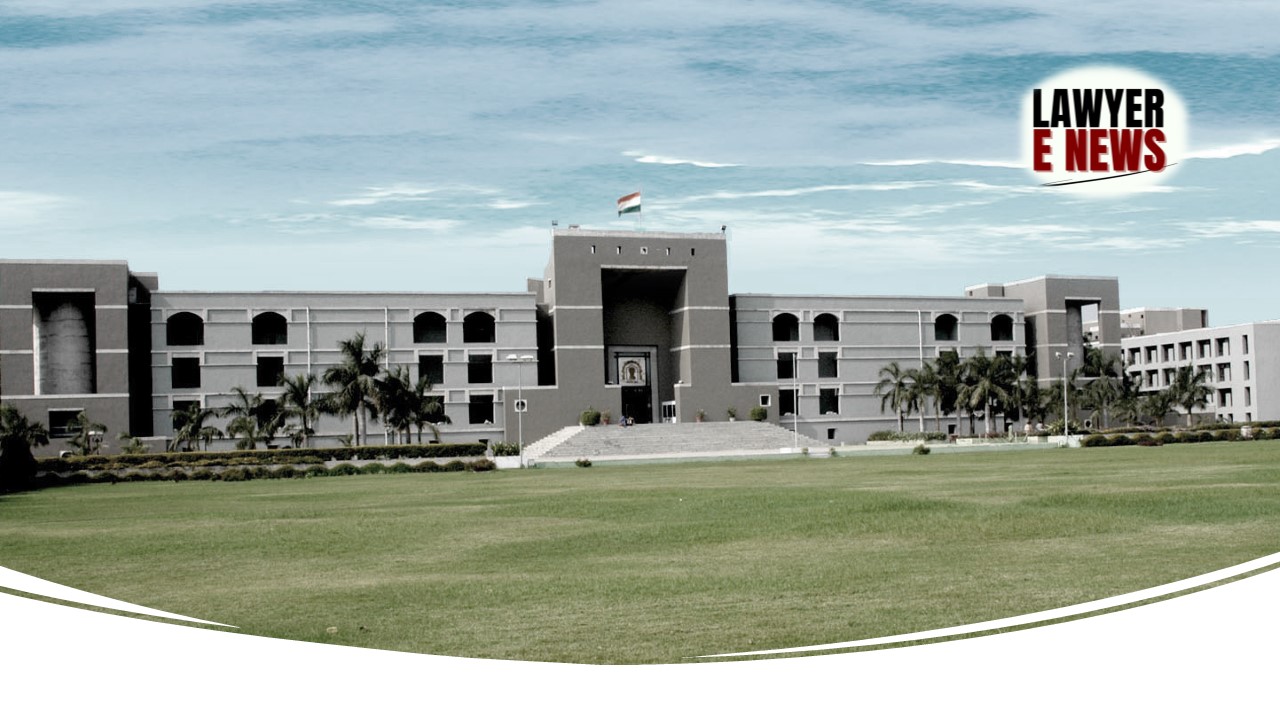
“The dichotomy about the status of the firm—whether dissolved or not—prevents the dispute from being treated as non-arbitrable at this stage,” held Justice Mauna M. Bhatt of the Gujarat High Court, reaffirming the primacy of arbitral autonomy and judicial non-intervention under Section 5 of the Arbitration and Conciliation Act, 1996.
Gujarat High Court rejecting a writ petition filed under Articles 226 and 227 of the Constitution that sought to challenge an arbitral tribunal’s decision declining a Section 16 A&C Act jurisdictional objection. The Court underscored that the arbitrability of disputes involving a "partnership at will" and asset distribution cannot be summarily negated when the very status of dissolution is contested. The petition was dismissed as non-maintainable, with all jurisdictional objections left open for challenge under Section 34 post-award.
Partnership at Will, Asset Distribution, and Consent to Arbitration
The petitioner and respondent were partners in a firm M/s B.D. Engineers, governed by a Partnership Deed dated 20.04.1996, with the partnership expressly declared as one "at will." Disputes arose regarding the firm’s operations and dissolution, culminating in a joint notice dated 04.05.2018 indicating business closure w.e.f. 30.06.2018. However, a second notice dated 01.05.2019, issued unilaterally by the respondent, purported to confirm dissolution, which was disputed by the petitioner in a reply dated 24.05.2019.
Amidst these conflicting claims, arbitration proceedings were initiated under Clause 12 of the partnership deed. Importantly, the appointment of the Arbitrator was by consent through a Section 11 application.
Subsequently, when the Statement of Claim included prayers for dissolution and distribution of assets, the petitioner raised a Section 16 application, contending that the subject matter was non-arbitrable as it involved "winding up" akin to an action in rem. This plea was rejected by the Arbitral Tribunal on 07.06.2023, leading to the present writ petition.
“Scope of Judicial Interference Is Extremely Narrow”: Court Dismisses Writ as Not Maintainable
Justice Mauna Bhatt, after an exhaustive examination of precedent and statutory provisions, observed:
“Entertaining such petition would dismantle the efficiency and autonomy of arbitration. Allowing every interim order to be re-litigated in the Constitutional Court would defeat the very purpose of the Act.”
Relying heavily on Section 5 of the Arbitration and Conciliation Act, 1996, the Court held that interference with arbitral proceedings is permissible only in ‘exceptional rarity’ or where “bad faith” is clearly shown, citing the Supreme Court’s decisions in Serosoft Solutions Pvt. Ltd. v. Dexter Capital Advisors Pvt. Ltd. (2025) and Bhaven Construction v. Executive Engineer, SSNNL (2022).
“The principle of judicial non-interference permeates the scheme of the Act,” the Court quoted from SBI General Insurance Co. Ltd. v. Krish Spinning, 2024 INSC 532, reinforcing that courts cannot interfere in jurisdictional determinations made by arbitral tribunals, which have exclusive authority under Section 16.
Arbitrability of Partnership Disputes: Status of Firm Still Disputed
At the core of the petitioner’s argument was the claim that upon dissolution, the dispute became non-arbitrable, relying on Sections 43 and 46 of the Indian Partnership Act, 1932, and Supreme Court judgments in Booz Allen & Hamilton Inc. (2011) and Vidhya Drolia v. Durga Trading Corporation (2021). It was contended that winding up proceedings are actions in rem, not amenable to private arbitration.
However, the Court decisively rejected this argument, observing:
“Even though the petitioner contends that the partnership firm has been dissolved, the contention… seems to be otherwise… With there being a dichotomy with regard to whether the partnership firm has in fact been dissolved or not, this Court does not find merit in the submission that the Arbitral Tribunal does not have any jurisdiction.” [Para 9.1]
The Court also distinguished R. Subbulakshmi v. R. Venkitapathy (2023 MHC 3634), relied upon by the petitioner, noting that it involved challenge to an interim award under Section 34, not a jurisdictional rejection under Section 16, and thus was factually and legally distinguishable.
“Not Every Erroneous Order Is Amenable to Writ Jurisdiction”: Observations on Maintainability
On the maintainability of writ petitions against arbitral orders, the Court reiterated that:
“Mere disagreement with the arbitral ruling or allegation of legal error does not suffice to invoke Article 226/227 jurisdiction.”
Quoting Serosoft Solutions, the Court listed the parameters where writ jurisdiction can be exercised, including perversity that “must stare in the face” or demonstrable bad faith, neither of which were found in the present case.
Further, the Court clarified that a final award, if passed, can still be challenged on jurisdictional grounds under Section 34 of the Act, thereby preserving the petitioner’s rights without disrupting the arbitral process.
“This is not a case where there are allegations of breach of principles of natural justice… All rights and contentions of both parties are kept open.” [Para 13]
Contractual Interpretation: Arbitration Clause Not Excluded Post-Dissolution
Clause 12 of the Partnership Deed mandated arbitration of disputes relating to the “business or terms of the deed,” while Clause 13 referred to matters governed by the Indian Partnership Act. The petitioner argued that post-dissolution, the matter falls under Clause 13 and thus is non-arbitrable.
The Court rejected this interpretation:
“With the existence and even the fact of dissolution itself being in dispute, Clause 12 remains applicable at this stage. The jurisdiction of the tribunal cannot be ousted merely on the assertion of dissolution, especially when the records show continued business activity.” [Para 9–9.1]
The Court noted the production of tax returns, GST records, and bank statements indicating that the partnership was still operationally active, adding weight to the respondent’s stand that dissolution was not conclusively established.
Judicial Restraint Reaffirmed in Arbitral Framework
Summing up, the Gujarat High Court reiterated that courts should not disrupt arbitral proceedings unless compelled by extreme circumstances, particularly where statutory remedies are still available. The doctrine of "minimal interference" under Section 5 of the A&C Act, bolstered by the competence-competence principle under Section 16, was firmly upheld.
The writ petition was dismissed as not maintainable, with a firm message that jurisdictional objections must await the post-award challenge under Section 34, unless the arbitral order is patently illegal, perverse, or motivated by bad faith.
Date of Decision: 06 November 2025