-
by sayum
25 August 2026 11:12 PM







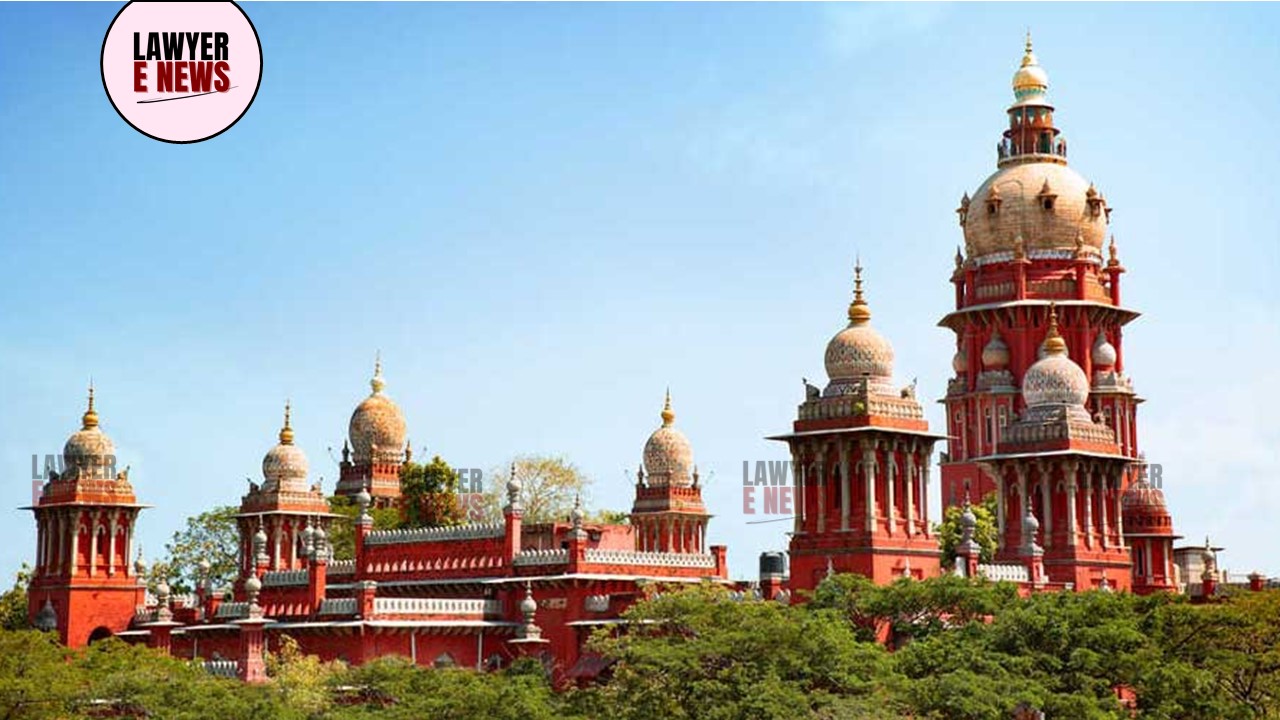
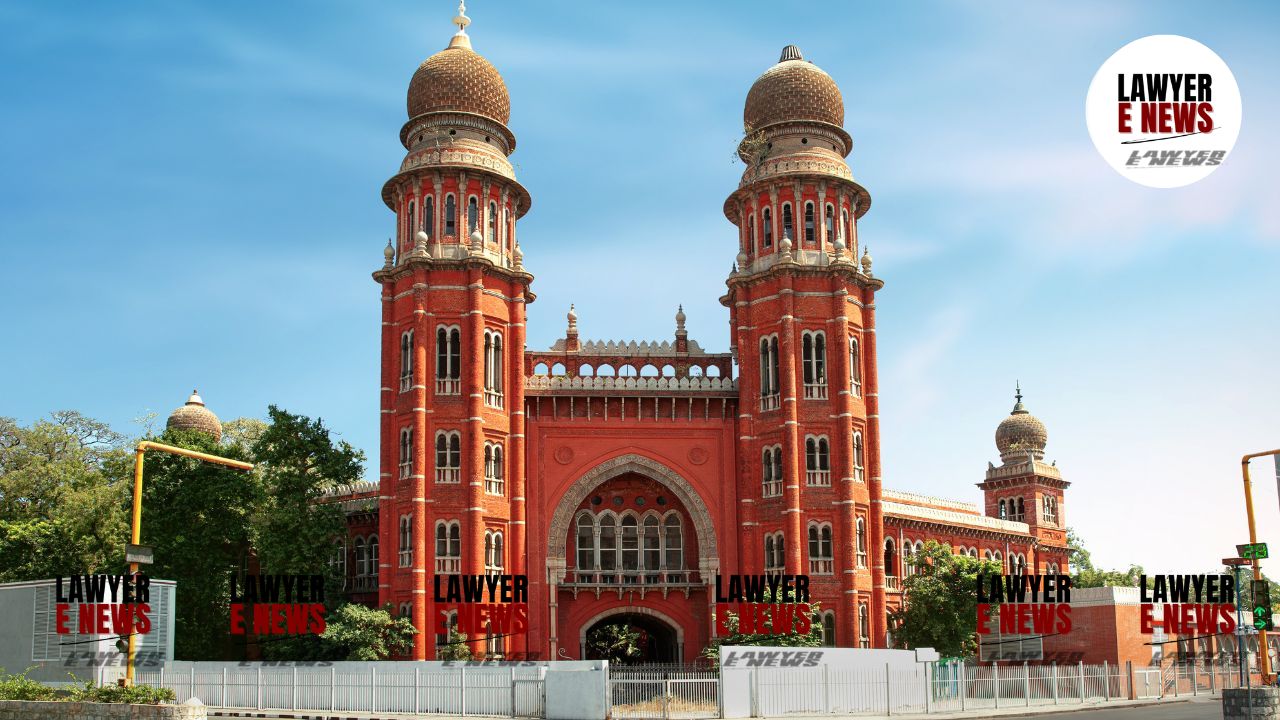
“Audit Clearance and Departmental Sanction Do Not Immunize from Criminal Prosecution Under the Prevention of Corruption Act”— Madras High Court refused to quash the criminal proceedings against several former Executive Officers of various Town Panchayats in Salem District, accused of criminal conspiracy and corruption in connection with the procurement of vehicle-mounted fogging machines at rates allegedly exceeding the Maximum Retail Price (MRP). The Court held that the grounds raised by the accused—pertaining to procedural compliance, audit clearance, and selective prosecution—raised disputed questions of fact, which can only be examined at trial, not at the stage of a quash petition under Section 482 of the Criminal Procedure Code.
Justice M. Nirmal Kumar observed: “Whether the purchases were collusive, dishonest, or in violation of MRP instructions are questions of fact which require evidence to be tested during trial. Audit clearance is not conclusive to absolve criminal liability.”
The petitions arose from charges framed under Sections 13(2) read with 13(1)(a) of the Prevention of Corruption Act, 2018, along with IPC offences such as Sections 120-B, 409, 420, 465, 467, 468, 471 and 474, in Spl.C.C.Nos.1 to 3 of 2024 pending before the Special Court for Prevention of Corruption Cases, Salem.
“Charge Sheets Supported by Witness Statements, Documents, and Sanction—No Grounds to Quash”
“Power under Section 482 CrPC is to prevent miscarriage of justice, not to short-circuit criminal trials on disputed facts”
The accused—former Executive Officers of nine Town Panchayats—had approached the High Court seeking quashing of the criminal charges, contending that the purchases made during 2018–2019 were approved by competent authorities, based on tender processes, and were in line with rates prevalent across 180 other Panchayats.
However, the Court was not persuaded. Justice Nirmal Kumar held that: “Audit approvals or departmental permissions do not erase criminal liability where prima facie material shows dishonest misappropriation.”
“There are sufficient materials in the charge sheet, supported by statements of witnesses and official records. Once cognizance has been taken, the case must proceed to trial.”
The Court also emphasized that judicial interference at the pre-trial stage is warranted only in cases where the allegations are inherently improbable, or when the prosecution is manifestly malicious, which was not the case here.
“MRP Is Not Open to Tender Manipulation—Accused Allegedly Colluded to Fix Inflated Prices in Violation of Official Instructions”
“All suppliers quoted identical inflated rates—Cartelization and collusion are factual issues to be proved at trial, not quashed upfront”
According to the DVAC Vigilance Report, the petitioners were found to have procured fogging machines from select traders, bypassing broader tender invitations and allegedly quoting prices that exceeded the MRP fixed by manufacturers.
“Sri RR Traders quoted ₹5,72,000/-, Deva Traders ₹5,73,000/-, and Nedunchezhian Enterprises ₹5,74,000/-—this near-identical quoting across Panchayats indicates possible collusion and cartelization,” the Court noted.
The prosecution argued that despite specific instructions from the Assistant Director of Town Panchayats to ensure machines were procured within the MRP, the Executive Officers approved purchases well above the MRP, without deducting excess amounts.
While the petitioners claimed that the prices were comparable to those uploaded on the Government e-Marketplace (GeM) and aligned with purchases made by other Panchayats, the Court found that:
“Quoting GeM rates of 2020 is irrelevant when the purchases were made in 2018–2019. The MRP for the relevant period is fixed and must be adhered to.”
The Court noted that the petitioners failed to establish emergency conditions such as dengue outbreaks to justify the urgency or deviation from standard procurement norms.
“Selective Prosecution and Mala Fide Intent Are Trial Issues—No Impeccable Material to Interfere at This Stage”
“Merely showing that other Panchayats also purchased at similar prices is not enough to quash proceedings—Discriminatory prosecution must be proved by unimpeachable evidence”
One of the core contentions raised by the petitioners was that 180 Town Panchayats had similarly purchased fogging machines at comparable prices during the relevant period, yet only these petitioners were targeted, indicating mala fide and selective prosecution.
However, the High Court ruled that: “Motive and malice are matters of fact and must be established through evidence. The Court cannot accept unverified RTI data or assumptions to short-circuit the prosecution.”
“The petitioners have not produced any unimpeachable material to conclude that the prosecution is arbitrary or discriminatory.”
It was also clarified that the Assistant Director of Town Panchayats, initially named as A1, was dropped from the charge sheet after investigation did not reveal any active participation or gain in the alleged conspiracy.
“Public Servants Are Accountable—Official Resolutions and Departmental Letters Do Not Immunize Against Corruption Charges”
“Sanction for prosecution was obtained lawfully; audit approvals cannot override criminal liability under PC Act”
Rejecting the petitioners' claim that they acted in good faith based on resolutions, tenders, and instructions from their superior officer, the Court clarified:
“Sanction was obtained from the competent authority under Section 19(1)(c) of the PC Act after detailed examination. Audit clearance is not a shield from prosecution where the material indicates criminal conspiracy or loss to public funds.”
The prosecution also asserted that emergency procurement powers under the District Municipalities Act cannot be invoked without actual public health emergencies, which were not established by the petitioners.
Quash Petitions Dismissed—Trial to Proceed on Merits
Concluding the judgment, the High Court stated: “The points raised by the petitioners are factual and disputed by the prosecution. No impeccable material is produced to overlook the charge sheet. Hence, these Criminal Original Petitions stand dismissed.”
It further directed: “The trial court shall proceed uninfluenced by any of the observations made in this order and decide the case on its own merits.”
Date of Decision: 16 September 2025