-
by sayum
28 August 2026 10:07 AM







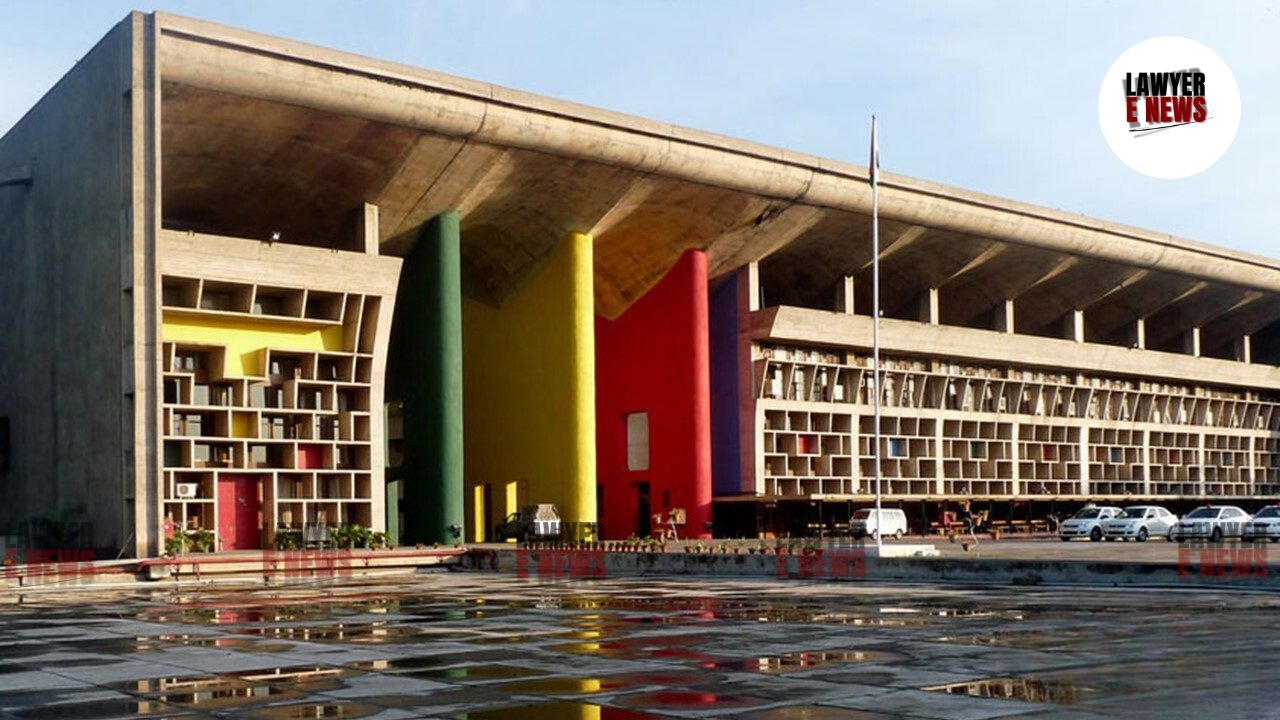
"Against a person such an inquiry caused by words could still be sutured, but against a community, the injury multiplies. Therefore, the healing hand needs to be in tandem." Punjab and Haryana High Court, in a significant ruling, held that high-ranking public officials are expected to maintain restraint and exhibit sensitivity towards all sections of society, regardless of caste or creed.
A bench of Justice Sumeet Goel observed that derogatory remarks made by a person in a position of authority carry a potential social impact that cannot be brushed aside, especially when such remarks enter the public domain and incite communal disharmony.
The petitioner, a Superintending Engineer in Uttar Haryana Bijli Vitran Nigam Limited (UHBVNL), sought anticipatory bail in connection with FIR No. 90 registered at Police Station Sonepat City. The prosecution alleged that a video clip featuring the petitioner participating in a conversation containing derogatory and abusive remarks against a particular community had gone viral, leading to public resentment. This was the petitioner's second attempt to seek pre-arrest bail after his previous petition was dismissed as withdrawn.
The primary question before the court was whether a private conversation containing derogatory remarks against a community attracts the rigours of Section 196(1) of the BNS once it becomes viral. The court also examined whether a second petition for anticipatory bail was maintainable without a substantial change in circumstances and the extent of responsibility a senior public servant holds in maintaining social harmony.
Maintainability Of Second Anticipatory Bail Petition
The Court noted that the petitioner had earlier applied for pre-arrest bail before the High Court, which was dismissed as withdrawn on April 20, 2026. Subsequently, the Court below also dismissed his plea on April 23, 2026. The State argued that the second petition was not maintainable as there was no substantial change in circumstances.
Court Explains Reach Of Section 196(1) BNS
The bench observed that the material collected during the investigation prima facie reflected that objectionable and derogatory remarks targeting a particular community were made in a conversation where the petitioner was an active participant. The language used was not only abusive but also capable of inciting resentment and communal disharmony.
Private Nature Of Conversation No Shield Against Communal Tension
Addressing the petitioner’s argument that the conversation was private and held behind closed doors, the Court held that this cannot dilute the seriousness of the allegations. The bench remarked that once the contents of such a conversation enter the public domain and generate communal tension, the "private" nature of the origin loses its significance at the stage of bail.
"The contention raised on behalf of the petitioner that the conversation was private in nature cannot, at this stage, dilute the seriousness of the allegations, particularly when the contents thereof entered the public domain and allegedly generated communal tension in the area."
The 'Speech Act Theory': Words As Actions
Justice Sumeet Goel invoked the 'Speech Act Theory' delineated by John Searle and J.L. Austin to emphasize that spoken words do not merely have a communicative purpose but also perform actions. The Court detailed the ‘Locutionary Act’ (saying something), the ‘Illocutionary Act’ (the core purpose or intent), and the ‘Perlocutionary Act’ (the effect on the listener).
Words Carry Consequential Meaning And Physical Impact
The Court observed that words carry emotional, psychological, and even physical impacts. It noted that intentions are carried through words, and wise counsel dictates that they be spoken with care to avoid altercations or misunderstandings. The bench emphasized that even a one-time intense diatribe against a community could have cascading ramifications.
"Therefore, words have a consequential meaning; they carry an emotional, psychological and even a physical impact. Intentions are carried through words... Any unwitting or unintentional remarks passed against a community, repeated articulations or even a one-time intense diatribe or even a forceful articulation can have cascading ramification."
High-Ranking Officials Must Exhibit Sensitivity And Restraint
The Court highlighted that the petitioner admittedly holds the post of Superintending Engineer and is a senior public functionary. Such a person is entrusted with responsibilities affecting the public at large and is expected to uphold constitutional morality. The use of derogatory remarks by a public servant in authority assumes greater significance due to its social impact.
Custodial Interrogation Necessary For Effective Investigation
The bench agreed with the State that custodial interrogation was necessary to examine electronic devices, identify the source of the recording, and determine the roles of other persons involved. The Court referred to the Supreme Court judgment in Sumitha Pradeep vs. Arun Kumar C.K. and another (2022), which held that the prima facie case is the foremost consideration for bail.
"There appears to be a serious misconception of law that if no case for custodial interrogation is made out by the prosecution, then that alone would be a good ground to grant anticipatory bail... The first and foremost thing that the court hearing an anticipatory bail application should consider is the prima facie case put up against the accused."
Balancing Individual Rights With Societal Interests
The Court concluded that while considering a plea for anticipatory bail, it must equilibrate between safeguarding individual rights and protecting societal interests. Given the magnitude of the offence and the potential impact on social peace, the Court found no compelling ground to grant the concession of bail to the petitioner.
The High Court dismissed the petition, holding that the investigation was at a nascent stage and the possibility of the petitioner interfering with the probe could not be ruled out. The bench clarified that its observations were only for the purpose of deciding the bail plea and should not be treated as an expression of opinion on the merits of the case.
Date of Decision: 20 May 2026