-
by sayum
28 August 2026 8:44 AM







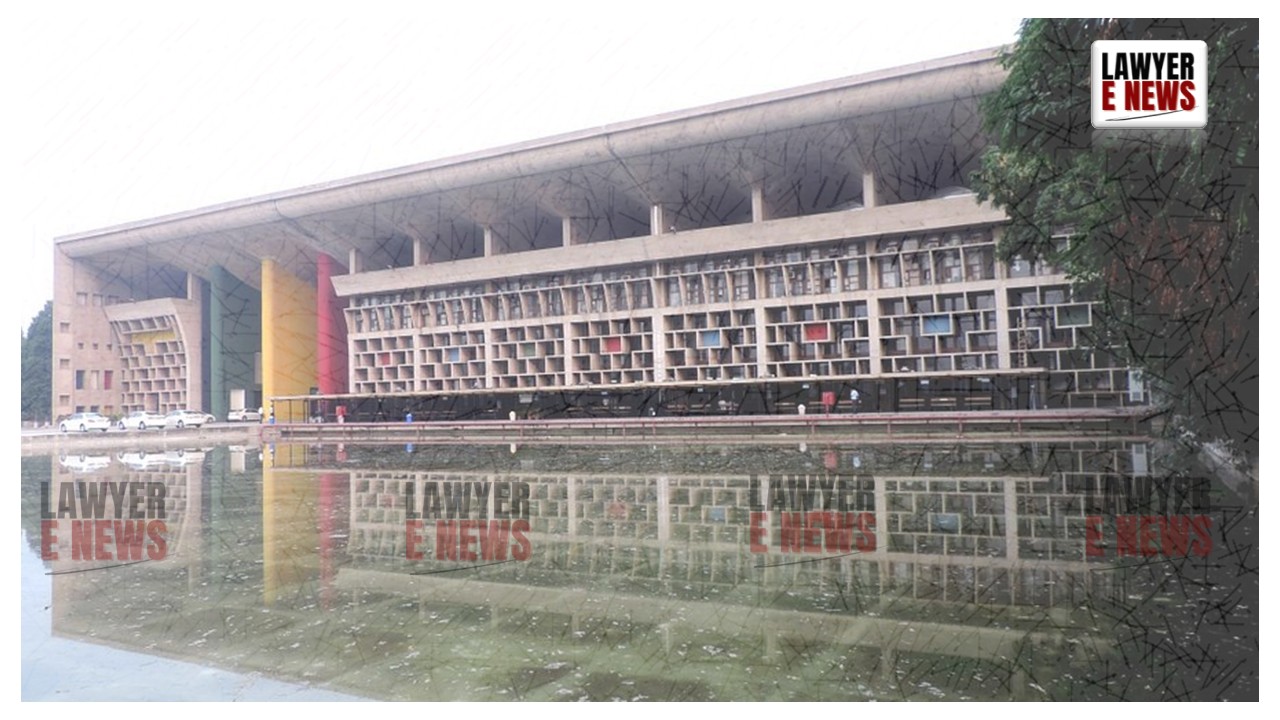
“The fundamental right to life as enshrined under Article 21 of the Constitution of India would become endowed to the present petitioner, which otherwise would not become endowed…” - In a landmark judgment Punjab and Haryana High Court struck down an arbitrary cut-off date prescribed by the State of Punjab that denied access to electricity connections in unauthorized colonies to certain categories of plot owners. The Court declared that the action of denying a permanent electricity connection, despite valid sale deeds and sanctioned constructions, constituted a clear violation of the petitioner’s “fundamental right to life as enshrined under Article 21 of the Constitution.”
“The cut-off date has no worth at all in the present factual scenario… and to the said extent it is required to be read down, and is so read down.”
The petitioner, Jaishree Bagga, had legally purchased 11 marlas of land in Silver Estate, Bajwara Bypass, District Hoshiarpur, and constructed a residential house after obtaining necessary approvals and building plan sanctions. A temporary electricity connection was sanctioned on 28.03.2022. However, on 1.4.2024, her electricity supply was disconnected without notice or justification. Despite applying for a permanent connection on 24.06.2024 and paying the requisite fees, the petitioner was left without electricity in peak summer.
Upon inquiry, the petitioner learned that the refusal stemmed from Clause 2.0 of a Government notification dated 25.11.2024, which stipulated that only those who had executed documents before 31.07.2024 would be eligible for registration without needing a No Objection Certificate. This condition effectively excluded the petitioner from being considered eligible, despite her valid title and sanctioned construction.
“The prescription of the cut-off date snatches or truncates the rights of those vendees who had earlier acquired a perfect title over the disputed plots.”
Justice Sureshwar Thakur, delivering the judgment, held that the impugned clause operated to the detriment of lawful property holders who had obtained proper sale deeds and building sanctions. He ruled that the clause, as it stood, “is neither based on any intelligible differentia nor has any nexus with the objective sought to be achieved.”
The Court was unequivocal that the requirement of re-registration imposed by the clause was legally unsustainable, stating: “There was no requirement as such to re-register the plot with the Sub Registrar concerned… The power to rescind the earlier executed deed of conveyance became vested only in the Civil Court concerned.”
Criticising the clause further, the Court observed: “The cut-off date is meaningless and/or redundant… it has no legal worth in the present factual scenario.”
Emphasizing the constitutional breach, the Court remarked: “The respondent concerned is directed to release all the basic amenities, vis-a-vis the subject plot, therebys the fundamental right to life as enshrined under Article 21… would become endowed to the present petitioner.”
“Accordingly, the impugned Clause 2.0… is hereby quashed and set aside.”
In quashing Clause 2.0 of the notification dated 25.11.2024 and the subsequent circular dated 04.12.2024, the Punjab and Haryana High Court not only provided relief to the petitioner but reaffirmed that access to basic civic amenities like electricity is integral to the constitutional guarantee of life and dignity. The ruling underscores that administrative convenience cannot override constitutionally guaranteed rights, especially when they jeopardize basic survival in an urbanized society.
The Court's directive to grant a permanent electricity connection to the petitioner affirms that the State must act within the bounds of fairness, non-discrimination, and legality, especially where essential services are concerned.
Date of Decision: 3 April 2025