
-
by sayum
28 August 2026 10:07 AM







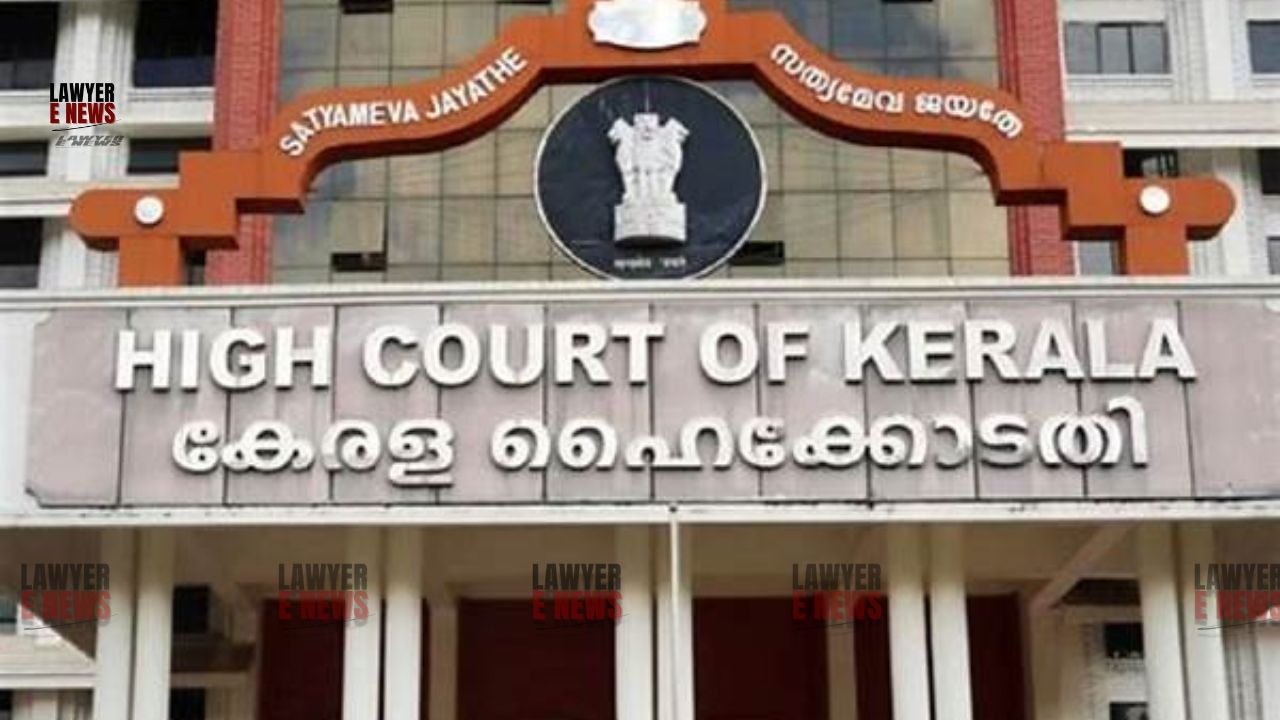
"In the absence of specific mentioning of the amount in the demand notice there is no demand for payment of the actual/specific amount covered by the cheque in the eye of law," Kerala High Court has ruled that a statutory demand notice issued under Section 138 of the Negotiable Instruments Act, 1881, is legally incomplete and invalid if it fails to specifically mention the amount of money covered by the dishonoured cheque.
A bench of Justice A. Badharudeen, in a important judgment, observed that the phrase "makes a demand for the payment of the said amount of money" in proviso (b) to Section 138 mandates a specific demand for the exact sum to allow the drawer an opportunity to avoid penal consequences.
The case arose from a complaint filed by the appellant regarding the dishonour of a cheque for ₹95,000. While the trial court confirmed the issuance and dishonour of the cheque, it acquitted the accused on the grounds that the statutory notice sent by the complainant did not mention the specific amount demanded. The complainant challenged this acquittal before the High Court, arguing that since there was only a single transaction between the parties, the accused was well aware of the amount, and the omission was a mere technicality.
The primary legal issue before the High Court was whether a demand notice that merely mentions the cheque number and date, without specifying the amount, satisfies the requirements of proviso (b) to Section 138 of the NI Act. The court was also called upon to determine if the non-mentioning of the amount could be overlooked in cases where only one transaction existed between the complainant and the accused.
Court Analyzes Five Stages Of The Deemed Offence Under Section 138
The Court began by reiterating that an offence under Section 138 of the NI Act is a "deemed offence" that is complete only upon the fulfillment of five specific stages. These include the issuance of the cheque for a legally enforceable debt, its presentation within the validity period, its dishonour, the issuance of a demand notice within thirty days, and the subsequent failure of the drawer to pay the demanded amount within fifteen days.
Justice Badharudeen emphasized that the fourth stage—the issuance of the demand notice—is governed strictly by the language of the statute. The Court noted that proviso (b) specifically uses the phrase "makes a demand for the payment of the said amount of money," which indicates that the notice must be specific about the quantum of the debt to be repaid.
Specific Amount Mention Essential To Facilitate Payment And Avoid Penal Liability
The Bench observed that the very purpose of the statutory notice is to provide the drawer of the cheque a final opportunity to settle the debt and avoid criminal prosecution. If the notice does not specify the actual amount due, the Court reasoned that it becomes impossible for the recipient to know exactly what sum must be paid to satisfy the demand and escape penal liability.
"Once the notice failed to mention the actual/specific amount due, the possibility to repay the actual/specific amount which failed to be asked for would become impossible."
The Court rejected the appellant's contention that the amount could be inferred because there was only one transaction between the parties. It held that even on a meticulous reading of provisos (b) and (c) of Section 138, the statute mandates a specific demand. The Court clarified that the law does not permit such an inference when a specific statutory mandate exists for the demand of the "said amount of money."
Absence Of Specific Demand Results In No Offence In The Eye Of Law
The High Court further held that a notice failing to mention the specific amount is "incomplete" and cannot be considered a legal notice in the eyes of the law. Since the demand itself was found to be non-existent due to the lack of specificity, the subsequent failure to pay within fifteen days would not attract the penal provisions of Section 138.
"In the absence of demand for the actual/specific amount demanded in the notice, no offence would be completed, particularly, the ‘deemed offence’."
Concluding that the trial court was justified in its findings, the High Court affirmed the acquittal of the accused. The Bench noted that the verdict impugned did not require any interference as the complainant had failed to satisfy a fundamental statutory prerequisite for prosecution under the Negotiable Instruments Act.
The appeal was accordingly dismissed, with the Court confirming that a demand for the "said amount of money" is a non-negotiable requirement for a valid notice under Section 138.
Date of Decision: 26 May 2026