-
by sayum
26 August 2026 4:42 AM







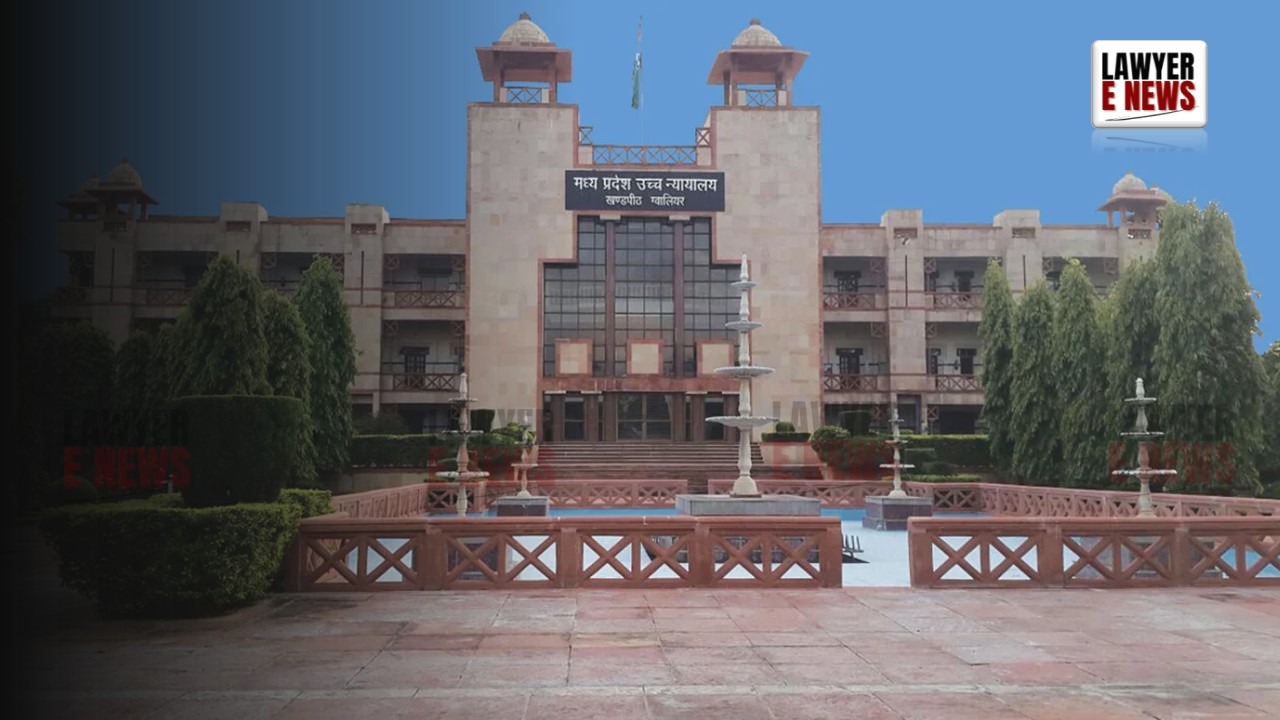
“Section 17 of SARFAESI is not appellate, it’s an original proceeding—so Section 5 of the Limitation Act applies,” ruled the Madhya Pradesh High Court in a crucial decision that puts an end to conflicting interpretations regarding whether borrowers can seek condonation of delay in filing applications under the SARFAESI Act. Division Bench comprising Justice Vivek Rusia and Justice Binod Kumar Dwivedi held that Debt Recovery Tribunals (DRTs) are fully empowered to condone delays in such cases, provided there is sufficient cause shown.
The judgment has now created binding clarity on the issue, ensuring that borrowers are not denied access to DRT on mere technicalities of time.
“SARFAESI Does Not Exclude Limitation Act—So Delay Can Be Considered”
The Court rejected the DRT’s stand that it had no authority to entertain time-barred applications under Section 17 of the SARFAESI Act. It declared:
“There is no express exclusion of Sections 4 to 24 of the Limitation Act, 1963 under the SARFAESI Act. Therefore, delay in filing applications under Section 17 can be condoned by the Tribunal, if justified.”
Section 17 gives borrowers the right to challenge measures taken by secured creditors—such as possession of mortgaged property. While the law provides a 45-day time limit, the Court made it clear that this is not an absolute bar.
Referring to Section 29(2) of the Limitation Act, the Court held that when a special statute like SARFAESI prescribes a limitation period but does not exclude the Limitation Act, then the Limitation Act provisions automatically apply.
“A Borrower Cannot Be Shut Out for Delay Without Hearing His Reasons”
In strong words reinforcing the right to legal remedy, the Court observed:
“The right conferred under Section 17 is not an empty formality—it is a substantial safeguard. Denial of hearing on the ground of delay, without even considering the reasons, defeats the very purpose of the law.”
The Court emphasized that proceedings under Section 17 are original in nature and not appellate, as is often misunderstood. It pointed out that such applications are equivalent to filing a civil suit for protection of possession and property, and hence must be treated accordingly by DRTs.
“Borrower and Bank Cannot Be Treated Unequally—Same Tribunal, Same Law”
The judgment also took note of the fact that banks are allowed to take benefit of the Limitation Act when filing applications under Section 19 of the RDB Act, which governs recovery by financial institutions. Since Section 17 of SARFAESI and Section 19 of RDB Act are heard by the same forum—the DRT, the Court said it would be unjust to deny the borrower what the bank is allowed.
“If banks can seek condonation of delay under the Limitation Act while approaching DRT, then borrowers too must be given that right. Equality before law cannot be one-sided.”
“Ground Realities Like COVID, DRT Vacancy and OTS Talks Must Be Considered”
Taking a realistic view of why delays happen, the Court acknowledged that many borrowers are caught in genuine situations beyond their control. It noted that the COVID-19 pandemic, unavailability of DRT benches, and ongoing One Time Settlement (OTS) discussions with banks often lead to delays in filing Section 17 applications.
“These are not intentional delays. Tribunals should apply their mind to the cause shown and exercise discretion in a fair and just manner.”
“No Bar in SARFAESI Like In Appeals—So Tribunal Can Hear Delayed Applications”
The High Court noted that unlike certain laws which contain express bars on condoning delay beyond a certain time, the SARFAESI Act does not have such a clause. For example, certain appellate provisions in other laws say the appeal “shall not be entertained after expiry of prescribed time”. The absence of such a clause in Section 17 is crucial.
“In absence of any such bar, the Limitation Act fills the gap—and allows the Tribunal to do justice in deserving cases.”
“Access to DRT Is Not a Charity—It’s a Statutory Right”
Reiterating that DRT is the only forum available to borrowers due to the bar on civil courts under Section 34 of SARFAESI, the Court held that denying this right without considering delay applications would render the law meaningless.
“Borrower’s right to approach the DRT is not charity—it is a statutory right. That right cannot be refused merely on account of delay, especially when reasons are legitimate and documented.”
High Court Sets Aside DRT Orders—Sends Cases Back for Fresh Hearing
The Madhya Pradesh High Court allowed the borrowers’ petitions, set aside the DRT’s orders, and directed the Tribunals to hear the delay condonation applications afresh on merits. It also dismissed the review petition filed by a bank, thereby upholding its earlier interpretation of the law.
In doing so, the Court aligned itself with Supreme Court decisions such as Mardia Chemicals v. Union of India, Baleshwar Dayal Jaiswal v. Bank of India, and others, as well as High Court rulings including Fair Style Embroidery Works v. DRT-III Chandigarh.
This judgment of the Madhya Pradesh High Court brings much-needed clarity and relief to borrowers who are often pushed out of the legal process due to minor delays. It reaffirms that substance must prevail over form, and that DRTs must exercise discretion in a lawful and fair manner when borrowers seek a hearing on delay.
It establishes that Section 17 SARFAESI applications are judicial proceedings, and borrowers cannot be non-suited without consideration of their condonation pleas. The Court’s view respects both the spirit of the SARFAESI Act and the borrower's constitutional right to access justice.
Date of Decision: November 3, 2025