-
by sayum
28 August 2026 10:07 AM







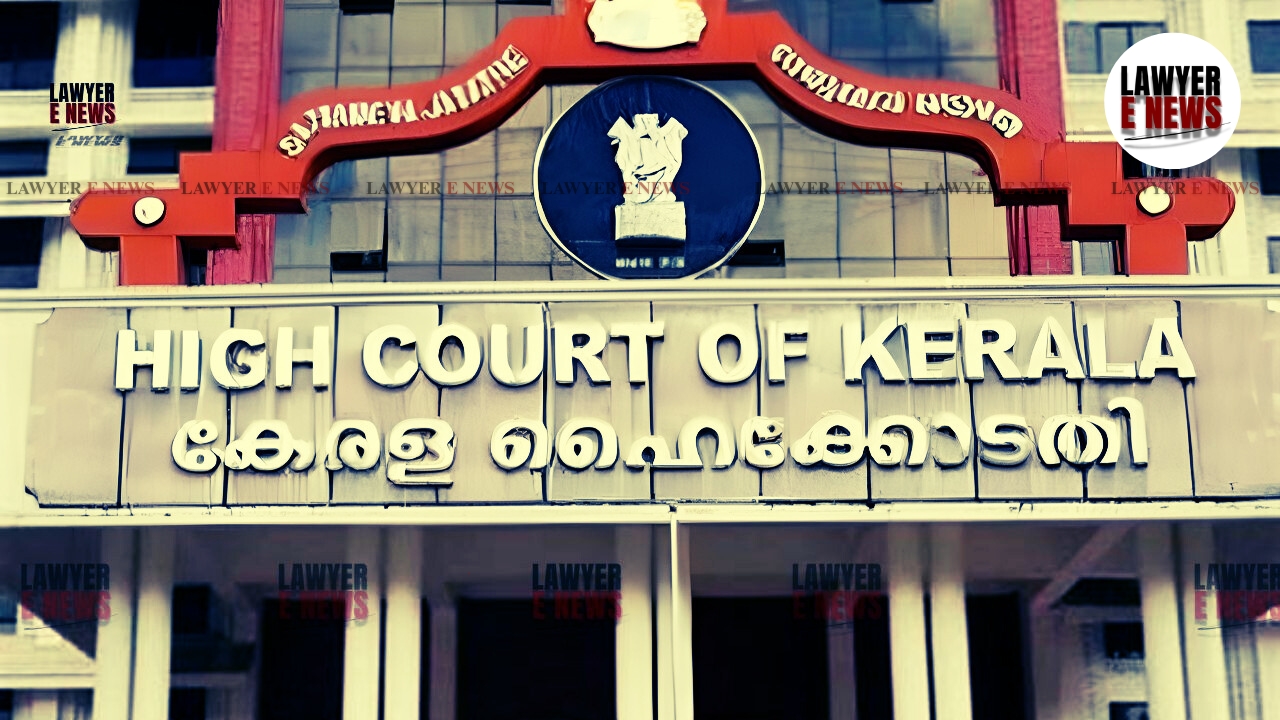
"Court is not an expert to fix the payments to be made to the employees, which is a lengthy process... However, it is the responsibility of a welfare State to ensure a decent living wage to its employees," Kerala High Court has held that while the power to fix pay scales and service conditions belongs exclusively to the executive domain, the State cannot indefinitely delay the formulation of such rules for pre-primary teachers and ayahs by citing bureaucratic hurdles.
A Division Bench comprising Justice Anil K. Narendran and Justice Muralee Krishna S., in a judgment dated May 26, 2026, observed that the State, as a "constitutional employer," has a duty under Article 43 of the Constitution of India to ensure a decent standard of life for its employees.
The case arose from a long-standing dispute involving pre-primary school teachers and ayahs appointed by Parent-Teacher Associations (PTAs) in various Government schools. Despite a 2012 Division Bench judgment directing the State to evolve a suitable policy for pre-school education and fix interim wages, the Government delayed action for over a decade. In 2022, the Government issued an order (Ext.P10) postponing the framing of service rules until the National Education Policy 2020 was implemented, which led to a fresh round of litigation.
The primary question before the court was whether the State could indefinitely postpone the formulation of service conditions for pre-primary staff pending the implementation of central policies. The court was also called upon to determine whether a writ court is justified in fixing specific monetary amounts for honoraria or pay scales in the absence of an executive decision.
State Cannot Indefinitely Delay Implementation Of Judicial Directions
The Court expressed strong disapproval of the State's "bureaucratic laziness" and delay tactics in implementing the 2012 directions. It noted that the Government took almost 10 years to come up with an order that essentially postponed the framing of service rules indefinitely. The Bench observed that the directions in the earlier judgment were categoric and were meant to relieve the suffering of a marginalized group of society.
The Bench held that the Government cannot take a stand that the scheme or service conditions cannot be formulated till the implementation of the National Education Policy. "The said attitude of the Government is nothing but a clear violation, or in other words, scant disregard to the directions in the 2012 judgment," the court remarked. Consequently, it upheld the Single Judge's decision to set aside the Government Order dated April 4, 2022.
Fixation Of Pay Scales Is Purely An Executive Function
While the Court agreed that the Government had "slept over" the directions, it found that the Single Judge had overstepped by fixing the honorarium at ₹27,500 for teachers and ₹22,500 for ayahs. Relying on the Apex Court's ruling in S.C. Chandra v. State of Jharkhand, the Bench reiterated that granting pay scales is an executive function and courts should exercise judicial restraint to avoid a "cascading effect" of financial problems for the authorities.
The Court noted that the judiciary is not an expert body equipped to undertake the lengthy process of pay fixation, which requires considering pay parity, duties, responsibilities, and inflation rates. The Bench observed that while the interim amounts fixed in 2012 were grossly insufficient at present, the specific escalation ordered by the Single Judge lacked a detailed evidentiary basis.
"No wisdom can be squeezed into by the executive, either by way of Government Orders or otherwise, to diffuse a settled judicial order."
State Must Act As A Model Employer Under Constitutional Mandates
Drawing from the principles of the Directive Principles of State Policy, the Court emphasized that under Article 43, the State shall endeavor to secure a living wage and conditions of work ensuring a decent standard of life. The Bench referred to the Supreme Court's observations in Dharam Singh v. State of U.P., noting that "ad-hocism" thrives where administration is opaque and that the State cannot balance budgets on the backs of those who perform basic and recurring public functions.
The Bench highlighted that the work done by pre-primary teachers is "not less noble or tiresome" than that of primary school teachers. It noted that even if the court cannot fix the exact scale, it must ensure that the State does not treat its workers in an unreasonable or prejudicial manner. The court directed that the State must take note of the claim for regularization with specific reference to the dictum in Jaggo v. Union of India.
Final Directions On Time-Bound Compliance
In its final order, the Court mandated a strict timeline for the Government. It directed the State to finalize and complete the formulation of service conditions for the pre-primary staff within four months. Furthermore, the Government was ordered to take a decision on the enhanced ad hoc honorarium payable to these employees within two months, taking the date of the first writ petition in 2014 as the starting point.
The Bench made it clear that this decision must account for the inflation rates and the observations made in the 2012 judgment. While the specific monetary fixation by the Single Judge was set aside, the requirement for a "reasonable escalation" was underscored as a necessity for a welfare state to fulfill its constitutional obligations.
In conclusion, the High Court balanced the doctrine of separation of powers with the rights of marginalized employees. It reaffirmed that while the executive holds the "purse strings" and the power to fix pay, it cannot use policy implementation as a shield to evade judicial mandates or to deny its employees a living wage.
Date of Decision: 26 May 2026