-
by sayum
28 August 2026 8:44 AM







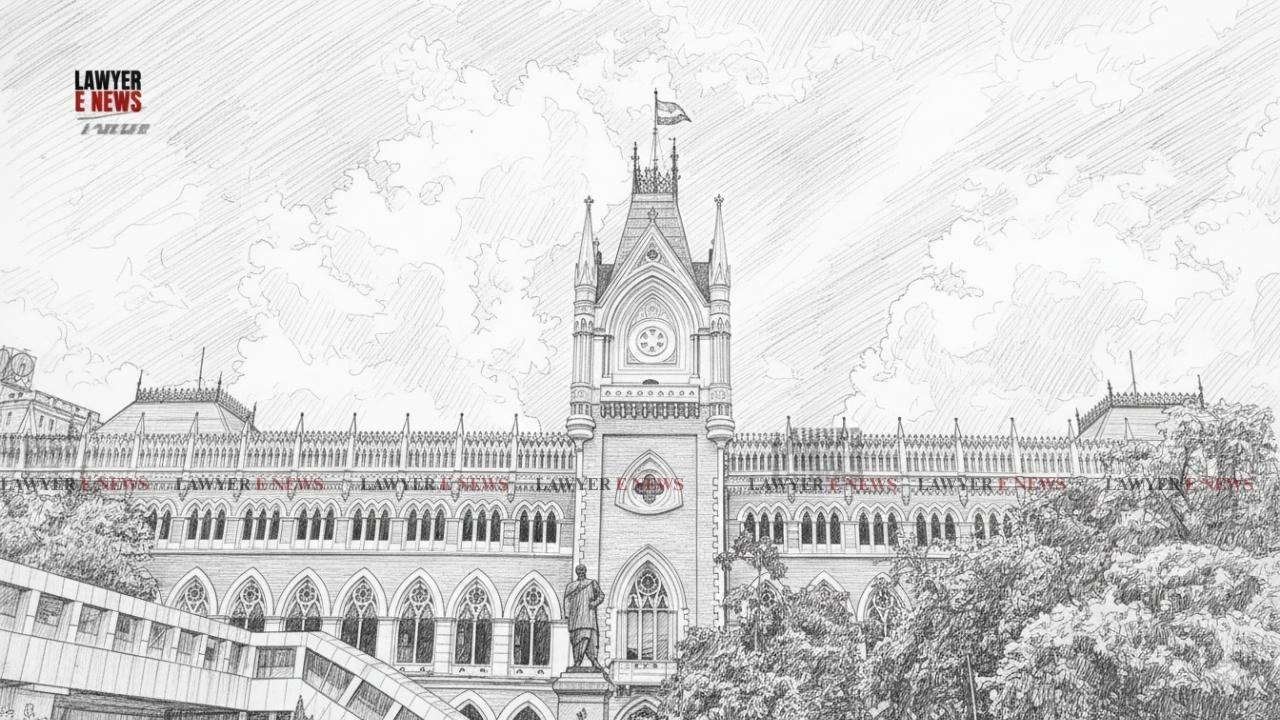
"As the property belongs to deities and Court is the Guardian of the Deities in order to protect the interest of the Deities and for regular performance of Seba-Puja it is necessary to appoint special officer to conduct an enquiry," High Court at Calcutta, in a significant ruling, held that the judiciary serves as the guardian of deities and must take proactive steps to protect their interests during property disputes.
A single bench of Justice Biswaroop Chowdhury observed that even where a plaintiff’s prima facie case appears weak due to pleading deficiencies, limited interim protection may be necessary to ensure the regular performance of Seba-Puja and to prevent the alienation of the deity’s estate.
The petitioner, a plaintiff in a suit for partition and declaration, moved the High Court after being denied an ex-parte ad-interim injunction by both the Trial Court and the First Appellate Court. The dispute centers on Shebaitship rights and the management of properties allegedly belonging to family deities, which the petitioner claimed were being neglected by the opposite parties residing outside West Bengal.
The primary question before the court was whether ad-interim protection can be granted in a Shebaitship dispute when there are apparent discrepancies between the title deeds and the plaint schedules. The court was also called upon to determine its duty as the protector of a deity's interest when joint Shebaits are in conflict over the management and alienation of religious property.
Ad-Interim Injunctions
The Court began by examining the principles governing temporary injunctions under Order XXXIX Rule 1 of the CPC. It noted that the three foundational pillars—prima facie case, balance of convenience, and irreparable injury—must be strictly satisfied. The Court referenced Anand Prasad Agarwalla v. Tarkeshwar Prasad, noting that it is inappropriate for a court to conduct a "mini-trial" at the stage of granting temporary injunctions.
Court Evaluates Discrepancies In Property Schedules
While reviewing the findings of the lower courts, Justice Chowdhury noted that the partition deed of 1904 relied upon by the petitioner did not immediately align with the properties described in the suit schedules. The Court observed that the schedules in the deed referred to different police station limits and measurements compared to those mentioned in the plaint.
"This Court does not find any error with regard to the observation made by the Learned Appellate Court regarding plaintiff not having Prima facie case."
The Doctrine Of Parens Patriae Regarding Deities
Despite the weak prima facie case, the High Court emphasized the unique nature of the suit involving religious endowments. The Court held that since the property belongs to the deities, the judiciary must act as their guardian to prevent any abuse of the process of the law. The bench noted that the protection of the deity’s interest is paramount, transcending the procedural lapses of the litigating parties.
"In the interest of justice and to prevent the abuse of the process of Court plaintiff/petitioner should be given an opportunity to amend the plaint and take such other steps necessary under law."
Appointment Of Special Officers For Fact-Finding
To resolve the factual impasse, the Court appointed Joint Special Officers to visit the suit properties. Their mandate is to ascertain who is currently performing the daily Seba-Puja and who remains in physical occupation of the premises. The Court directed that this report would be essential for the Trial Court to ultimately decide the pending injunction application.
Interim Protection To Prevent Alienation
While remitting the matter to the Trial Court, Justice Chowdhury granted a limited ad-interim injunction for six weeks. The defendants were restrained from alienating, disposing of, or parting with the possession of the suit property. This order was deemed necessary to preserve the status quo until the Trial Court could evaluate the Special Officers' report and the amended pleadings.
"The ad-interim order of injunction restraining the defendants from alienating, disposing or parting with possession of the suit property and from changing the nature and character of suit property shall remain for a period of 6 weeks."
The High Court concluded by clarifying that it had not delved into the final merits of the title dispute, leaving all legal points open for the Trial Court’s adjudication. The court emphasized that the preservation of the deity's property is a necessity that outweighs the technical deficiencies in the initial application, provided such deficiencies are remediable through amendment.
Date of Decision: 22 May 2026