-
by sayum
28 July 2026 11:21 AM







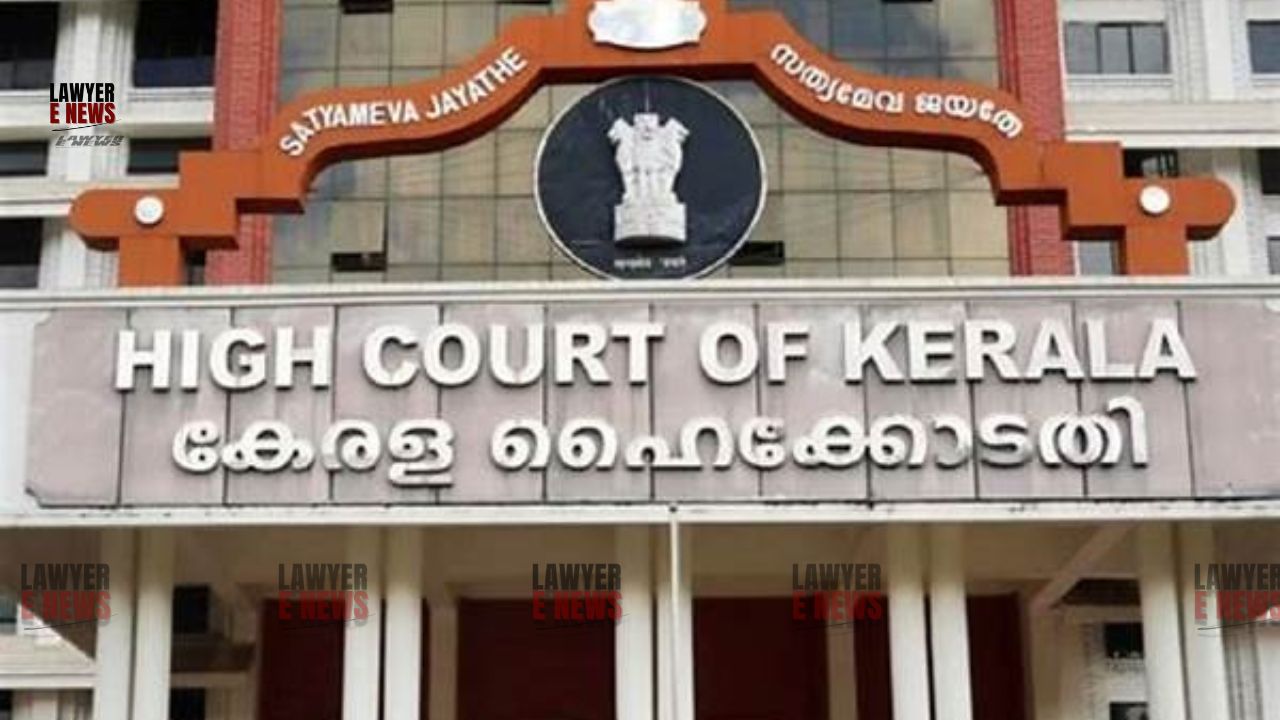
"Truth is always a chimera and the illusion surrounding it can only be removed by valid evidence led, either direct or indirect... to enter into a purely moral conviction, total anathema to criminal jurisprudence," High Court of Kerala, in a significant judgment, held that a conviction in a criminal case must rest on valid legal evidence and cannot be sustained merely on moral grounds or judicial suspicion.
A Division Bench comprising Justice Raja Vijayaraghavan V and Justice K. V. Jayakumar observed that while the testimony of a child victim is of sterling quality, any exaggerations or material improvements regarding additional accused persons necessitate a cautious approach, leading the Court to acquit three out of four convicts in a POCSO case.
The case originated from allegations that a child, aged 11, was subjected to repeated penetrative sexual assault by the first accused (A1) and his associates (A2 and A3) during 2017-2018. It was further alleged that the mother of the first accused (A4), who worked as a maid in the victim's house, abetted the crimes by failing to protect the child. The Special Court for POCSO Act cases at Kalpetta had originally convicted all four accused, sentencing the primary accused to life imprisonment.
The primary questions before the court were whether an unexplained delay of two years in lodging the First Information Statement (FIS) was fatal to the prosecution. The court was also called upon to determine if the fourth accused could be held liable for abetment under Section 16 of the POCSO Act for an "illegal omission" to take care of the victim. Furthermore, the bench examined if the allegations of gang rape involving A2 and A3 were credible given their late introduction into the investigation.
Delay In Lodging FIS Not Fatal In Sexual Offences Where Threats Exist
The Court first addressed the two-year delay in reporting the incidents. Relying on the Supreme Court's decisions in State of Punjab v. Gurmit Singh and Tulshidas Kanolkar v. State of Goa, the bench noted that delay in sexual offences often stems from the reluctance of the family or threats from the accused. In this case, the victim testified that the first accused had captured nude photographs and used them to blackmail her into silence.
The bench observed that the explanation offered by the victim appeared natural and plausible under the circumstances. The Court held that the mere delay in lodging the first information report does not render the prosecution version brittle if the underlying reasons, such as fear of social stigma or continuous threats, are satisfactorily established.
"Delay per se is not a mitigating circumstance for the accused where allegations of rape are involved."
Testimony Regarding Primary Accused Found Reliable Despite Delay
Regarding the first accused, the Court found the victim's testimony to be consistent and corroborated by the medical evidence. Dr. Cicily Richard (PW18) had noted the absence of the hymen, and although a clear opinion on penetrative assault could not be given due to the time lapse, the Court held that the foundational facts were proved. The bench affirmed the trial court's invocation of the presumption under Section 29 of the POCSO Act against the first accused.
The judges noted that the victim had identified the first accused at the very first instance to her teachers and the police. The nature of the assault and the use of a mobile phone to record images created a strong chain of evidence. Consequently, the Court found no reason to interfere with his conviction or the sentence of life imprisonment, declaring it was not excessive given the gravity of the offence.
Exaggerations And Improvements Fatal To Case Against Co-Accused
However, the Court took a different view regarding the second and third accused. It was observed that their names and the allegation of gang rape were entirely absent from the initial FIS and the Section 164 CrPC statement. These names surfaced only twelve days after the investigation began, following a letter from Child Line workers that was never even produced in court.
The bench held that such a material improvement in the victim's version cast serious doubts on the involvement of A2 and A3. The Court emphasized that while the testimony of a victim is vital, an "exaggerated, embellished and improved version" cannot form the basis of a conviction. The bench concluded that the prosecution failed to prove the role of these accused beyond a reasonable doubt.
Court Clarifies Scope Of Abetment By Omission Under POCSO Act
Turning to the fourth accused, the mother of A1, the Court examined the trial court’s finding that she "facilitated" the crime by failing to take care of the child. The Special Judge had ruled that had A4 taken due care, the crime could have been avoided. The High Court found this reasoning to be legally unsustainable under Section 16 of the POCSO Act.
The bench clarified that for an "illegal omission" to constitute abetment under Section 16, there must be evidence of "intentional aiding" or a conspiracy. The Court noted that there was nothing on record to show that the fourth accused intentionally facilitated her son's house trespass or the sexual assault. A mere failure to provide "due care" as a maid does not equate to the criminal intent required for abetment of rape.
"Suspicion, however strong it may be, cannot substitute proof."
Moral Conviction Is Anathema To Criminal Jurisprudence
In its concluding remarks, the High Court cited Renuka Prasad v. State, reminding the judiciary that a conviction must not be upheld based on moral considerations or a "story scripted by the prosecution" without legal evidence. The bench expressed that while the crimes were heinous, it could not allow a "purely moral conviction" to stand against the accused in the absence of connecting links.
Ultimately, the High Court confirmed the conviction and life sentence of the first accused, Suresh Babu P.M. However, it allowed the appeals of the remaining accused, setting aside the convictions of Suresh P.M. (A2), Siju Poulose (A3), and Kanchana (A4), ordering their immediate release. The victim’s appeal seeking further convictions under gang rape charges was dismissed.
Date of Decision: 04 June 2026