-
by sayum
28 July 2026 1:44 PM








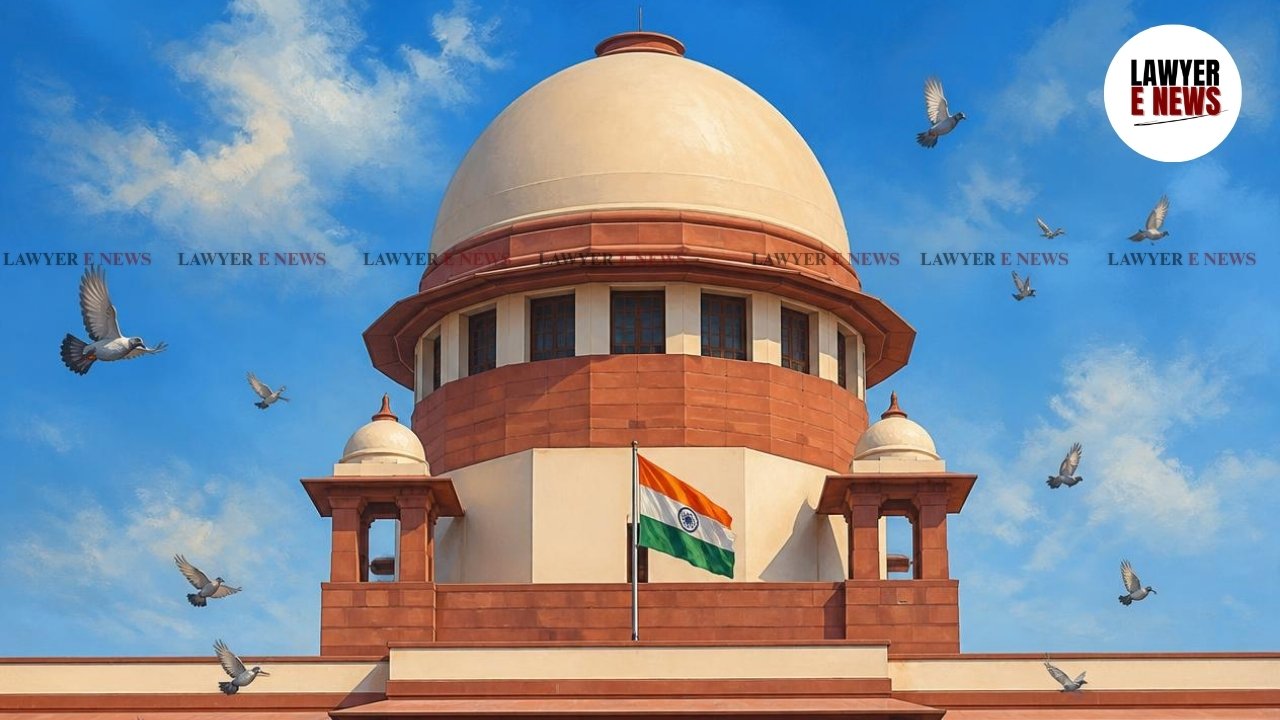
"Driver of the bus, who would otherwise be concentrating on the driving, would depend upon the indications, signals or whistling from the conductor to monitor and regulate the movement of the bus. When the appellant accused had followed the instructions of the conductor in stopping and moving the bus, which the appellant was duty-bound to do, it would be both unreasonable and illogical to attribute any negligence on his part," Supreme Court, in a significant judgment dated May 27, 2026, held that a bus driver cannot be held criminally liable for rash and negligent driving if he restarts the vehicle based on the conductor's whistle or signal.
A bench comprising Justice Prashant Kumar Mishra and Justice N.V. Anjaria observed that a driver is duty-bound to follow the conductor’s instructions and is not expected to personally look back to ensure every passenger has safely alighted before moving the vehicle.
The appellant, a driver with the Karnataka State Road Transport Corporation (KSRTC), was convicted by the Trial Court and the High Court under Sections 279 and 304A of the IPC. The prosecution alleged that in 2011, while a passenger was alighting from the bus, the appellant moved the vehicle in a rash manner, causing her to fall and succumb to head injuries. The driver challenged his conviction, arguing that he had merely followed the conductor's signal to proceed.
The primary question before the court was whether a bus driver can be attributed with "culpable negligence" or "rashness" under Section 304A IPC when he moves the vehicle upon receiving a signal from the conductor. The court was also called upon to determine the extent of a driver's duty of care toward passengers alighting at a stop.
Conductor Is The Person-In-Charge Of Regulating Passenger Movement
The Court noted that in any passenger bus, the conductor serves as the person-in-charge who regulates the movement of the vehicle. It is through the conductor’s whistle or bell that the driver is conveyed information regarding when to stop and when to start. The bench observed that the driver, who must concentrate on the road, depends entirely on these signals to monitor passenger safety during boarding and alighting.
Driver Duty-Bound To Follow Conductor's Whistle
The Court highlighted the testimony of the bus conductor (PW6), who admitted that he had whistled for the bus to stop and, after believing the passengers had disembarked, whistled again for the driver to move. The bench found that the driver acted bona fide by following these instructions. Since the appellant was following a established protocol he was duty-bound to obey, the Court found it "illogical" to attribute negligence to him for the subsequent accident.
Driver Not Expected To Look Back To Verify Passenger Safety
Applying the yardstick of common sense, the Supreme Court rejected the notion that a driver must personally verify if passengers have safely cleared the footboard. The bench noted that the driver's dependence on the whistle was a normal and natural conduct. It was further observed that holding a driver negligent in such circumstances would be an unjustifiable conclusion, as the responsibility to ensure safe disembarkation primarily rests with the conductor.
Distinction Between Culpable Negligence And Error Of Judgment
Citing the precedent in Ravi Kapur vs. State of Rajasthan, the Court explained that for an act to be punishable under Section 304A IPC, the negligence must be "culpable." This requires a state of mind where the criminality arises from a deliberate risk-taking rather than a mere error of judgment. In this case, the Court found that the factor of "deliberation in mind" to risk a crime was entirely absent on the part of the driver.
"Recklessness" Requires A Heedless State Of Mind
The Court further clarified that "recklessness" is a higher degree of carelessness where one acts regardless of harmful consequences. The bench held that the appellant’s act was preceded by the thought of heeding the conductor’s signal. Therefore, moving the bus could not be described as reckless or negligent, nor could the principle of res ipsa loquitur (the thing speaks for itself) be applied to bridge the gap in evidence.
High Speed Alone Does Not Constitute Negligence
The bench also referred to State of Karnataka vs. Satish, reiterating that "negligence" and "rashness" are relative terms. High speed or the mere fact of an accident occurring does not create a presumption of guilt. The Court emphasized that the truth often emanates from common sense and the attendant facts of the case, which here clearly indicated that the driver discharged his duty in accordance with the conductor's signals.
The Supreme Court concluded that the Trial Court and the High Court committed a manifest error by convicting the appellant. Finding that the deceased might have slipped due to her own lack of caution and that the driver acted on indicative instructions, the bench set aside the conviction and sentence. The appellant was held not guilty and acquitted of all charges under Sections 279 and 304A of the IPC.
Date of Decision: May 27, 2026