-
by sayum
26 August 2026 10:38 AM







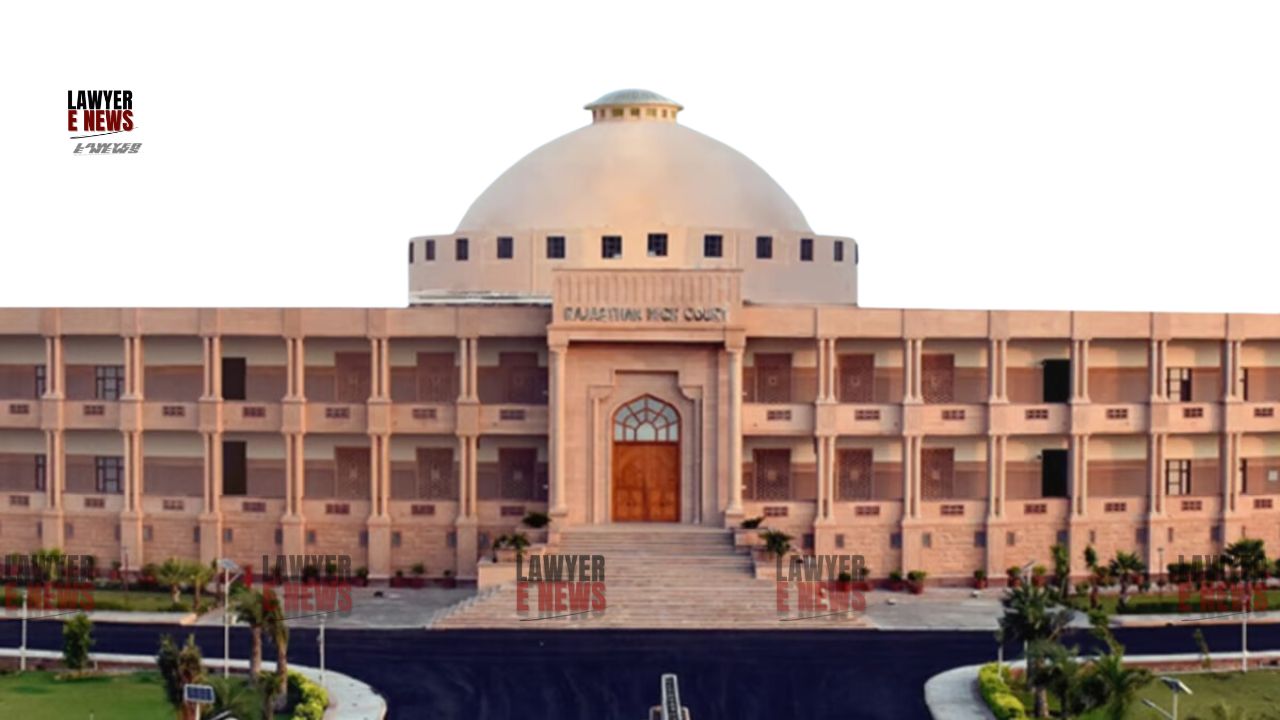
"In none of the offences alleged against the petitioners is the minimum sentence prescribed as seven years... they fall under serious offences, not heinous": Rajasthan High Court set aside the Appellate Court’s direction to transfer a case involving juveniles to the Children’s Court for their trial as adults under the Protection of Children from Sexual Offences Act (POCSO).
The case revolved around the classification of offences as “heinous” under Section 2(33) of the Juvenile Justice (Care and Protection of Children) Act, 2015, and whether such classification was applicable to the charges against the petitioners. The High Court held that none of the offences attracted the statutory minimum sentence of seven years required to qualify as “heinous”, and therefore the trial could not proceed in the Children’s Court under Section 15 of the Act.
“Trial of Juveniles as Adults Permitted Only in Cases of Heinous Offences – Not All Serious Crimes Qualify”: Court Rejects Reference to Children’s Court
The High Court, while allowing two connected criminal revision petitions filed by juveniles detained in the Observation Home at Ajmer, ruled that offences such as attempt to rape (Section 376/511 IPC), stalking, criminal conspiracy, abetment of suicide, and other related charges under the IPC, POCSO Act, and Information Technology Act do not meet the threshold of “heinous offences” under Section 2(33) of the Juvenile Justice Act. Accordingly, the Court quashed the order of the Appellate Court dated 16.06.2025 that had directed their trial as adult offenders in the Children’s Court.
The judgment provides critical clarification on how the term “heinous offence” must be interpreted under juvenile justice law and reiterates the binding precedent laid down in Shilpa Mittal v. State (AIR 2020 SC 405).
The petitioners, juveniles at the time of the alleged offences, were charged under several sections of the IPC including 376/511 (attempt to rape), 354-A, 354-D, 306, 384, 120-B, as well as under Sections 7, 8, 11, and 12 of the POCSO Act, and Section 67A of the Information Technology Act, 2000.
Following investigation, a charge-sheet was filed and the Juvenile Justice Board (JJB), Ajmer, on 26.03.2025, held that the trial should proceed before the Board itself as per procedures applicable to “serious offences”, and refused to refer the case to the Children’s Court under Section 15.
This decision was challenged by the complainant before the Special Judge, POCSO Court No.2, Ajmer (Appellate Court), which, on 16.06.2025, reversed the JJB’s ruling and ordered that the petitioners be tried as adult accused in the Children’s Court. The revision petitions before the High Court were directed against this reversal.
The primary question before the High Court was:
“Whether the offences alleged against the petitioners qualify as ‘heinous offences’ under Section 2(33) of the Juvenile Justice Act, 2015, justifying their trial as adults under Section 15?”
Justice Dhand carefully examined the legal framework under the Juvenile Justice (Care and Protection of Children) Act, 2015. The Act classifies offences into three categories:
Petty offences – maximum punishment up to 3 years,
Serious offences – punishment between 3 to 7 years,
Heinous offences – offences with minimum punishment of 7 years or more.
The Court reaffirmed that:
“Heinous offence includes the offences for which the minimum punishment under the Indian Penal Code or any other law for the time being in force is imprisonment for seven years or more.”
Since none of the provisions under which the petitioners were charged prescribed a minimum sentence of 7 years, the Court concluded that the alleged acts do not qualify as “heinous offences”.
This categorisation is crucial because only heinous offences attract Section 15, which empowers the Board to conduct a preliminary assessment and refer the juvenile for trial as an adult to the Children’s Court.
The High Court rejected the State’s argument that attempt to commit rape under Section 376/511 IPC must be treated akin to rape under Section 376 IPC, which has a minimum sentence of 7 years. The Court clarified:
“The only charge against the petitioners is attempt to commit rape... punishable under Section 376/511 IPC, and half of the minimum sentence of 7 years, i.e., three and a half years sentence is prescribed.”
Relying heavily on the binding precedent in Shilpa Mittal v. State (AIR 2020 SC 405), the Court underscored that:
“Offences where the maximum punishment is more than 7 years but no minimum sentence is prescribed, or the minimum is less than 7 years, do not qualify as ‘heinous offences’.”
The judgment also dismissed reliance on Barun Chandra Thakur v. Master Bholu (2023) and XXX v. State of U.P. (2025), stating that the facts in those cases involved offences with clearly prescribed minimum punishments, which is not the case here.
Justice Dhand further observed:
“The term ‘heinous offences’... cannot be interpreted in a way which may be less beneficial for the child, who is alleged to have committed an offence falling between the category of ‘serious offences’ and ‘heinous offences’.”
And cautioned that:
“Treating children as adults is an exception to the rule. It is also a well-settled principle of statutory interpretation that an exception has to be given a restricted meaning.”
The High Court held that:
“None of the alleged offences fall within the purview of ‘heinous offence’ as defined under Section 2(33) of the Act of 2015 because of the absence of minimum sentence of seven years or more. Hence, there is no reason or occasion to refer the case of the petitioners to the Children’s Court for their trial as ‘Adult Accused’.”
Accordingly, the appellate order dated 16.06.2025 was quashed, and the matter was remanded to the Juvenile Justice Board, Ajmer, to proceed with inquiry as per procedures applicable to “serious offences”.
The Court's directions reinforce that strict adherence to statutory definitions is essential when dealing with juveniles in conflict with the law. The verdict emphasizes that where the statute intends to draw sharp lines based on minimum sentencing, judicial bodies must not dilute such criteria to broaden the scope of adult prosecution.
Date of Decision: 27 October 2025