-
by sayum
28 August 2026 10:07 AM







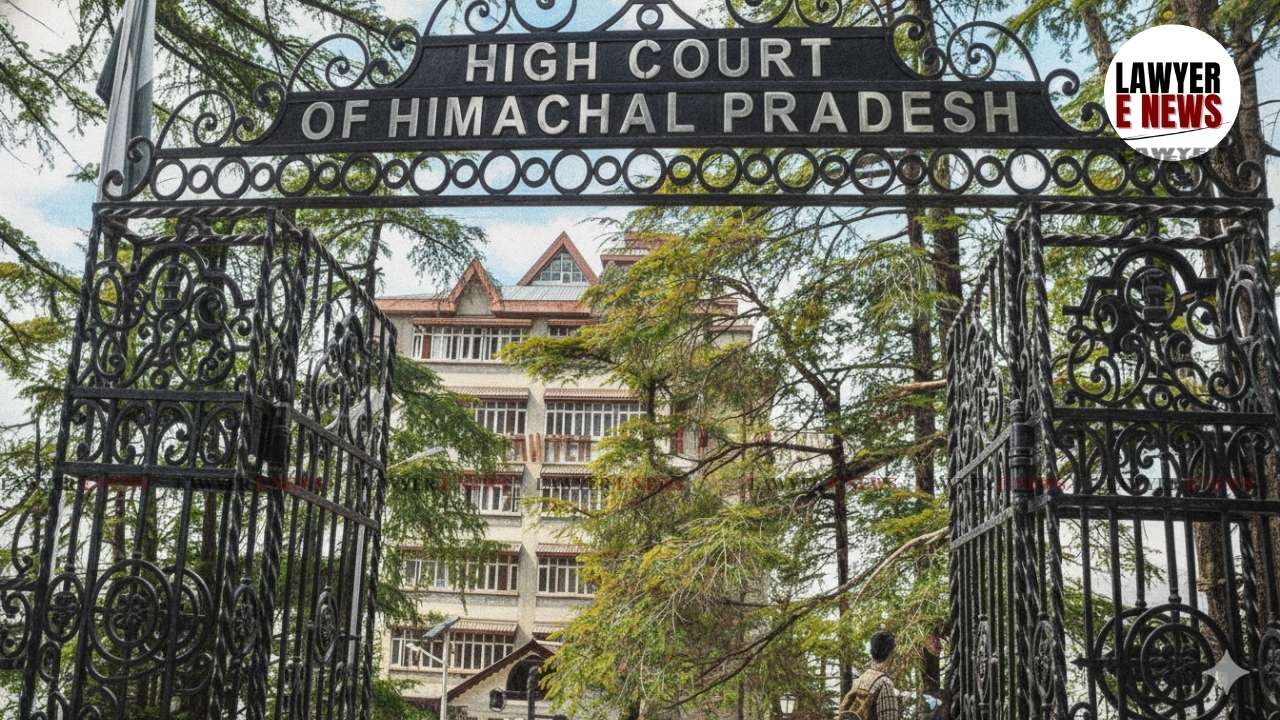
"Whether he drives a vehicle with a licence or without a licence, the law expects him to be neither rash nor negligent in the performance of his task, and we will judge his conduct in the matter as if he were the most qualified driver," Himachal Pradesh High Court, in a significant ruling, has held that the mere absence of a driving license on the part of a victim does not constitute negligence nor does it absolve an accused driver of criminal liability for rash and negligent driving.
A bench of Justice Rakesh Kainthla observed that the proximate cause of an accident must be determined by the actual conduct of the drivers on the road, rather than their regulatory status or the possession of a license.
The case arose from an accident on July 7, 2009, where a bus driven by the accused, Rajender Singh, hit a motorcycle carrying two individuals on the Shamshi-Kullu road. The motorcycle rider, a minor without a valid driving license, sustained grievous injuries including multiple fractures. The lower courts concurrently convicted the accused under Sections 279, 337, and 338 of the IPC, leading to the present revision petition before the High Court.
The primary question before the court was whether the victim’s lack of a driving license contributed to the accident or could serve as a ground for the accused's acquittal. The court was also called upon to determine if the benefit of the Probation of Offenders Act could be extended to a driver convicted of rash and negligent driving.
Limited Scope Of Revisional Jurisdiction
The Court began by outlining the parameters of its revisional power, noting that it is not an appellate court and should only rectify patent defects or jurisdictional errors. Relying on the Supreme Court's ruling in Malkeet Singh Gill v. State of Chhattisgarh, the bench emphasized that concurrent findings of fact should not be upset unless shown to be perverse.
The bench noted that the Revisional Court does not dwell at length upon the facts and evidence to reverse findings unless a gross miscarriage of justice is established. Since two courts had already appreciated the evidence in detail, the High Court’s role was restricted to ensuring the legality and regularity of the proceedings.
Absence Of License Is Not Proof Of Negligence
Addressing the petitioner’s main contention that the victim was negligent because he was a minor without a license, the Court rejected this argument. It cited the precedent in Suleman Rehiman Mulani v. State of Maharashtra, holding that there is no presumption in law that a person without a license is incompetent or negligent.
The Court observed that proficiency in driving might furnish a defense, but the absence of a license does not automatically make one guilty of negligence. It held that the law expects every person on the road to act reasonably, and the victim’s conduct must be judged by his actions at the time of the incident, not his lack of documentation.
"Therefore, the informant could not have been held to be negligent merely because he did not possess a valid driving licence."
Evidentiary Value Of Injured Witness Testimony
The Court placed high reliance on the testimonies of the informant and the pillion rider, who were both injured in the accident. Citing Neeraj Sharma v. State of Chhattisgarh, Justice Kainthla noted that the presence of an injured witness at the scene is inherently reliable and their statements carry significant evidentiary weight.
The bench held that unless there are compelling circumstances to doubt such witnesses, their version must be accepted as valuable evidence. The Court found that an injured witness is unlikely to allow the real culprit to escape while falsely implicating an innocent person, making their testimony the "eyes and ears of justice."
Non-Examination Of Independent Witnesses Not Fatal
The petitioner argued that the prosecution failed to examine independent witnesses despite the accident occurring on a busy road. The Court dismissed this, stating that the Public Prosecutor has the discretion to choose which witnesses to examine to avoid repetitive depositions.
Referring to Hukam Singh v. State of Rajasthan, the Court held that the prosecution is not obliged to multiply witnesses if the existing evidence is sufficient to unfold the narrative. The bench observed that the quality of evidence determines the adequacy of the case, and the intrinsic worth of the injured witnesses' testimony was not diminished by the absence of other witnesses.
Violation Of Statutory Rules Of The Road
The Court found that the accused had violated the Rules of the Road Regulations, 1989, by overtaking a Gypsy when a motorcycle was approaching from the opposite side. It noted that the driver of a vehicle must drive as close to the left side as possible and should not overtake unless the road ahead is clear.
Evidence from the site plan corroborated that the bus was on the wrong side of the road at the point of impact. The Court held that such a breach of statutory regulations clearly established rashness and negligence on the part of the bus driver, regardless of the victim's age or license status.
"The accused overtook the Gypsy when a motorcycle was coming from the opposite side, contrary to the Rules of the Road Regulations."
Denial Of Benefit Under Probation Of Offenders Act
Regarding the plea for leniency under the Probation of Offenders Act, the High Court maintained a strict stance. Citing Dalbir Singh v. State of Haryana, the bench observed that road accidents have proliferated to an alarming extent in India, and deterrence is a prime consideration in sentencing.
The Court held that a professional driver must always keep in mind the "fear psyche" that callous driving leading to injuries or death will result in a jail sentence. It ruled that the benevolent provisions of the Probation of Offenders Act are generally not applicable to those convicted of rash and negligent driving under the IPC.
The High Court concluded that the findings of the lower courts were based on a correct appreciation of evidence and carried no jurisdictional error. Finding the six-month sentence for causing grievous hurt appropriate given the multiple fractures sustained by the victim, the Court dismissed the revision petition and upheld the conviction.
Date of Decision: 25 May 2026