-
by sayum
20 August 2026 1:37 PM







"The Proper Judicial Response Is Not Prohibition But Regulation... The Law Demands Reasonable Containment of Risk": Delhi High Court set aside the order of the Special CBI Court which had rejected the CBI’s request to examine a crucial witness—C. Edmonds Allen, a 79-year-old U.S.-based informant—through video conferencing. The High Court held that rigid application of procedural safeguards cannot obstruct the administration of justice, especially where technology and appropriate protocols can sufficiently protect national security concerns under the Official Secrets Act, 1923 (OSA).
This matter, involving alleged transmission of classified Indian defence documents to unauthorised individuals in violation of the OSA, has drawn attention for its intersection of national security, digital evidence, and fair trial rights. The Court’s decision to permit the remote examination of the foreign witness from the Indian Consulate in New York, even without the accused's consent, reflects a judicial willingness to reconcile secrecy obligations with evidentiary necessities in the digital age.
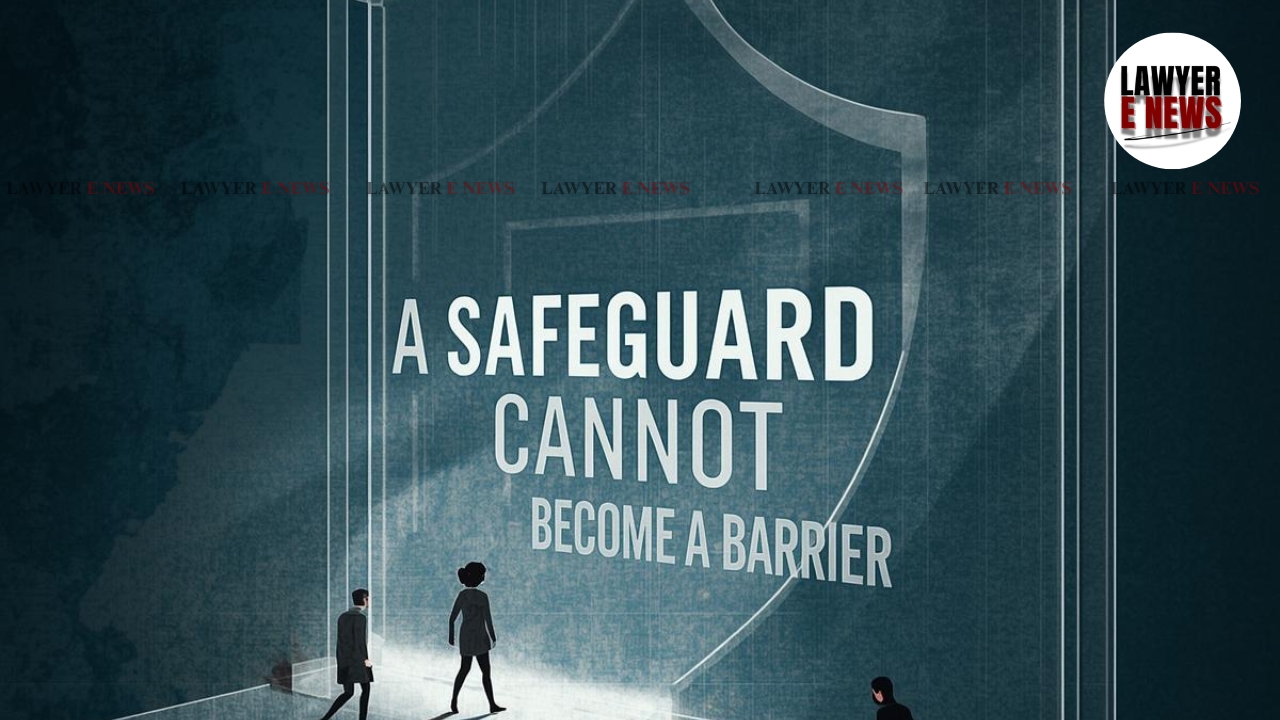
"Safeguards Must Not Become Walls Around Justice": High Court Relaxes Consent Requirement Under Rule 18 of VC Rules
Justice Sanjeev Narula, delivering the judgment, categorically rejected the notion that the accused’s refusal under Rule 5.3.11 of the Delhi High Court Video Conferencing Rules, 2020 could operate as a veto to block the deposition of an essential prosecution witness. He observed, "Rule 5.3.11 is a fairness provision: it ensures that the accused’s fair-trial rights are kept in view before resort is taken to video conferencing. It does not confer a substantive veto over the prosecution’s ability to lead material evidence."
Invoking Rule 18, which empowers the High Court to relax any VC Rule in case of undue hardship, the Court held that "this is a fit case for relaxation. We therefore invoke Rule 18 and relax the operation of Rule 5.3.11 for PW-46, while preserving the accused’s rights through contemporaneous viewing and full cross-examination on a secure, court-controlled feed."
"The Law Demands Reasonable Containment of Risk, Not Denial of Evidence": OSA No Bar to In-Camera Digital Testimony
The Trial Court had dismissed the CBI’s application on grounds that transmitting classified documents to a foreign-based witness would risk violation of the Official Secrets Act, and that the video feed could not guarantee complete secrecy. Rejecting this approach, the High Court clarified, “OSA does not interdict the conduct of trials; it prescribes the manner in which sensitive proceedings are to be held… the answer in law is not prohibition but regulation in a just and equitable manner through adequate safeguards.”
The Court stressed that Section 14 of the OSA, read with Section 327 of the CrPC, provides for in-camera proceedings to prevent public dissemination of sensitive material, and that these protections can be effectively extended to video-conferencing scenarios. It remarked, "The proper judicial response is therefore to manage risk, while preserving the integrity of the proceeding."
“He Set the Process in Motion”: Court Affirms Materiality of Mr. Allen's Testimony
The Respondents had argued that Mr. Allen, being the director of a company allegedly involved in the matter, should be summoned as an accused rather than a witness, and that he had never been cited in the chargesheet nor examined under Section 161 CrPC. However, the Court found these arguments unpersuasive. It held, “His communication to the Defence Minister set the process in motion… His testimony bears directly on provenance, transmission, and authenticity of the documents.”
Quoting from Section 311 CrPC, the Court stated, "The Court may summon any person at any stage if his evidence appears essential to a just decision." Mr. Allen’s testimony, therefore, could not be excluded merely due to procedural omissions or pending Section 319 applications seeking his arraignment as an accused.
“Technology Can Serve Both Justice and Secrecy”: Court Mandates Stringent VC Protocols
The High Court acknowledged the defence’s concerns about potential leakage of classified information but concluded that regulatory safeguards could adequately address such fears. It ordered that the examination be conducted via a secure, end-to-end encrypted platform, in view-only mode, without any download or recording capabilities. The testimony is to take place within the Indian Consulate in New York, under diplomatic supervision.
It further mandated that any necessary documents be redacted, sent via official diplomatic channels, stored in locked custody, and returned immediately post-deposition. The Court emphasised, “The risk of leakage is being unduly magnified… The law demands reasonable containment of risk. On that touchstone, a safeguarded video examination is the apposite course.”
“Justice Cannot Be Denied Because It’s Inconvenient”: Age, Health, and Security of Witness Also Factored In
Finally, the Court gave weight to Mr. Allen’s cardiac and orthopedic conditions, noting that compelling his travel from the United States to India would be unjust and dangerous, potentially rendering material evidence permanently inaccessible. Justice Narula observed, “At 79, with documented cardiac ailment, compelling international travel may imperil both the witness and the progress of the trial.”
It concluded that digital testimony from a secure diplomatic location was not only legally permissible but practically necessary to ensure both judicial efficacy and protection of sensitive information.
“Ends of Justice Must Guide Procedural Discretion”
Setting aside the Trial Court’s order dated 6 April 2023, the High Court directed that Mr. Allen’s evidence be recorded via VC from the Indian Consulate, with strict adherence to OSA-compliant safeguards. It left all other pending applications, including those under Section 319 CrPC, open for the Trial Court to decide independently.
Justice Narula’s judgment powerfully reaffirms that technological innovation and due process can coexist, even in the most sensitive prosecutions involving national security. As he aptly concluded, “The law does not demand perfection, it demands fairness.”
Date of Decision: 28 October 2025