-
by sayum
26 August 2026 9:49 AM







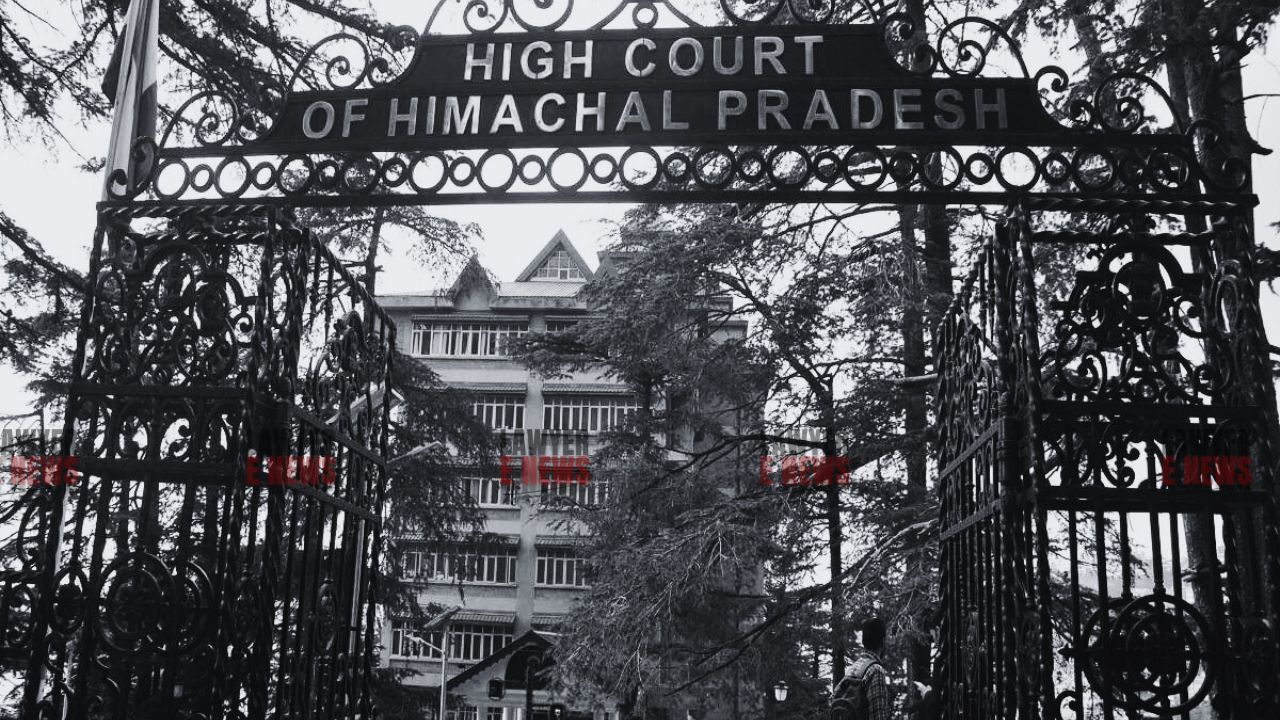
“Suspicion, However Strong, Cannot Replace Proof Beyond Reasonable Doubt” - In a significant reaffirmation of criminal jurisprudence, the Himachal Pradesh High Court dismissed the State’s appeal against acquittal in a murder case, ruling that “in the face of conflicting testimonies, hostile witnesses, and unreliable dying declarations, the acquittal by the trial court was a plausible view and does not warrant interference.”
In State of Himachal Pradesh v. Gurmel Singh & Others, Criminal Appeal No. 222 of 2014, a Division Bench of Justices Vivek Singh Thakur and Romesh Verma upheld the acquittal of two men accused of murdering Vijay Kumar during a drunken altercation allegedly stemming from a ₹1000 loan. The trial court had earlier acquitted the accused citing inconsistencies in witness accounts, unreliable medical testimony, and failure of the prosecution to link the accused to the crime conclusively.
Medical Opinion Destroys Dying Declaration: “Deceased Was Too Intoxicated and Injured to Speak Coherently”
The central prosecution claim hinged on multiple oral dying declarations allegedly made by Vijay Kumar to his family—his father, brothers, and uncle—accusing Gurmel Singh and Subhash Chand of fatally assaulting him over a financial dispute. However, the High Court noted that the medical evidence thoroughly undermined the credibility of these statements.
Dr. Kapil Sharma (PW2), part of the postmortem board, testified:
“The level of ethyl alcohol in the deceased’s blood was 276.79 mg%. At such concentration, speech is slurred, vision is blurred, and a person may be incapable of making coherent statements, especially after suffering severe head injuries.”
Dr. Sukhdev Raj (PW3), who treated Vijay Kumar at the hospital before his death, confirmed:
“The patient was unconscious, reeking of alcohol, and had suffered massive intracranial haemorrhage. In my opinion, he could not have made a valid statement at that point.”
Dr. S.K. Mahajan (PW6), another postmortem doctor, echoed the same:
“Head injury combined with such high alcohol content would have rendered the patient incapable of coherent speech.”
In light of this, the Court categorically ruled:
“The alleged dying declaration, which forms the bedrock of the prosecution case, is wholly unreliable, medically implausible, and legally insufficient to establish guilt.”
Contradictions Between FIR and Testimony of Victim’s Family Destroy Prosecution’s Core Narrative
The Court also found the testimony of the victim’s family to be contradictory and unconvincing.
PW-1 Narinder Singh, the deceased’s brother, stated that Vijay Kumar named the accused before losing consciousness. However, the FIR lodged by their father, Ajit Singh, presented a conflicting version. While the father claimed he saw the accused beating his son, PW-1 maintained he only heard about it from the victim.
The Court remarked:
“There is a clear conflict between the versions of PW-1 and the FIR, which shakes the foundational credibility of the prosecution story. If the eyewitness account of the father differs materially from that of the brother, the entire narrative stands compromised.”
Further, Ram Asra (PW-7), a relative who was allegedly present at the scene, admitted in court:
“I did not recognize the accused as the incident happened at night, and I was told later that it was Gurmel and Subhash.”
His inability to identify the accused directly cast serious doubt on the prosecution’s claim of clear identification.
Prosecution Withheld Key Witnesses From the ‘Jagrata’—Adverse Inference Drawn
According to the prosecution, the assault took place near a house where a religious event or jagrata was being held. PW-18, the Investigating Officer, admitted that 10 to 15 people attending the jagrata were interviewed—but none were presented as prosecution witnesses.
The Court was unequivocal:
“When there is a public gathering and the alleged incident occurs nearby, the failure to examine independent witnesses justifies drawing an adverse inference against the prosecution.”
Additionally, key local witnesses—PW-8 (Pradhan), PW-9, and PW-10 (Panchayat members)—turned hostile, claiming complete ignorance of the incident. Even though they were cross-examined by the prosecution, their evidence yielded nothing in support of the State.
Chain of Evidence Broken by Unreliable Seizure and Forensic Testimony
The prosecution sought to rely on recovery of blood-stained clothes from the accused under Section 27 of the Indian Evidence Act. But contradictions among witnesses undermined the credibility of these seizures.
Constable Rajeev Kumar (PW13) admitted:
“When Gurmel Singh was taken into custody, no blood was visible on his pants. Blood stains were noticed later. I cannot explain how or when the blood appeared.”
In contrast, another seizure witness PW-14 claimed he did notice the stains at the time of seizure. This discrepancy led the Court to observe:
“The blood recovery evidence is tainted by serious contradictions and appears manufactured. Moreover, even the FSL report linking the blood group 'B' to the recovered items is inconclusive in absence of DNA correlation or proof of ownership.”
“Two Reasonable Views Are Possible—Acquittal Cannot Be Reversed”
Reaffirming the well-settled principles of appellate interference in acquittal, the Court cited Babu Sahebagouda v. State of Karnataka, Ballu v. State of MP, and State of Rajasthan v. Kistoora Ram, reiterating:
“In cases of acquittal, interference is permissible only if the trial court’s findings are perverse or legally untenable. If two views are reasonably possible, the appellate court must refrain from substitution.”
Applying this to the present case, the Court held:
“The trial court took a view based on contradictions, hostile witnesses, and medical evidence. It is not an impossible view. Hence, there is no perversity in the judgment and no scope for interference.”
Acquittal Upheld, Appeal Dismissed
In a detailed 67-paragraph judgment, the High Court held that the prosecution failed to establish the guilt of the accused beyond reasonable doubt. The alleged dying declaration was unreliable. The forensic evidence was inconsistent. Key witnesses turned hostile. No independent eyewitness from the jagrata was produced.
“Suspicion, however strong, cannot replace the necessity of legal proof. The prosecution failed to complete the chain of evidence and establish a conclusive case.”
Accordingly, the appeal was dismissed. The acquittal of Gurmel Singh and Subhash Chand was affirmed, and all pending applications stood disposed of.
Date of Decision: 28 October 2025