-
by sayum
25 August 2026 11:12 PM







❝A Christian unmarried daughter who has attained majority is not entitled to claim maintenance from her father under Section 125 of CrPC unless she is unable to maintain herself due to physical or mental abnormality or injury❞ — Kerala High Court
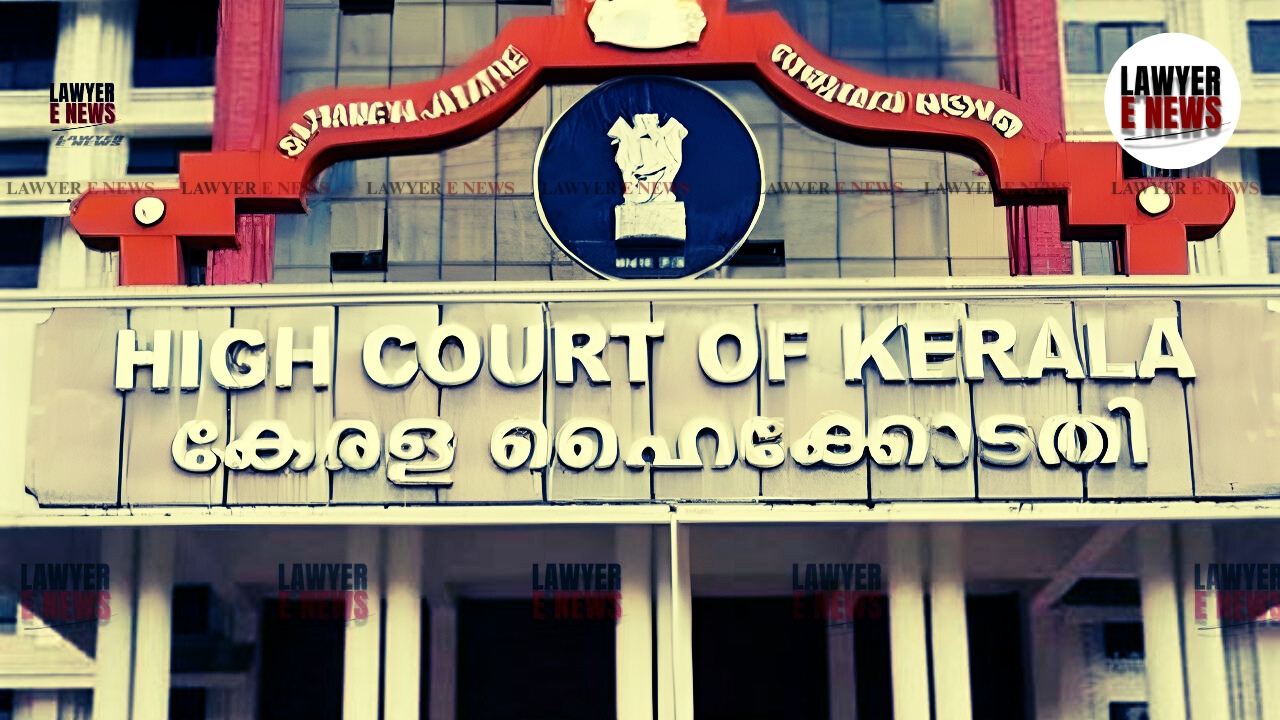
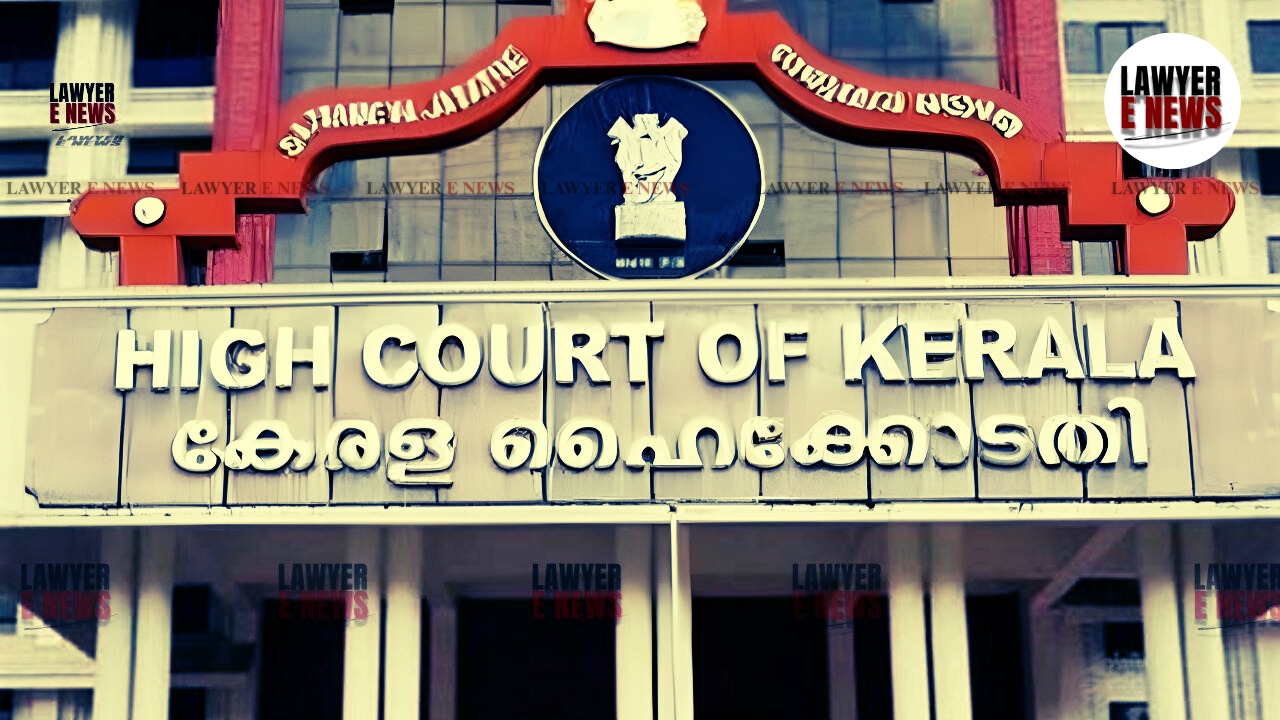
High Court of Kerala at Ernakulam addressing a fundamental question under Section 125 of the Criminal Procedure Code: Can a Christian father be legally compelled to pay maintenance to his unmarried daughter who has attained majority and is not disabled? The Court, speaking through Hon’ble Dr. Justice Kauser Edappagath, held that no such statutory obligation exists unless the daughter is incapable of supporting herself due to physical or mental infirmity. This ruling marks an important clarification in the intersection between personal laws and statutory maintenance obligations.
The case arose from a challenge to the Family Court’s order passed on 9th March 2021 in M.C. No. 306 of 2017. The Family Court had awarded monthly maintenance of ₹20,000 to the wife and ₹10,000 to the daughter, in addition to a consolidated ₹30,000 towards educational expenses. The revision was filed by the husband/father, disputing the entitlement of both recipients on distinct legal grounds.
The petitioner contended that the daughter had already attained majority by the time the petition was filed, was not disabled, and was in fact a practising lawyer. He further argued that the wife had been living separately without any sufficient reason, and was employed, hence disqualified from claiming maintenance.
The Court examined each of these grounds and found substantial merit in the first contention regarding the daughter’s claim. Justice Edappagath observed, “Section 125(1)(c) of Cr.P.C. contemplates that a claim of maintenance by a daughter who has attained majority is admissible only when, by reason of any physical or mental abnormality or injury, she is unable to maintain herself.” It was specifically noted that the daughter in this case was a practising advocate and did not suffer from any such disability.
While dealing with the legal foundation, the Court also engaged with relevant precedent, including the Supreme Court’s ruling in Jagdish Jugtawat v. Manju Lata & Ors. [(2002) 5 SCC 422], where the Court had taken a liberal view by allowing maintenance under Section 125 to continue for a major unmarried Hindu daughter relying on Section 20(3) of the Hindu Adoptions and Maintenance Act (HAMA). However, the Kerala High Court distinguished the present case by stating, “The dictum laid down in those decisions was based on the provision under Section 20(3) of the HAMA, which enables an unmarried major Hindu daughter to claim maintenance from her father.”
The High Court decisively stated, “There is no corresponding personal law applicable to Christians that enables a Christian unmarried daughter to claim maintenance from her father.” It relied on the Full Bench decision in Mathew Varghese v. Rosamma Varghese [2003 (3) KLT 6 (FB)], where it was held that a Christian father is only obligated to maintain his minor child.
“In the absence of any disability or abnormality, a major unmarried Christian daughter has no enforceable right under Section 125 CrPC to seek maintenance from her father,” the Court held while setting aside the Family Court’s award of ₹10,000 per month to the daughter.
Turning to the wife’s entitlement, the Court rejected the argument that she had deserted her husband without sufficient cause. The evidence, according to the Court, showed that the wife was residing in Mumbai “for the educational purposes and medical treatment of her ailing son.” Justice Edappagath remarked, “When a wife chooses to reside away from her husband to provide better treatment and education for her ailing son, it cannot be said that she is living separately without sufficient reason.”
The Court acknowledged that a wife’s right to maintenance under Section 125(1)(a) is not absolute and is subject to Section 125(4), which denies maintenance to a wife who lives separately without just cause. However, it was emphasized that “a mother’s parental obligation is generally considered wider in scope than her marital obligation.”
In addressing the petitioner’s claim that his wife was employed and therefore not entitled to maintenance, the Court referred to settled judicial precedent. Justice Edappagath cited the Supreme Court’s ruling in Rajnesh v. Neha [(2021) 2 SCC 324], and observed, “Even if the wife is earning, it cannot operate as a bar from being awarded maintenance by her husband.”
The Court further remarked, “Unable to maintain herself in Section 125 does not mean that the wife must be in a state of impecuniousness. Even if the wife has the capability to earn or is earning something, it does not disentitle her from claiming maintenance.” In this case, the wife was found to be only sporadically employed and without a steady source of income.
Additionally, the husband himself had disclosed substantial financial means. He admitted to being the proprietor of AGL International Recruiting Agency and owner of two flats worth ₹90 lakhs. His bank account revealed average monthly withdrawals of ₹60,000. In light of this, the Court upheld the award of ₹20,000 per month as “reasonable” and proportionate.
On the aspect of reimbursement of educational expenses of ₹30,000 incurred by the wife, the Court upheld the Family Court’s order. It observed that, “The claim for maintenance by a wife who is unable to maintain herself would also include the expenses incurred by her towards the education of the child who is dependent on her. Merely because the child is a major would not prevent the wife from claiming maintenance from her spouse to meet the needs of the dependent child.”
Concluding the judgment, the Court declared, “The impugned order, to the extent it granted monthly maintenance to respondent No.2, is hereby set aside. The revision petition stands allowed in part.”
This ruling reinforces the strict limitations imposed by Section 125 of CrPC and reaffirms that personal law continues to play a decisive role in interpreting statutory maintenance rights. The Kerala High Court has sent a clear message that Christian personal law does not recognize any obligation upon a father to maintain an unmarried major daughter who is healthy and capable of sustaining herself.
It also reaffirms that mere employment or separate residence does not disentitle a wife from claiming maintenance, especially when justified by broader familial obligations or insufficient income.
Date of Decision: 29 October 2025