-
by sayum
28 August 2026 10:07 AM







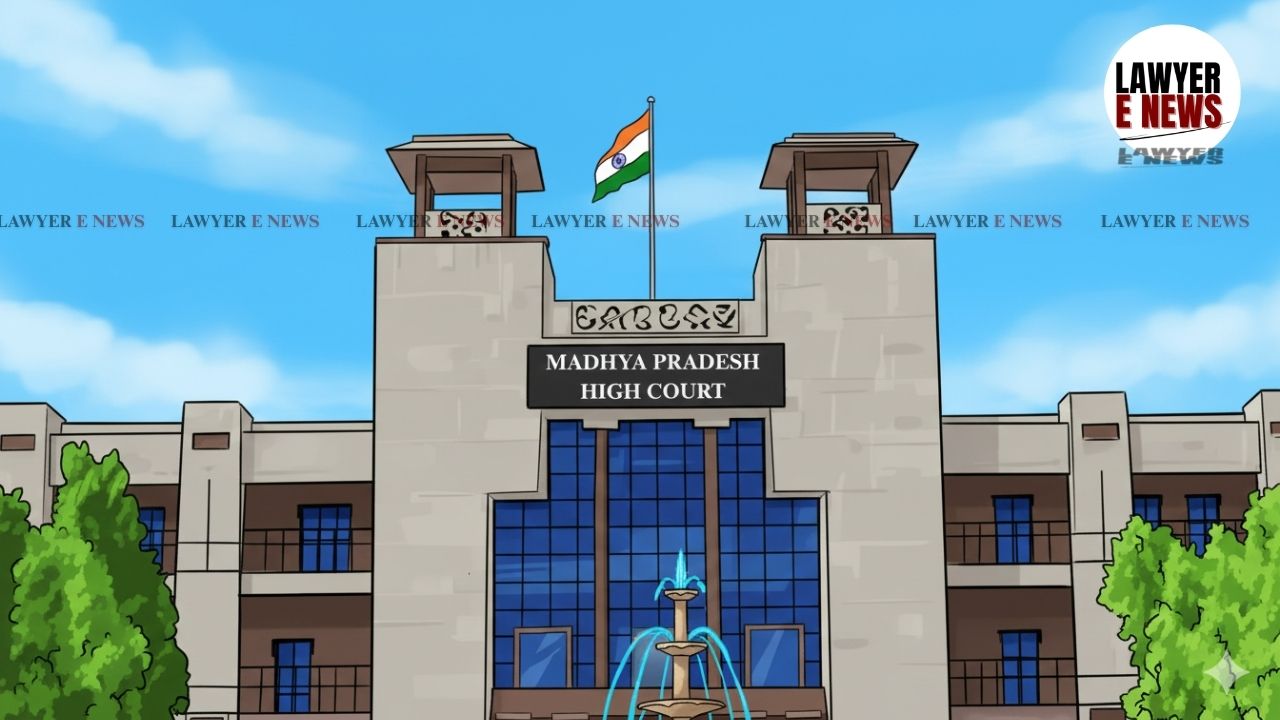
"Detention is merely a coercive device intended to compel compliance and not a punitive sentence akin to criminal incarceration. Once detention ceases to operate as an effective coercive mechanism and instead assumes the nature of indefinite punitive confinement, the same travels beyond the permissible statutory framework." Madhya Pradesh High Court, in a significant ruling, held that imprisonment in maintenance execution proceedings is primarily a coercive tool rather than a punitive one, and prolonged detention can frustrate the very purpose of the law by incapacitating the earner.
A single-judge bench of Justice Himanshu Joshi, while dealing with a petition under Section 528 of the Bharatiya Nagarik Suraksha Sanhita (BNSS), observed that continued detention of an indigent person becomes oppressive when it strips them of the practical means to generate income for future payments.
The petitioner, a manual laborer, was arrested on October 30, 2025, following execution proceedings for maintenance arrears amounting to approximately ₹1.38 lakhs owed to his wife and two minor children. Despite being incarcerated for over five months and having deposited a partial amount of ₹20,000, both the Judicial Magistrate First Class and the Revisional Court rejected his applications for release under Section 480 BNSS. The petitioner approached the High Court contending that his continued incarceration had assumed a punitive character and was detrimental to his health and earning capacity.
The primary question before the court was whether the prolonged incarceration of the applicant for over five months in a singular execution proceeding was legally sustainable and proportionate. The court was also called upon to determine whether such detention, if continued indefinitely, violates the constitutional mandate of personal liberty under Article 21 and the underlying objective of maintenance laws.
Maintenance Laws As Social Welfare Measures
The Court at the outset observed that proceedings relating to maintenance under Section 125 CrPC and corresponding BNSS provisions are social welfare measures intended to prevent vagrancy, destitution, and economic abandonment. However, it clarified that the statutory mechanism for enforcement must be exercised within constitutional and legal limitations consistent with principles of fairness and proportionality.
Distinction Between Coercive And Punitive Detention
Justice Himanshu Joshi emphasized that the law relating to imprisonment in maintenance execution proceedings recognizes detention as a coercive device, not a punishment. The bench noted that the moment detention ceases to be effective for compliance and becomes indefinite confinement, it exceeds the statutory framework.
"The law relating to imprisonment in maintenance execution proceedings has consistently recognized that detention is merely a coercive device intended to compel compliance and not a punitive sentence akin to criminal incarceration."
Prolonged Incarceration Frustrates Recovery
The Court highlighted the counter-productive nature of jailing a manual laborer for an extended period. It noted that the inevitable consequence of prolonged incarceration of an indigent person is the total deprivation of earning capacity, which in turn makes further compliance with maintenance orders practically impossible.
"Continued detention of an indigent person, who claims inability arising from prolonged incarceration itself, may ultimately frustrate the very purpose sought to be achieved by maintenance law because the person detained becomes economically incapacitated from discharging future liabilities."
Balancing Maintenance Rights With Article 21
While acknowledging the rights of the wife and children to maintenance, the Court held that the lower courts failed to balance the coercive purpose of detention against humanitarian and constitutional considerations under Article 21. The bench pointed out that the petitioner’s deteriorating medical condition, which required ICU treatment, was largely ignored by the subordinate courts while rejecting his release.
"The Courts below... were expected to balance the coercive purpose of detention against humanitarian and constitutional considerations flowing from Article 21 of the Constitution of India."
Conditional Release and Directions
The Court observed that the petitioner's deposit of ₹20,000 indicated a degree of willingness to comply. Consequently, the High Court set aside the orders of the JMFC and the Revisional Court. It directed the petitioner’s immediate release upon furnishing a personal bond of ₹50,000 and a solvent surety.
As a condition for release, the Court ordered the petitioner to deposit an additional ₹25,000 before the executing court within thirty days. It clarified that the release does not extinguish the maintenance liability and the petitioner must continue to pay future monthly maintenance regularly.
The High Court concluded that while maintenance is a legal entitlement and not charity, the mode of recovery cannot be allowed to become arbitrary or oppressive. By quashing the lower court orders, the bench reaffirmed that the objective of the law is to ensure the welfare of the family, which cannot be achieved by keeping the sole breadwinner in indefinite detention without earning potential.
Date of Decision: 15 May 2026