-
by sayum
27 August 2026 3:32 PM







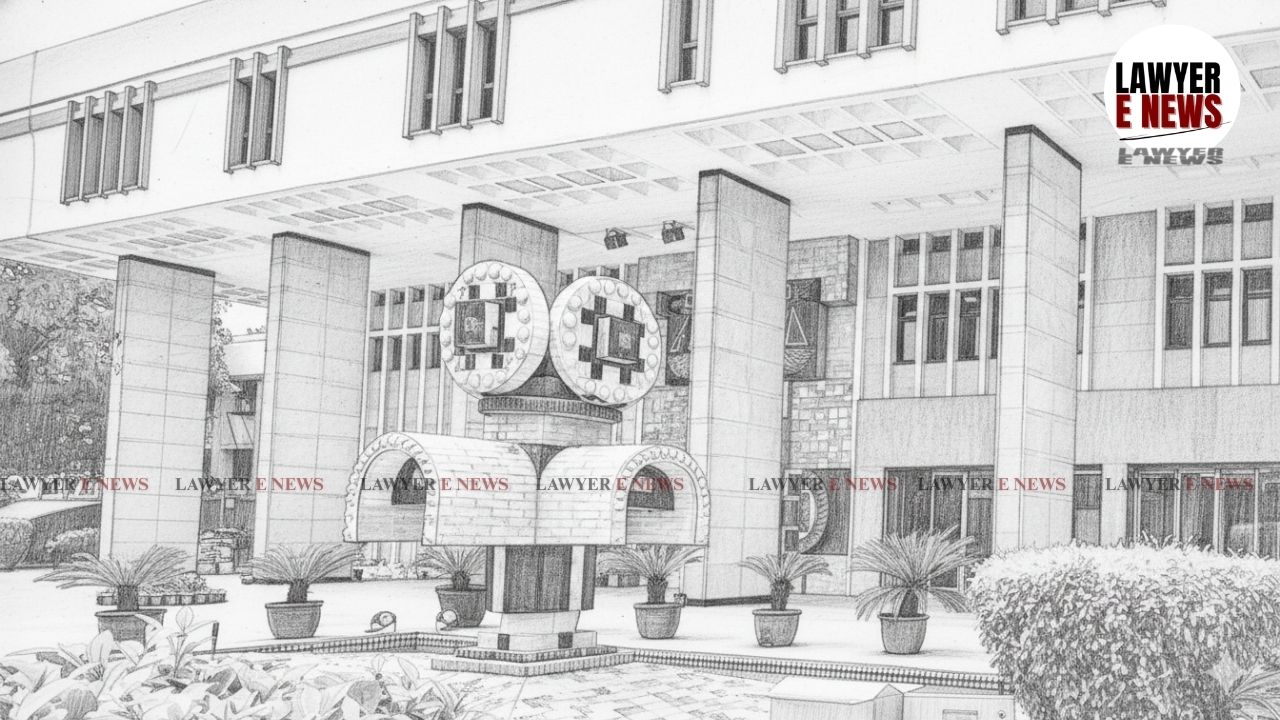
"Once a Labour Court or Industrial Tribunal renders an award, such award is subject to judicial review by the High Court under Articles 226/227. In such cases, the writ is directed against the adjudicatory process and the award itself, not merely the private entity," Delhi High Court, in a significant ruling, held that writ petitions challenging the awards of Labour Courts or Industrial Tribunals are maintainable even against privatized entities like Air India.
A bench of Justice Shail Jain observed that while a private entity may not ordinarily be amenable to writ jurisdiction, the position differs when a petitioner challenges the adjudicatory process of a statutory tribunal. The Court emphasized that Article 226 and Article 227 of the Constitution of India empower High Courts to exercise supervision over subordinate tribunals to keep them within bounds.
The case involved casual daily-rated drivers and helpers engaged by the then-Indian Airlines in the 1990s who had completed more than 240 days of continuous service. Their services were terminated between 1997 and 1998 without notice or retrenchment compensation, leading to an industrial dispute. The Central Government Industrial Tribunal (CGIT) found the termination to be in violation of Section 25-F of the Industrial Disputes Act but awarded only nominal compensation ranging from Rs. 25,000 to Rs. 55,000.
The primary question before the court was whether a writ petition is maintainable against Air India following its privatization in 2022. The court was also called upon to determine whether the termination of the workmen was justified as being in compliance with prior court orders and whether the compensation awarded by the CGIT was adequate.
Writ Maintainable Against Privatized Entity If Challenging Tribunal Award
The Respondent-Management raised a preliminary objection that since Air India was privatized in 2022, it was no longer "State" under Article 12. However, the Court distinguished between direct writs against private employers and writs challenging a Tribunal's award. The Court noted that Section 17(2) of the Industrial Disputes Act excludes civil court jurisdiction, making writ jurisdiction the only available remedy against patent illegalities in awards.
The Court held that the bar against writ jurisdiction applies when a petitioner bypasses statutory remedies to approach the High Court directly. Where workmen have already exhausted the statutory mechanism under labour laws, the writ is directed against the award itself. Justice Shail Jain noted that any interpretation rendering Tribunal awards immune from judicial scrutiny would defeat the very object of industrial adjudication and the High Court's power of superintendence.
Staggered Termination Belies Claim Of Compliance With Court Orders
The Management argued that the terminations were effected to comply with a High Court judgment dated May 9, 1997, which prioritized a specific 1990 panel. The Court rejected this, noting that the terminations occurred over a year later, between August 1997 and October 1998. The Bench observed that an act done in compliance with a court order must follow that order with reasonable promptness rather than being spread selectively over eighteen months.
"The orders of this Court are not a reservoir of convenient justification to be drawn upon selectively and intermittently as the management sees fit," the Court remarked. It held that the staggered and selective manner of termination was wholly inconsistent with faithful compliance with a judicial direction.
Section 25-F Protection Is Absolute Regardless Of Source Of Engagement
The Court emphasized that Section 25-F of the Industrial Disputes Act is absolute and unqualified for any workman who has completed 240 days of service. The Bench noted that the legislature consciously omitted the only proviso that existed in the section via Act 49 of 1984. The right under Section 25-F is earned through the act of service itself and is not dependent on whether the engagement was voluntary or directed by a court.
The Court found that the Petitioner-workmen had undergone medical fitness tests and formal document verification, indicating a structured engagement. Since the three conditions of Section 25-F—notice, wages in lieu of notice, and retrenchment compensation—were not met, the retrenchment was declared ex facie illegal. The Court upheld the CGIT's finding on the illegality of the termination but sought to address the nature of the relief.
Reinstatement Not Automatic After Long Lapse Of Time
While the termination was illegal, the Court observed that the dispute was nearly thirty decades old. It held that reinstatement of casual daily-rated workers after such a long period would be impractical and disproportionate. The Bench noted that even if reinstated, the petitioners would only revert to their status as casual workers, which would offer illusory relief given the passage of time and the absence of a subsisting requirement.
"The passage of time is a crucial factor in moulding relief," the Bench observed, affirming that in cases involving casual workers, monetary compensation is often the most equitable remedy.
Compensation Enhanced On Pro-Rata Basis Per Supreme Court Guidelines
Referring to the recent Supreme Court decision in Amit Kumar Dubey v. M.P.P.K.V.V. Co. Ltd. (2025), the Court held that compensation cannot be nominal or uniform. It must bear a direct nexus with the length of service rendered. The CGIT’s award of Rs. 25,000 to Rs. 55,000 was deemed inadequate for decades of litigation. Consequently, the Court enhanced the compensation to Rs. 1.25 Lakhs for one year of service, Rs. 2.5 Lakhs for two years, and Rs. 3.75 Lakhs for three years or more.
The High Court partly allowed the writ petitions, upholding the finding of illegal retrenchment but significantly enhancing the monetary compensation in lieu of reinstatement. The ruling reinforces that privatization does not insulate an employer from judicial review of labour awards and ensures that compensation for illegal termination remains proportionate to the length of service.
Date of Decision: 08 May 2026