-
by sayum
28 July 2026 11:21 AM







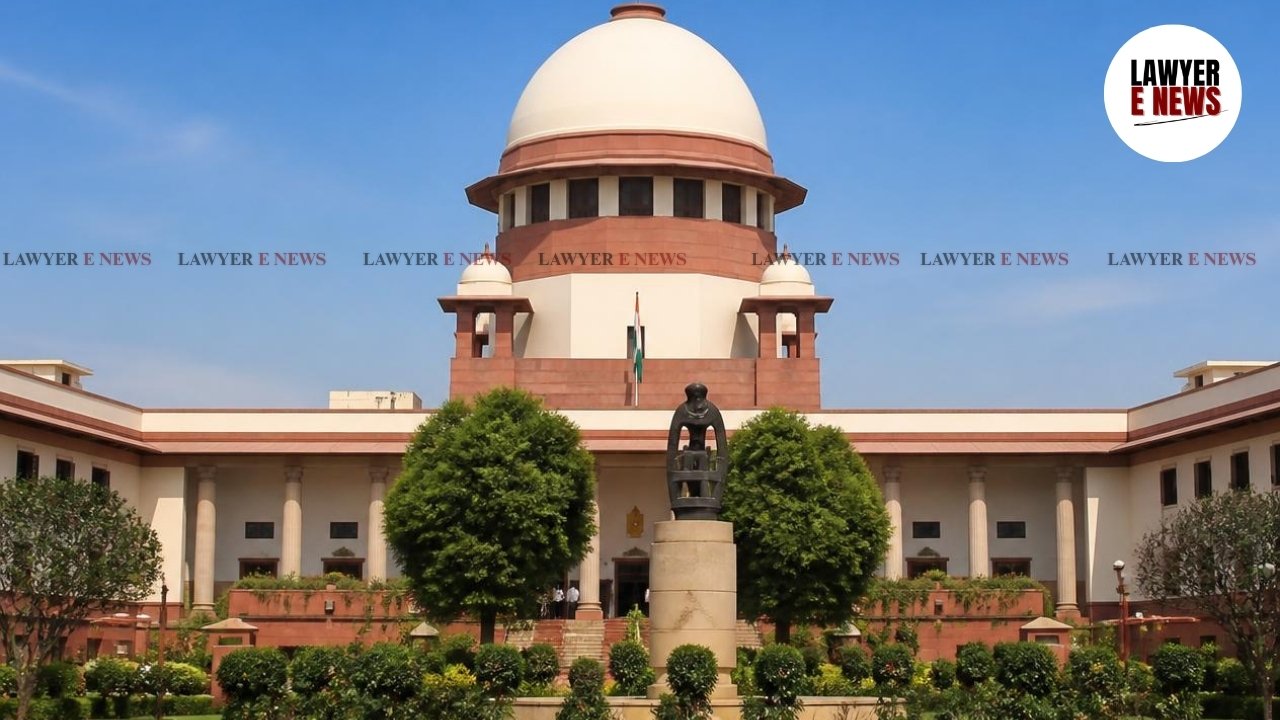
"Concept of suppression or non-disclosure of facts transcends mere concealment; it necessitates the deliberate withholding of material facts—those of such critical import that their absence would render any decision unjust," Supreme Court, in a significant judgment, held that the non-disclosure of prior procedural history does not automatically disqualify a litigant from relief unless the suppressed facts are "material" to the merits of the case.
A bench comprising Justice Ahsanuddin Amanullah and Justice Vipul M. Pancholi observed that the State, as a model employer, is estopped from avoiding the implementation of a final, unchallenged order by citing delays or technical lapses. The Court emphasized that while litigants must approach the court with clean hands, the "dirt" of non-disclosure must be evaluated against the potential for an unjust decision.
The appellants, Grade-IV employees of the Visakhapatnam Municipal Corporation, obtained a favorable order from the Andhra Pradesh Administrative Tribunal in 2012 granting them a regular pay scale. Despite this order attaining finality, the State failed to implement it, leading to a decade of unsuccessful contempt and execution proceedings due to procedural delays. When the appellants moved the High Court, their writ petition was dismissed on the grounds of suppressing the fact that a previous writ petition regarding the same execution costs had been withdrawn without liberty to file afresh.
The primary question before the Court was whether the non-disclosure of previous execution-related proceedings amounted to the suppression of "material facts" sufficient to deny substantive relief. The Court also examined whether the State could benefit from its own wrong by refusing to implement a final judicial order that had remained unchallenged for over a decade.
The Standard For Material Suppression Of Facts
The Court clarified that while the general rule disqualifies a litigant for suppression, the non-disclosed fact must be "material" in a way that would have altered the merits of the case. Relying on the precedent in S J S Enterprises (P) Ltd. v. State of Bihar (2004), the bench noted that the rule is intended to deter deception, not to arm adversaries with technical weapons.
"The suppressed fact must be a material one in the sense that had it not been suppressed it would have had an effect on the merits of the case. It must be a matter which was material for the consideration of the court, whatever view the court may have taken," the bench observed.
Distinction Between Procedural History And Substantive Merits
The Court noted that the previous proceedings suppressed by the appellants related primarily to execution delays and costs, rather than the underlying right to the pay scale itself. Even if the appellants failed to disclose these steps, the bench held that such omissions did not go to the heart of the crystallized right established by the 2012 Tribunal order.
The bench further referenced Arunima Baruah v. Union of India (2007) to highlight that the court's jurisdiction must be viewed through the lens of access to justice. It held that if a suppressed fact is not material for the determination of the lis, the court may choose not to refuse its discretionary jurisdiction under Article 226 of the Constitution of India.
State’s Obligation To Act As A Model Employer
A significant portion of the judgment focused on the conduct of the State and the Municipal Corporation. The bench expressed dismay that the State attempted to benefit from its own failure to implement a judicial order. It held that the State, being "State" under Article 12, must act as a model employer and cannot hide behind a party's failure to execute an order to escape its duty.
"It would not lie in their mouths to take a stand that because a party does not get an Order passed by a competent judicial forum executed, it would not comply with or honour the same. The State cannot be heard espousing such contention and is, to our minds, clearly estopped from so doing," the Court held.
Application Of The Maxim 'Ex Injuria Sua Nemo Habere Debet'
The Court invoked the legal maxim ex injuria sua nemo habere debet, meaning no party can take advantage of their own wrong. Since the State never challenged the 2012 Tribunal order, allowing them to resist implementation due to the appellants' delay would reward the State's own non-compliance.
The bench also cited Kusheshwar Prasad Singh v. State of Bihar (2007) to reiterate that a party who fails to perform a duty cannot later complain about the consequences of that failure. In this case, the State's failure to implement the pay scale was the root cause of the prolonged litigation.
Recurring Cause Of Action In Monthly Salary Payments
The Court addressed the issue of delay by observing that in matters of monthly pay scales, every month of non-payment creates a fresh cause of action. This ensures that the underlying grievance remains alive regardless of past procedural hurdles. Furthermore, the bench held that systemic delays in the judicial process should not be held against the litigant.
"No litigant should have even an iota of doubt or an impression that just because of systemic delay or the matter not being taken up by the courts resulting in efflux of time the cause would be defeated," the bench quoted from Union Territory of Ladakh v. Jammu and Kashmir National Conference (2024).
Final Directions Of The Court
The Supreme Court concluded that despite the "failings in the appellants' conduct" regarding disclosure, the substantive justice of the case required the implementation of the long-standing order. The bench set aside the High Court's order and directed the respondents to comply with the 2012 Tribunal order within four months. However, to balance the appellants' non-disclosure, the Court declined to award any interest on the arrears.
The ruling serves as a vital precedent in balancing the duty of full disclosure with the substantive "right of access to justice." It reinforces that technical lapses in pleading cannot be used by the State to evade its constitutional obligations as a model employer, especially when dealing with final judicial orders.
Date of Decision: 08 May 2026