-
by sayum
27 August 2026 3:32 PM







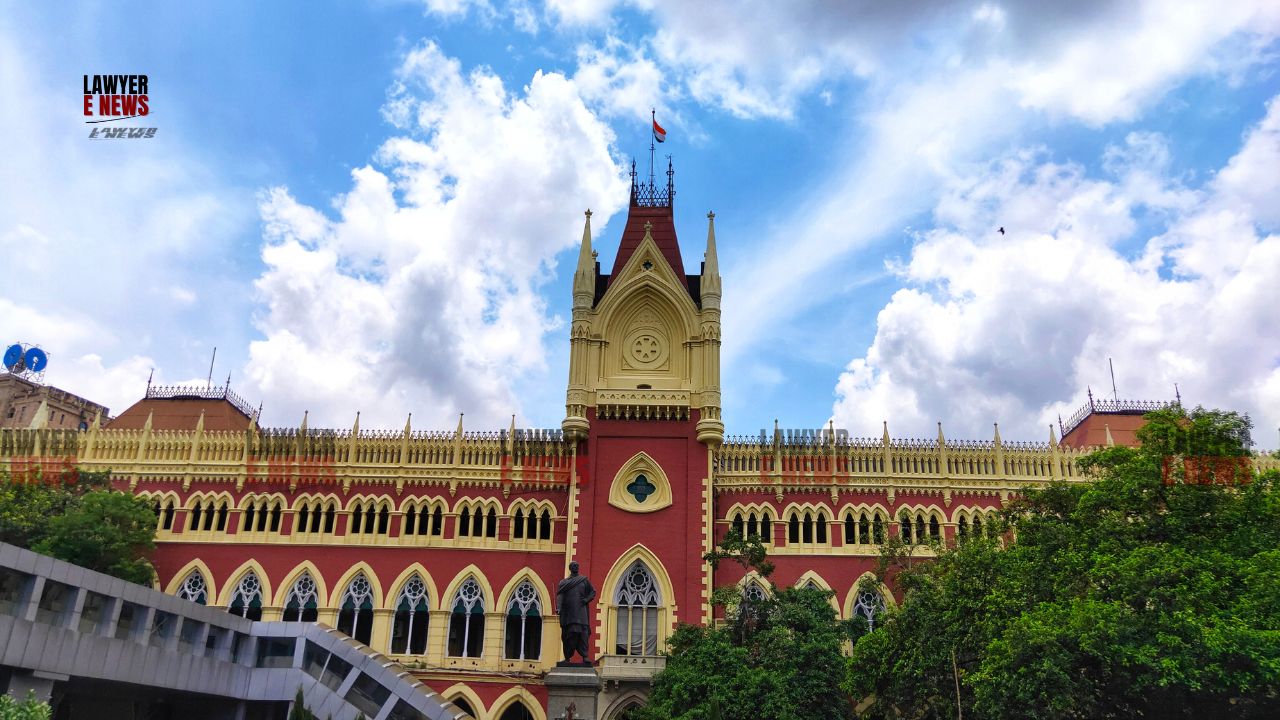
"An order of temporary injunction which pays lip-service to the three cardinal tests without specifically addressing grave allegations made by the defendants cannot be sustained." Calcutta High Court, in a significant ruling, held that a Trial Court cannot grant a temporary injunction by merely citing the three cardinal tests without specifically addressing serious allegations of fraud and collusion raised by the defendants.
A division bench comprising Justice Sabyasachi Bhattacharyya and Justice Biswaroop Chowdhury observed that a judicial order must provide clear reasons and advert to the specific contentions of both parties to be legally sustainable.
The appellants, who are the owners of the subject property, had initially executed a registered power of attorney and an agreement for sale in favor of respondent nos. 2 and 3, which were later mutually cancelled. However, during the subsistence of the power of attorney, the respondents allegedly entered into a sub-agreement for sale with the plaintiff (respondent no. 1) without disclosing this to the owners. The owners, claiming they never received any consideration and alleging a collusive fraud between the respondents and the plaintiff, filed a police complaint and contested the plaintiff's suit for specific performance.
The primary question before the court was whether a Trial Court can grant a temporary injunction under Order XXXIX Rules 1 and 2 of the CPC without adjudicating upon specific allegations of fraud and collusion raised in the written objection. The court was also called upon to determine if a summary conclusion on the "three cardinal tests" satisfies the requirement of a reasoned judicial order.
Trial Court Must Address Specific Allegations in Written Objections
The Court observed that while the Trial Judge granted a temporary injunction in favor of the plaintiff, the order completely failed to consider the grave allegations of fraud and collusion raised by the property owners. The bench noted that the appellants had raised serious concerns regarding the lack of consideration and the surreptitious nature of the agreement executed by their erstwhile attorneys.
"The impugned order, although it pays lip-service to the three cardinal tests of grant of injunction, does not specifically advert to any of the grave allegations levelled in the written objection of the appellants," the bench observed.
Mere Recital of Cardinal Tests Without Reasoning is Insufficient
The High Court emphasized that the three cardinal tests for granting an injunction—prima facie case, balance of convenience, and irreparable injury—are not mere formalities. The court held that the Trial Judge failed to provide any clear reasoning as to how these tests were satisfied in the face of the defendants' objections.
Court Explains the Necessity of a Reasoned Order
The bench highlighted that the failure to give clear reasons for concluding that a prima facie case exists renders an injunction order unsustainable. The court found that the Trial Court had not adverted to the disputes raised by both parties or the annexures provided, which is a fundamental requirement for a reasoned judicial determination.
"The impugned order cannot be sustained on such count alone, even without entering into the merits of the respective contentions of the parties," the Court held.
Interim Protection and Directions for Remand
While setting aside the impugned order, the High Court recognized the need for substantive justice. The bench noted that an interim order was subsisting during the pendency of the application in the Trial Court. To maintain the status quo while the matter is re-heard, the Court revived the interim protection to prevent the property from being alienated to third parties until a fresh decision is reached.
"Substantive justice would be sub-served if the temporary injunction application is remanded to be heard afresh... the appellants shall remain restrained by an order of injunction from selling, transferring and alienating the suit property in favour of third parties," the bench directed.
The High Court allowed the appeal and set aside the order dated December 12, 2025, passed by the Civil Judge (Senior Division) at Howrah. The matter has been remanded for a fresh hearing, with a direction to the Trial Court to pass a reasoned order by June 30, 2026, after considering the specific contentions of all parties. The Court clarified that it had not touched upon the merits of the fraud allegations, leaving them open for the Trial Court’s independent adjudication.
Date of Decision: 13 May 2026