-
by sayum
28 August 2026 10:07 AM







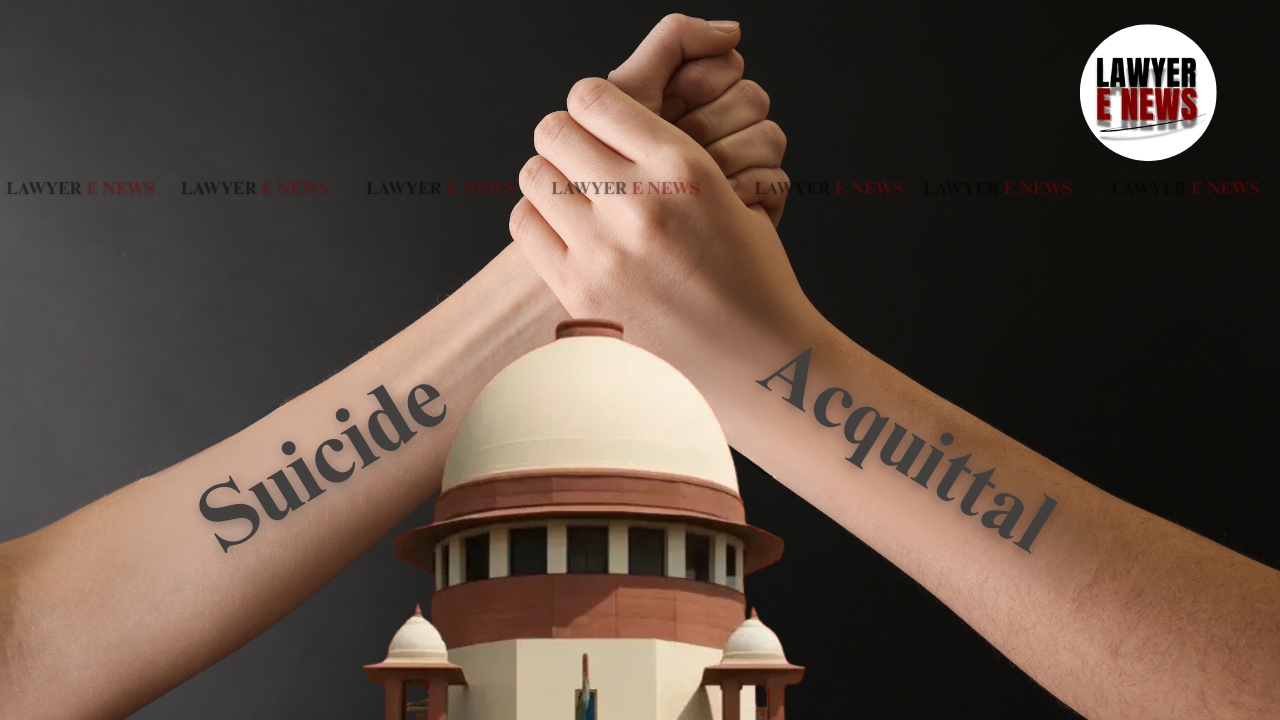
“Neighbourhood Quarrels Are Not Uncommon — Unless There's Clear Intent to Provoke Suicide, It Cannot Attract Section 306 IPC” — In a significant ruling delivered on September 9, 2025, the Supreme Court of India set aside the conviction of a woman under Section 306 IPC, holding that routine altercations between neighbours, even when heated or unpleasant, do not constitute abetment to suicide in the absence of direct incitement or intentional provocation.
Justice K.V. Viswanathan, delivering the verdict, observed, “These quarrels occur in everyday life… We are not able to conclude that there was an instigation on the part of the appellant to such an extent that the victim was left with no other option but to commit suicide.”
The Court emphasized that for an offence of abetment to suicide, there must be clear mens rea, and a proximate act of instigation that causes the person to take the extreme step. In the absence of such elements, a conviction under Section 306 IPC is legally unsustainable.
“No Evidence of Mens Rea or Direct Provocation — Mere Taunts or Insults Are Not Enough”
The prosecution had alleged that Geeta, the appellant, had abetted the suicide of her neighbour Sarika, a 25-year-old private tutor, who succumbed to burn injuries after a verbal spat with the accused on August 12, 2008. The incident was preceded by months of frequent quarrels, and the final confrontation involved verbal abuse, allegedly including casteist remarks. Sarika gave a dying declaration, blaming Geeta and her family for humiliating her repeatedly.
However, the Supreme Court noted that the other family members accused alongside Geeta were already acquitted, and that Geeta’s conviction alone could not be sustained based on the evidence available. The bench carefully examined whether the ingredients of Section 107 IPC (abetment) were satisfied and concluded that they were not.
The Court reasoned that “Even if we assume that physical blows were administered, will that per se constitute abetment to suicide? Certainly not. There has to be something more — a clear intention to provoke, instigate or compel the deceased to commit suicide.”
Referring to the settled principle from Swamy Prahaladdas v. State of M.P. and Madan Mohan Singh v. State of Gujarat, the Court held that “words uttered in a fit of anger or emotion, without intending the consequences to actually follow, cannot be said to be instigation.”
“Harsh Words Cannot Be Criminalised as Instigation Without Specific Intent” — Mens Rea Is the Bedrock of Criminal Abetment
Justice Viswanathan drew a sharp distinction between civil conduct and criminal liability, stating that Section 306 IPC must be read strictly, as it carries serious penal consequences. The conduct attributed to Geeta — name-calling, verbal altercations, and even public humiliation — did not meet the threshold required to attract penal consequences under criminal law.
The Court observed, “A word uttered in the heat of the moment, without intending the consequences to actually follow, cannot be said to be instigation. Unless a specific intention to provoke suicide is demonstrated, the offence of abetment cannot be sustained.”
The Court was also conscious of the fact that emotional sensitivity of the victim, even if genuine, cannot alone form the basis for conviction. In other words, the subjective distress of the deceased cannot substitute for objective criminal intent on the part of the accused.
The dying declaration made by Sarika, though accepted as genuine, was found insufficient to establish the required nexus under Section 306 IPC. The Court noted that there was no specific act by the appellant that directly caused or compelled the deceased to commit suicide.
“Conviction Cannot Rest on Emotional Response Alone — Law Requires Causation and Criminal Intent”
Setting aside both the Trial Court and High Court decisions, the Supreme Court underscored the dangers of overcriminalizing social disputes and reiterated that criminal law must be applied with caution, particularly in cases involving suicide.
The judgment reaffirms that criminal abetment to suicide must be proved with objective evidence, and courts must resist the temptation to convict merely because the accused’s behaviour was harsh or unpleasant.
The Court concluded, “The conviction of the appellant under Section 306 IPC is set aside. She is acquitted of all charges. Her bail bonds stand discharged.”
This ruling serves as a precedent for judicial restraint in cases where emotional events like suicide are followed by attempts to assign criminal blame without meeting the legal standards of abetment.
Date of Decision: September 9, 2025