-
by sayum
25 August 2026 12:32 PM







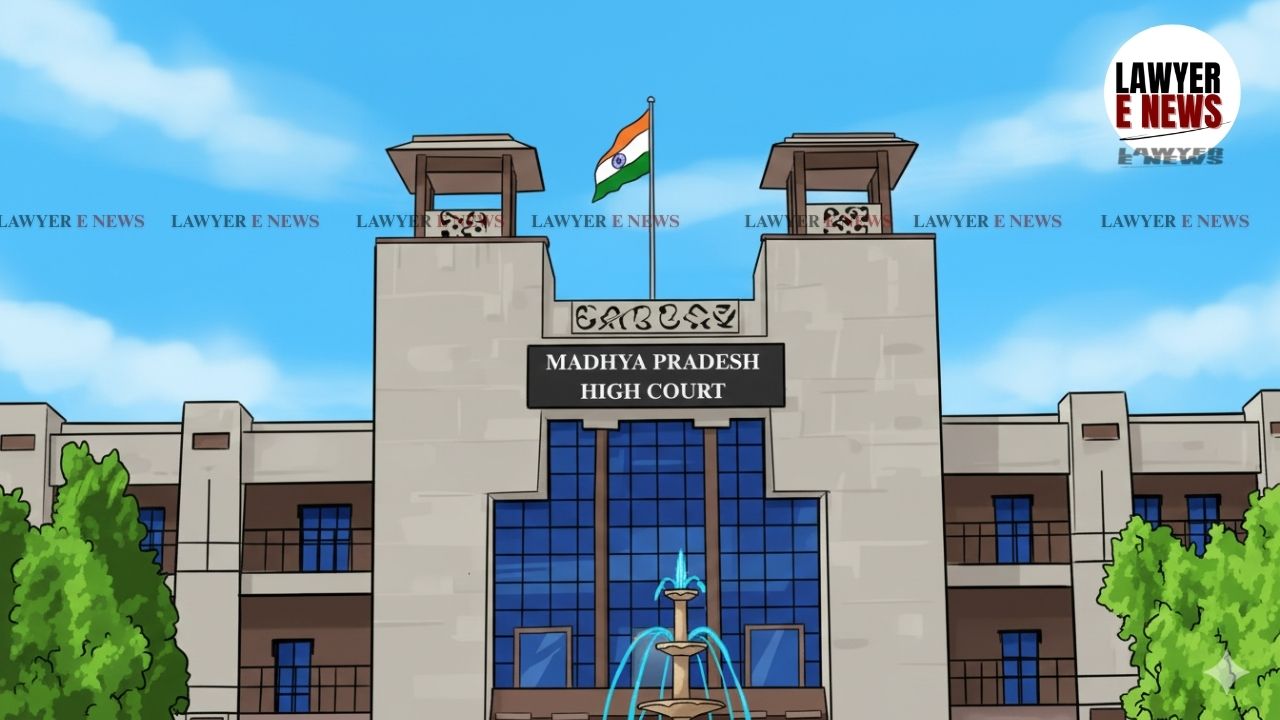
“Plea of Limitation Is Arguable — It Can Be Framed as an Issue, Not Used to Throttle Amendment at Threshold”, In a significant ruling on the scope of amendment of pleadings and supervisory jurisdiction under Article 227, the Madhya Pradesh High Court at Indore has upheld an order permitting amendment of a plaint in a high-stakes property dispute based on a Will, rejecting objections based on limitation, Order II Rule 2 CPC, alleged withdrawal of admissions, and filing of the amendment application through a power of attorney holder.
Justice Binod Kumar Dwivedi dismissed the petitions filed under Article 227 and reaffirmed that hyper-technical objections cannot defeat substantive adjudication of real controversy.
The dispute arose from a civil suit filed by Ms. Jyotsana Sanghi seeking declaration of title, permanent and mandatory injunction, and possession on the basis of a Will dated 07.08.2019 allegedly executed by Late Sharad Kumar Sanghi, who died on 21.02.2020.
The trial court allowed an application under Order VI Rules 16 and 17 CPC permitting amendment of the plaint. The defendants challenged that order before the High Court under Article 227, contending that:
“the amendment was time barred under Entry 58 of the Limitation Act,”
“it sought to withdraw admissions,”
“it was barred by Order II Rule 2 CPC,” and
“the amendment application was signed by a power of attorney holder whose authority had not yet been formally taken on record.”
The High Court rejected all these objections.
“Amendment Necessary to Determine Real Controversy Must Be Allowed”
The Court reiterated the settled principles governing amendments under Order VI Rule 17 CPC.
Referring to Life Insurance Corporation of India v. Sanjeev Builders Pvt. Ltd., (2022) 16 SCC 1, the Court emphasized:
“All amendments are to be allowed which are necessary for determining the real question in controversy provided it does not cause injustice or prejudice to the other side.”
The Court stressed that a hyper-technical approach must be avoided and that delay alone is not a ground to reject amendment.
“The merits of amendment are to be tested only during the course of trial, after the amendment is allowed and incorporated in the pleadings.”
The legislative intent, the Court noted, is to advance substantial justice and avoid multiplicity of proceedings.
Amendment Signed by Power of Attorney Holder: Not Invalid
One of the principal objections was that the amendment application was signed by Ravish Bafna, the plaintiff’s power of attorney holder, and that the application to formally bring the power of attorney on record under Order VII Rule 14(3) CPC was still pending.
Rejecting this contention, the Court held:
“The power of attorney holder does not require leave of the Court to make an application on behalf of the principal.”
Invoking Section 2 of the Power of Attorney Act, 1882 and Order III Rules 1 and 2 CPC, the Court observed that acts of a duly authorized attorney are acts of the principal.
Importantly, the plaintiff herself had never disputed the authority of the power of attorney holder.
“No iota of doubt remains that power of attorney holder can appear on behalf of the principal and file an application and also prosecute the legal cases.”
The pending procedural application under Order VII Rule 14(3) did not invalidate the amendment application.
Limitation Objection: A Mixed Question of Law and Fact
The petitioners contended that the amendment was barred under Entry 58 of the Limitation Act and thus ought to have been rejected outright.
The High Court disagreed, relying on Pankaja v. Yellappa, (2004) 6 SCC 415.
Where there is a dispute as to whether a claim falls under Entry 58 (3 years) or Entries 64/65 (12 years), limitation becomes an arguable issue.
“The plea of limitation being disputed could be made a subject matter of issue, after allowing the amendments prayed for.”
The Court held that it was not conclusively established that the reliefs were time-barred and that such a plea can be framed and decided at trial.
Thus, limitation cannot be used as a threshold bar to amendment where the issue is debatable.
“Order II Rule 2 CPC Operates as Bar to Subsequent Suit, Not to Amendment”
The defendants argued that the plaintiff had earlier relinquished certain claims and filed another suit without leave under Order II Rule 2 CPC, and that the amendment sought to import reliefs from that subsequent suit.
The High Court rejected this argument in clear terms:
“Order II Rule 2 CPC operates as a bar against a subsequent suit… and the field of amendment of pleadings falls far beyond its purview.”
Quoting paragraph 71.1 of LIC v. Sanjeev Builders, the Court held that invoking Order II Rule 2 to block an amendment is misconceived.
The provision cannot eclipse the power under Order VI Rule 17.
Withdrawal of Admissions: Not a Ground for Supervisory Interference
The petitioners also contended that the amendment sought to withdraw admissions.
The Court observed that the defendants retain the right to seek consequential amendments and lead evidence.
No manifest injustice or irreparable prejudice was demonstrated.
Thus, withdrawal of admissions in the factual matrix did not warrant interference under Article 227.
Article 227: No Interference Absent Perversity
The High Court emphasized the limited scope of supervisory jurisdiction.
“This Court… do not want to interfere… to correct mere errors of law or fact or just because another view than one taken by the Court below is possible.”
Since no patent perversity or gross failure of justice was shown, interference was unwarranted.
Both Miscellaneous Petitions were dismissed. The order dated 26.08.2025 allowing amendment of the plaint was upheld. Pending interlocutory applications were disposed of.
The ruling reinforces four critical principles:
“Amendments necessary to resolve real controversy should ordinarily be allowed.”
“Limitation pleas, if arguable, should be tried as issues — not used to throttle amendment.”
“Order II Rule 2 CPC cannot be invoked to defeat amendment of pleadings.”
“Supervisory jurisdiction under Article 227 is not an appellate power.”
The judgment stands as a reaffirmation of the liberal approach toward amendments and a caution against procedural technicalities overshadowing substantive justice.
Date of Decision: 12.02.2026