-
by sayum
28 August 2026 10:07 AM







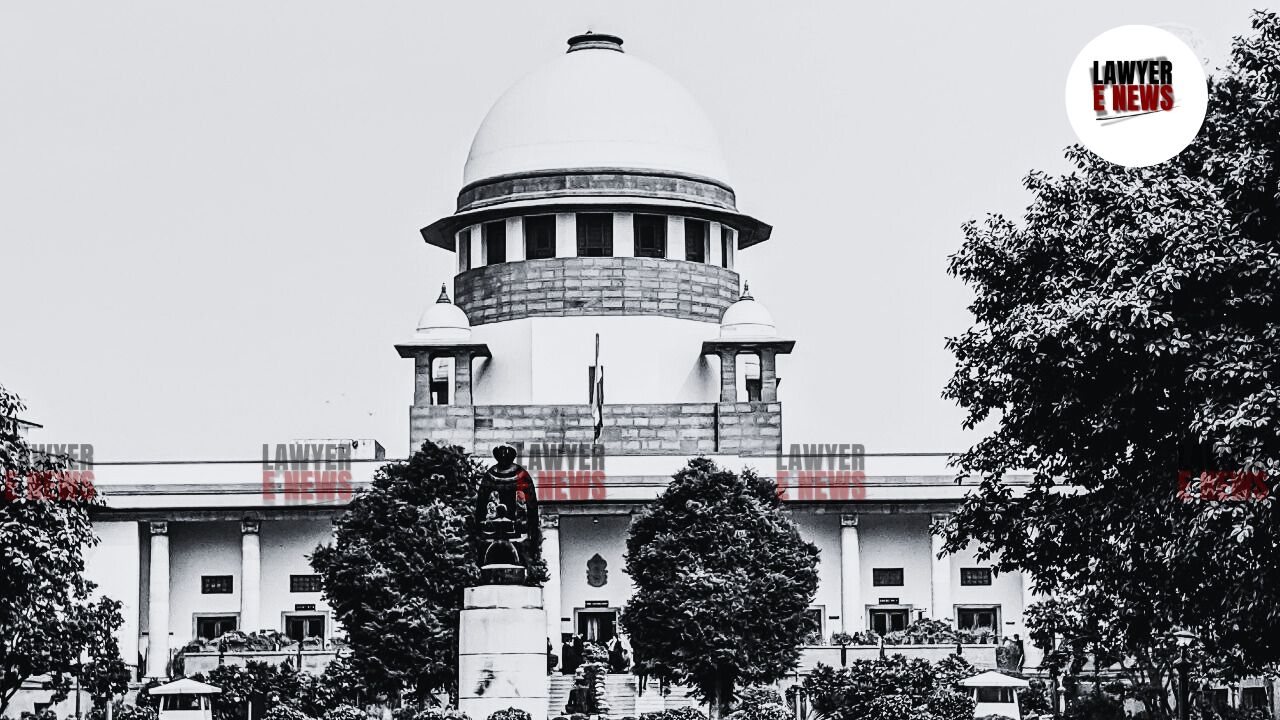
“Violation of Bail Conditions Is a Ground for Cancellation—Witness Protection Is Not a Substitute”, Supreme Court of India delivered a scathing judgment which has now become a landmark ruling on the interplay between bail cancellation and the Witness Protection Scheme, 2018.
The Court unequivocally ruled that when bail conditions are violated—particularly when witnesses are threatened—the only appropriate remedy is cancellation of bail, not resort to witness protection. In doing so, the Court set aside a “curious” and “erroneous” order of the Allahabad High Court that had directed the complainant to avail remedies under the Witness Protection Scheme instead of addressing the bail cancellation plea.
“The Witness Protection Scheme is Not a Substitute for Cancellation of Bail”: Court's Key Finding
The Supreme Court emphasized: “When it is an outright case of breach of the conditions of the bail order... the provisions of the Witness Protection Scheme, 2018 have hardly any role to play. This Scheme has nothing to do as such when the complainant seeks cancellation of bail on the ground of threats being administered to the witnesses.”
The Supreme Court ruled in favour of the complainant (Phireram), who sought cancellation of bail granted to the accused in a murder case (FIR No.137 of 2022, Surajpur Police Station, U.P.). The accused had allegedly violated multiple bail conditions by threatening key witnesses, leading to the registration of two further FIRs against him (Nos. 262 and 740 of 2024).
Despite this, the Allahabad High Court refused to cancel the bail and instead directed the complainant to invoke the Witness Protection Scheme, 2018. Challenging this decision, the appellant approached the Supreme Court.
The case stems from a 2022 murder under Sections 302, 201, 364, 120-B read with 34 IPC, where the accused was granted conditional bail by the High Court on April 29, 2024.
The bail conditions included standard restrictions such as: “The accused shall not tamper with prosecution evidence... nor threaten or intimidate witnesses.”
However, witness Chahat Ram subsequently filed two FIRs alleging threats by the accused, directly violating the bail conditions. The complainant, thus, approached the High Court under Section 439(2) CrPC seeking cancellation of bail.
The High Court, instead of addressing the matter on merits, dismissed the application, holding that: “...the complainant has the remedy under the Witness Protection Scheme, 2018...”
Whether Witness Protection Scheme Bars Bail Cancellation for Threats
The legal question before the Supreme Court was whether the availability of protection under the Witness Protection Scheme could be a valid substitute or bar to the cancellation of bail under CrPC when bail conditions are violated.
The Court condemned the High Court’s approach, observing: “The High Court should have decided the application seeking cancellation of bail on its own merits by applying well-settled principles of law.”
On Bail Violations
The Court highlighted that: “When the original first informant is able to prima facie demonstrate in what manner the accused is abusing the liberty granted to him, the provisions of Witness Protection Scheme have no role.”
The Court held that threats to witnesses are grounds for cancellation of bail, not just for invoking the Scheme.
Despite acknowledging the salutary and protective purpose of the Scheme, the Court stressed that: “The Scheme is not an alternative or substitute for Section(s) 437 or 439 CrPC. It is remedial and curative in nature, not preventive or judicial like bail cancellation.”
“Bail Is Not a Licence to Threaten Witnesses”: Liberty Is Conditional
The Court reaffirmed that: “Grant of bail is not a mechanical order. It is conditional liberty. If conditions are violated, liberty must be withdrawn.”
Relying on State v. Captain Jagjit Singh (1962) and Gudikanti Narasimhulu v. Public Prosecutor (1978), the Court held that societal impact and witness safety override individual liberty when conditions are breached.
Strong Criticism of Allahabad High Court's Repeated Error
In a remarkable and unprecedented move, the Supreme Court cited 40 identical “template” orders passed by the Allahabad High Court, all dismissing bail cancellation applications by merely directing parties to use the Witness Protection Scheme.
The Court observed: “We are dismayed to note that the aforesaid practice of passing cyclostyled template orders has been in vogue past more than two years.”
It also slammed the conduct of Public Prosecutors, who instead of supporting bail cancellation, misdirected the Court to relegate complainants to the Scheme.
The Supreme Court:
Set aside the Allahabad High Court's order
Remanded the matter for fresh hearing on the merits of bail cancellation
Directed the High Court to seek a report from the Investigating Officer
Instructed the Registry to send copies of this judgment to all High Courts, especially the Chief Justice of Allahabad High Court
Supreme Court Clarifies Legal Position on Bail Cancellation
The ruling in Phireram v. State of U.P. is a definitive statement of the law: Witness Protection Scheme does not curtail the power or duty of courts to cancel bail when liberty is abused.
It reaffirms the conditional nature of bail, the importance of witness testimony in fair trial, and the supervisory role of courts to ensure justice is not derailed by intimidation or threat.
Date of Decision: 02 September 2025