-
by sayum
28 August 2026 10:07 AM







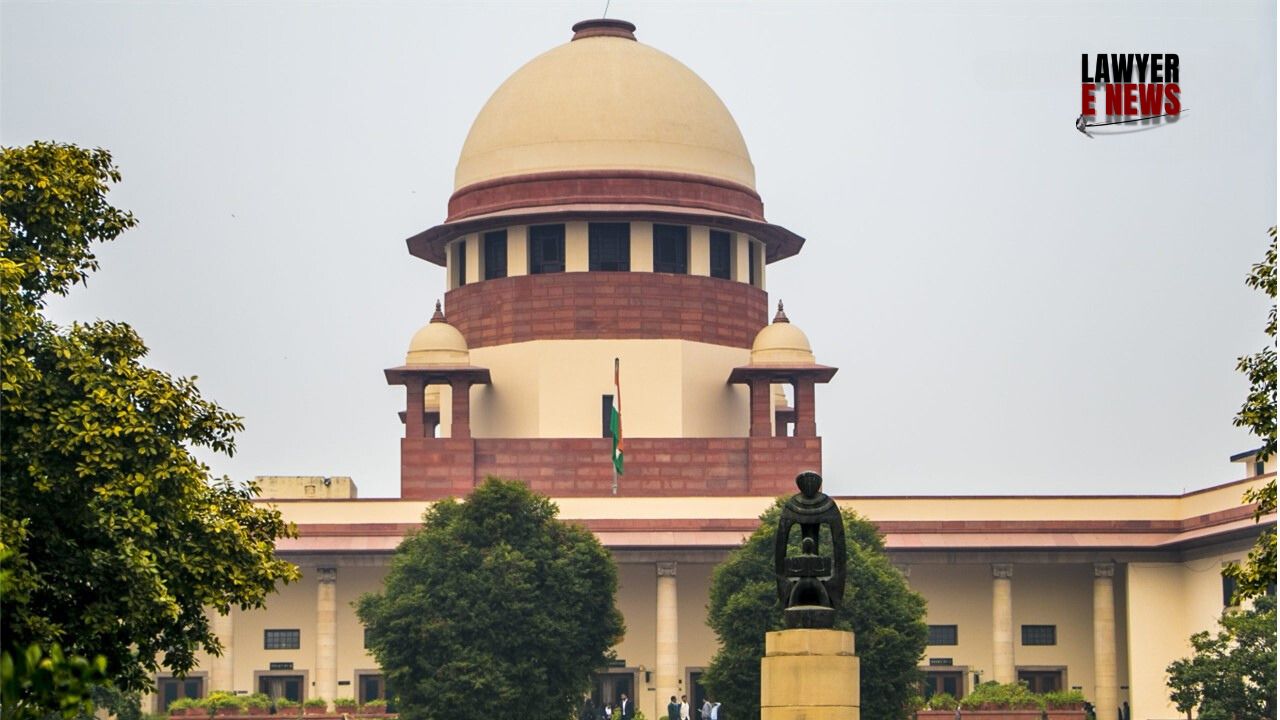
Supreme Court of India set aside the Bombay High Court’s refusal to grant anticipatory bail, holding that a prior withdrawal of bail applications cannot be treated as a bar when liberty is at stake and co-accused have already secured bail. The Court observed that the High Court had rejected the appellant’s plea solely because he had earlier withdrawn two anticipatory bail applications, even though others similarly placed had been granted relief. Refusing to allow procedural formality to override substantive justice, the Bench comprising Justice Pamidighantam Sri Narasimha and Justice Atul S. Chandurkar made it clear that “the appellant is entitled to anticipatory bail” and confirmed the interim protection earlier granted.
The ruling reiterates that anticipatory bail cannot be denied merely due to past procedural choices of the accused, especially when no adverse conduct is attributed to him, and co-accused enjoy the benefit of bail in the same FIR.
“Subsequent FIR Does Not Extinguish Bail Rights in Pending Case”: Supreme Court Affirms Liberty Must Be Evaluated Contextually
During the hearing, the State had raised a fresh objection—that a new FIR had been lodged under the Bharatiya Nyaya Sanhita, 2023 against the appellant during the pendency of the present appeal. But the Supreme Court refused to let that derail the proceedings, noting that the appellant had already secured interim protection in the second case from the Sessions Court, Bhiwandi. The Court categorically clarified that “our order will not have any bearing on other applications that the appellant may have or may file before the concerned Court,” and directed that all such matters should be decided independently.
In doing so, the Court underlined that the mere registration of a subsequent FIR cannot be mechanically used to deny relief in an earlier case, particularly when interim protection is already in force and procedural fairness is observed.
In a judgment asserting that liberty must not be sacrificed at the altar of procedural rigidity, the Supreme Court on 4th September 2025 granted anticipatory bail to Prathmesh @ Gudya Anirudh Patil, who was denied relief by the Bombay High Court solely on the ground that he had earlier withdrawn similar applications. The case concerned FIR No. 263/2024, registered under serious provisions of the newly enacted Bharatiya Nyaya Sanhita, 2023, including Sections 115(2), 118(2), 3(5), 351(2), 351(3), and 352. While the High Court dismissed the plea on technical grounds, the Supreme Court found that other co-accused had already been granted anticipatory bail and that interim protection had been in place since March 2025.
The Court’s order strongly affirms that anticipatory bail, as a vital safeguard of liberty under Article 21, cannot be denied for want of procedural formalism, especially when the accused has demonstrated good faith and cooperated with the process of law.
The appellant had approached the Bombay High Court for anticipatory bail in relation to an FIR registered on 27th June 2024 at Vada Police Station, District Palghar, Maharashtra. However, the High Court rejected his application on 3rd February 2025, stating that he had previously withdrawn two similar bail pleas. Importantly, no findings were made against him on merits, nor was there any allegation of misuse of liberty.
In contrast, the co-accused in the same FIR had already secured anticipatory bail on earlier dates—on 6th August 2024 and 4th October 2024 respectively. Observing this disparity, the Supreme Court took note that it had already extended interim protection to the appellant by its order dated 7th March 2025.
The central legal question before the Court was whether an earlier withdrawal of bail applications could be used as the sole ground to deny anticipatory bail to an accused, particularly when the co-accused had been granted bail and interim protection was operating in the appellant’s favour.
The Court held that it could not, and emphatically stated:
“Having considered the facts and circumstances of the case, we confirm the interim order dated 07.03.2025 and direct that the appellant be given the relief of anticipatory bail.”
The Court found no justification for the High Court’s technical rejection when others in the same position had been granted relief. The Bench cautioned against allowing procedural rigidity to override considerations of fairness and parity, particularly in matters of personal liberty.
When the State raised the issue of a new FIR (No. 0163/2025) under the Bharatiya Nyaya Sanhita, the appellant submitted that he had already obtained an interim order from the Sessions Court, Bhiwandi. The Supreme Court recorded the relevant portion, noting that:
“I.O. is directed not to take coercive steps against the applicant till filing say.”
The Court clarified that the current order did not influence any other pending proceedings or applications, and each must be decided independently.
It added a standard caveat on cooperation, holding that:
“In case the appellant does not cooperate with the investigation, respondent-State is at liberty to move the Trial Court for cancellation of his bail.”
The Supreme Court’s judgment in Prathmesh @ Gudya Anirudh Patil v. State of Maharashtra is a principled reaffirmation of the idea that bail jurisprudence must serve liberty, not mere procedure. By holding that an accused cannot be denied anticipatory bail solely for previously withdrawing similar applications—particularly when co-accused have been granted relief—the Court has placed constitutional values above hyper-technical objections.
The ruling also draws a clear boundary between distinct FIRs, stating that protection in one cannot be diluted merely because of the existence of another unless both are adjudicated on their own facts.
In a legal system adapting to the Bharatiya Nyaya Sanhita, this decision underscores that fundamental rights do not change with the statute—they remain rooted in fairness, due process, and the imperative of equal treatment before the law.
Date of Decision: 4th September 2025