-
by sayum
27 August 2026 3:22 PM







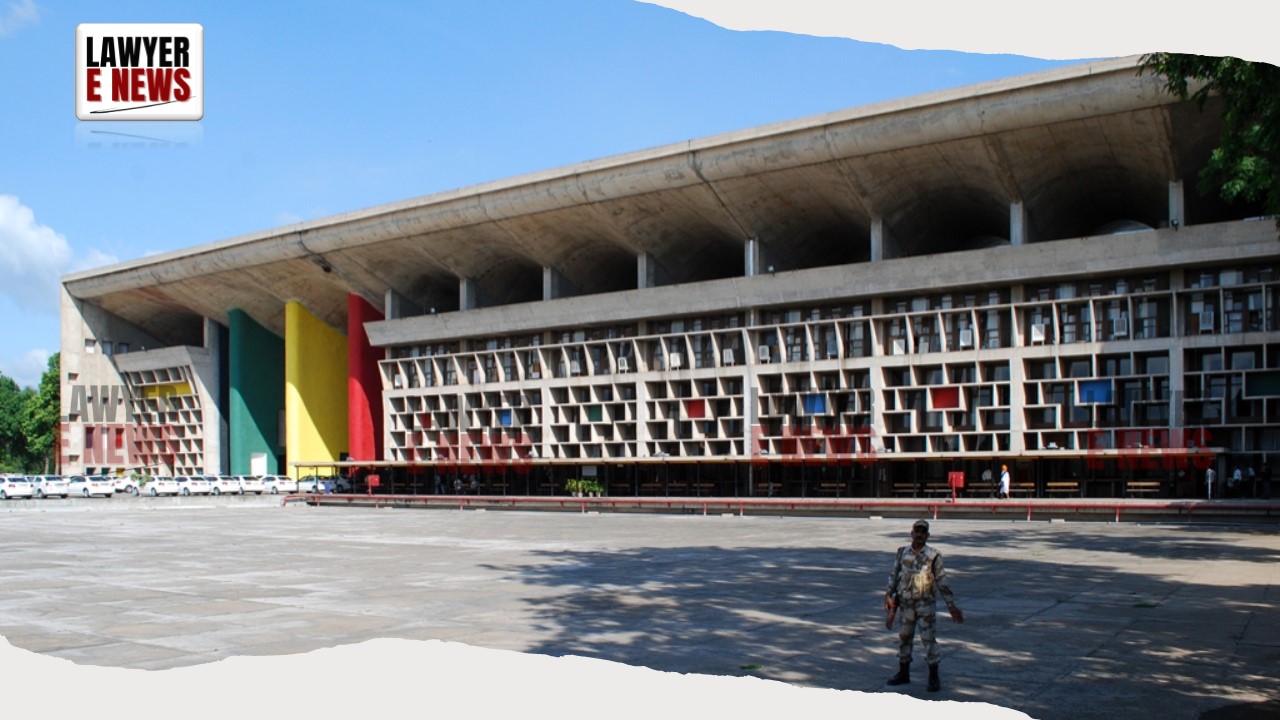
“Maintenance Under Section 125 CrPC is Not a Weapon for Unjust Enrichment” – In a strongly worded judgment, the Punjab and Haryana High Court dismissed a revision petition filed by a woman seeking maintenance under Section 125 of the Code of Criminal Procedure, affirming that a wife who is financially independent, qualified, and in possession of substantial assets cannot claim maintenance by misrepresenting facts and suppressing her true income.
Justice Alok Jain upheld the Family Court’s order dated July 8, 2025, observing that the petitioner’s conduct amounted to a calculated abuse of the judicial process and an attempt to secure monetary relief through concealment and falsehoods.
The Court made it clear that “maintenance is not a bounty to be misused by financially self-sufficient litigants to harass the other spouse,” and that Section 125 CrPC was never intended to be a “mechanism of unjust enrichment under the cloak of matrimonial dispute.”
“Petitioner Cannot Approach the Court with Unclean Hands and Expect Equitable Relief”
The Court’s findings were scathing, noting that the petitioner-wife had “deliberately concealed material facts, including her employment, multiple income sources, and financial holdings.” Justice Alok Jain observed that the petitioner “was working as a teacher at St. Joseph School, Ambala City, and yet she chose not to disclose her employment in the affidavit of income and expenditure.”
The judgment recorded that the petitioner had admitted in cross-examination to receiving benefits based on her status as an employee of Markanda Oil Store and had maintained multiple financial instruments, including Kisan Vikas Patras and a Public Provident Fund account with balances exceeding ₹15 lakhs. The Court observed, “This is not the case of a destitute woman seeking protection, but of a financially sound individual attempting to misuse a beneficial legislation.”
The Court also held that “the petitioner was not only gainfully employed but also had sufficient assets to maintain herself,” and thus failed the basic eligibility criteria for seeking maintenance under Section 125 CrPC.
False Adoption Claim Rejected – “Plea Raised Solely to Mislead and Gain Sympathy”
In a further blow to the petitioner’s credibility, the High Court dismissed her plea of adopting her niece as a child, noting that she had admitted that her husband never consented to such adoption and there was no legal or official document to support it.
Justice Jain wrote, “Adoption was claimed only to evoke sympathy from the Court, without any basis in law or fact. The plea was not supported by documentation or change in official records and stood entirely discredited during cross-examination.”
This false claim, the Court said, further undermined the petitioner’s position and showed a pattern of “attempting to manipulate judicial sympathy through emotional narratives lacking in truth or proof.”
“Section 125 CrPC Is a Shield for the Helpless, Not a Tool for Litigation Harassment”
Reiterating the foundational purpose of Section 125 CrPC, the Court cited the landmark rulings of the Supreme Court in Chaturbhuj v. Sita Bai and Rajnesh v. Neha, stating, “The provision exists to prevent destitution and vagrancy – not to enable one spouse to claim financial rights despite being economically independent.”
Justice Jain observed that the Court cannot allow itself to be “dragged into a web of falsehoods and omissions,” and further remarked that:
“When a person approaches a Court, he or she should do so not only with clean hands, but also with a clean mind, clean heart, and clean objective.”
In light of these principles, the Court concluded that “no litigant has a right to draft on the Court’s time and public resources to settle personal scores or pursue dishonest claims.”
“Litigation Is Not a License to Trap the Other Spouse in Endless Legal Battles”
The High Court emphasized that the repeated attempts by the petitioner to draw the respondent-husband into litigation, despite having no financial dependency, amounted to harassment. The Court observed that:
“The petitioner remained separated from the respondent since 2019 and never demonstrated financial hardship. Her claim that she is now earning less is suspicious, especially since earlier she admitted to a higher salary. This inconsistent conduct reflects a strategy to entangle the husband and extract money under legal pressure.”
Finding no error or perversity in the Family Court’s detailed order, the High Court held that “the revision petition is devoid of merit and deserves to be dismissed outright.”
Date of Decision: January 13, 2026