-
by sayum
23 August 2026 2:56 PM







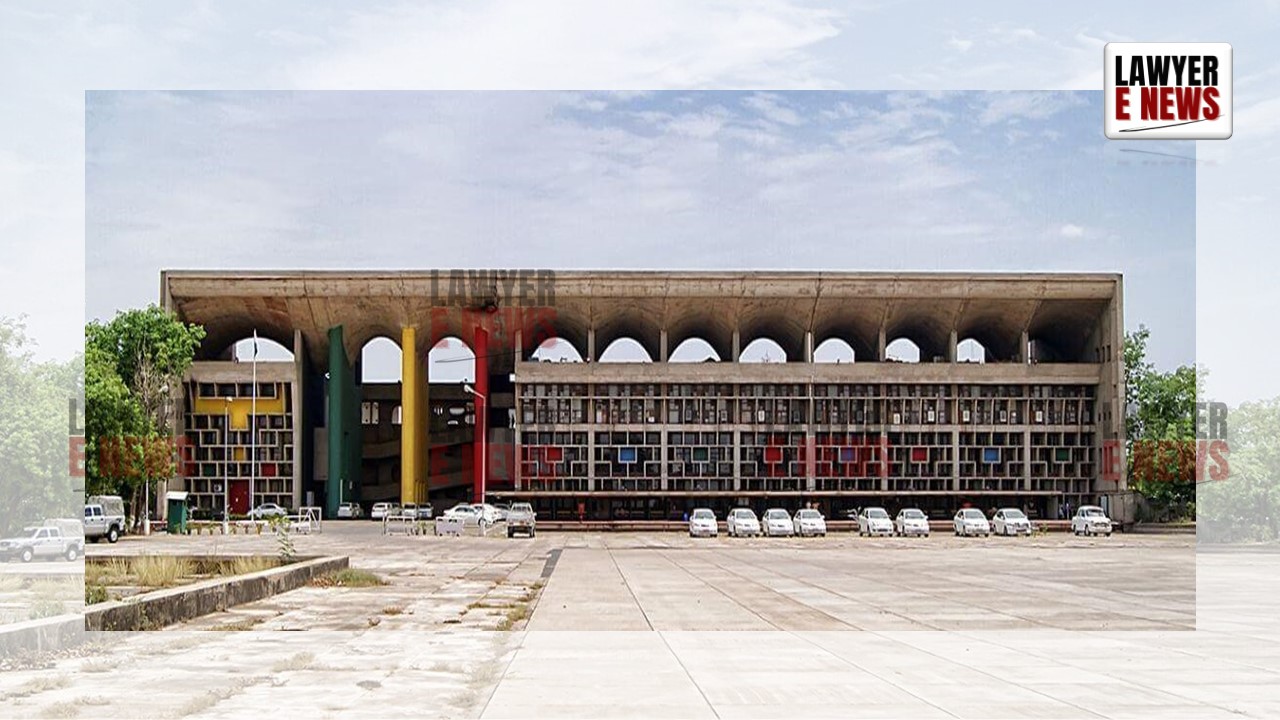
"Eviction Proceedings Under Rent Act Cannot Be Transferred to Commercial Courts Merely Because Property Is Commercial", In a significant ruling clarifying the limited scope of judicial interference under Article 227 and the strict parameters for rejection of plaints under Order VII Rule 11 of the Civil Procedure Code, the Punjab and Haryana High Court dismissed a tenant’s civil revision petition challenging the Rent Controller's refusal to reject an ejectment petition.
Justice Nidhi Gupta, presiding over the matter, ruled that “disputed questions of fact, such as whether the tenant had already vacated the premises, cannot be adjudicated under Order VII Rule 11 CPC” and reiterated that only the averments in the plaint can be considered at this stage. The Court emphasized that eviction proceedings under the Haryana Urban (Control of Rent and Eviction) Act, 1973, even concerning commercial premises, do not fall within the ambit of "commercial disputes" under the Commercial Courts Act, 2015.
"The Haryana Rent Act Is a Special Statute Creating Exclusive Jurisdiction in Rent Controllers"
The case arose from a challenge under Article 227 of the Constitution to the Rent Controller’s order dated November 19, 2025, rejecting an application by the tenant seeking dismissal of the landlord’s ejectment petition. The tenant had invoked Order VII Rule 11 CPC and Section 151 CPC, arguing that the ejectment petition was not maintainable because the premises had allegedly been vacated prior to the filing of the petition. The petitioner also contended that since the tenanted property was commercial, the dispute should fall under the Commercial Courts Act, 2015, rendering the Rent Controller’s jurisdiction void.
However, the High Court rejected both contentions. It held that: “Whether or not the petitioner has vacated the tenanted premises… are questions of facts and evidence, which can only be determined by the Rent Controller after leading of evidence…” [Para 6]
Relying on the consistent jurisprudence of the Supreme Court, including Kamala v. K.T. Eshwara Sa [(2008) 12 SCC 661] and Srihari Hanumandas Totala v. Hemant Vithal Kamat, the Court clarified that no defence or evidence can be looked into while deciding an application under Order VII Rule 11 CPC. The Court said:
“In order to reject a plaint for the suit being barred by any law under Order 7 Rule 11(d), the court needs to be guided by the averments in the plaint and not the defence taken.” [Para 7]
The High Court agreed with the Rent Controller’s reasoning that whether the premises had been vacated was a pure question of fact, and not one that could be resolved without trial.
On the applicability of the Commercial Courts Act, the Rent Controller’s findings were upheld in toto. The Court reiterated: “Eviction and rent recovery disputes arising out of the relationship of landlord and tenant, whether residential or commercial premises are involved, do not fall within the ambit of Section 2(1)(c) of the Commercial Courts Act.” [Para 7 of Rent Controller’s Order]
The Court also found that the landlord had explicitly pleaded the existence of a landlord-tenant relationship in the ejectment petition, and the Rent Controller’s jurisdiction was not ousted merely because the premises were used for commercial purposes.
The decision also underscores the principle that statutory forums under special legislations like the Haryana Rent Act have exclusive jurisdiction, and this cannot be bypassed through clever pleadings or misapplication of general statutes such as the Commercial Courts Act.
Justice Gupta further noted: “Section 6 of the Commercial Courts Act does not create any bar on the institution or continuance of eviction petitions under the Rent Act.” [Para 8]
Finally, taking note of the apparent intention of the tenant to delay proceedings by filing the application under Order VII Rule 11, the Court dismissed the civil revision petition, concluding that no “patent illegality or perversity” had been shown in the order under challenge to warrant interference under Article 227.
The judgment is a clear reaffirmation of procedural discipline, reinforcing the distinction between issues of law that can be resolved summarily and factual disputes requiring trial. It also sets to rest any confusion regarding the application of the Commercial Courts Act to statutory rent control proceedings, even where commercial properties are involved.
Date of Decision: 23.12.2025